Kerrison Spinal Rongeurs
Designed for precise laminectomy and foraminal decompression. Features ultra-thin footplates, smooth shaft glide, and clean ejector mechanisms for debris removal during cervical and lumbar spine operations.
 Surgical Instrument Manufacturer
 Forged under strict ISO 13485:2016 and EU MDR quality regimes in Sialkot, Pakistan, Fizza Surgical International engineered high-durability Bone Rongeurs for neurosurgery, spine reconstruction, orthopedics, and oral-maxillofacial procedures. Discover how metallurgical precision, lever mechanics, and micro-honing deliver superior biting force and extended instrument lifespan.
Controlled hardening to HRC 50-54 eliminates jaw edge chipping and mechanical shear strain under heavy bone loads.
Direct manufacturing in our Sialkot forging shop guarantees competitive wholesale costs for tenders and OEMs.
Batch steel certifications, passivation logs, and EUDAMED compliant technical dossiers provided for every delivery.
Every bone rongeur set is backed by structural alignment guarantees and 14-day sample dispatch options.
A technical evaluation guide for hospital procurement directors, orthopedic surgeons, and medical device distributors evaluating jaw mechanics, material fatigue, and biting torque efficiency.
Bone rongeurs are specialized surgical pliers designed to excise, nibble, and contour dense osseous tissue and cartilage. The mechanical advantage generated by the instrument dictates surgeon fatigue, tissue handling accuracy, and tool longevity during extensive orthopedic procedures.
Single-Action Mechanics: Utilizing a single pivot joint, single-action bone rongeurs deliver a direct 1:1 force transfer ratio. This configuration provides exceptional tactile sensitivity for delicate applications such as maxillofacial contouring, anterior dental alveoloplasty, or pediatric orthopedic trimming. However, cutting through thick cortical bone requires high hand force.
Double-Action (Compound Leverage) Mechanics: Double-action rongeurs incorporate a dual-pivot linkage system that acts as a force multiplier (up to 3:1 transmission ratio). Hand force applied at the handles is amplified through the secondary linkage, allowing surgeons to bite through tough femoral, tibial, or spinal bone with minimal physical effort. Fizza Surgical precision-aligns these compound joints using hardened stainless steel pins to eliminate lateral jaw deviation and prevent scissor-action binding.
The operational lifespan of a bone rongeur depends on steel purity and heat treatment precision. Inferior steel or crude tempering leads to micro-cracking along the cutting cup, edge dulling, or stress corrosion in autoclaves.
Engineered for neurosurgery, spinal laminectomy, orthopedic trauma, and maxillofacial surgery. Available in standard polish, satin glare-free finish, and gold-plated handle patterns.
Designed for precise laminectomy and foraminal decompression. Features ultra-thin footplates, smooth shaft glide, and clean ejector mechanisms for debris removal during cervical and lumbar spine operations.
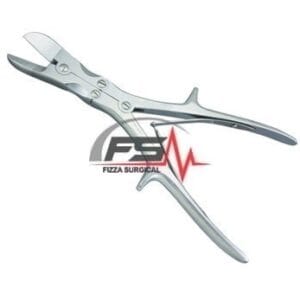
Heavy-duty compound action bone biting forceps for large-joint orthopedic reconstruction. Dual linkage multiplies hand leverage, enabling effortless resection of thick cortical bone structures.

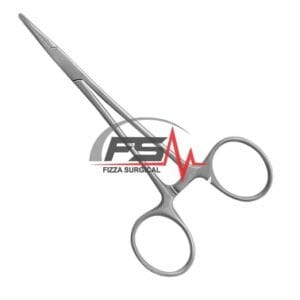
Slim profile compound rongeur offering high cutting force in restricted surgical fields. Ideal for foot, ankle, hand, and wrist joint debridement with 2mm to 4mm cup widths.

Delicate double-action curved jaws for precise ear, nose, throat (ENT) and micro-neurosurgical procedures. Provides high tactile control and clean cup-to-cup edge contact.
Fine-tipped bone nibblers for alveoloplasty, dental implant site preparation, and pediatric orthopedics. Hand-honed cutting cups ensure splinter-free bone trimming.
Specialized side-cutting and end-biting jaw geometry engineered for aggressive mastoid, sinus, and orthopedic canal access without obscuring line-of-sight.
Ergonomically contoured handle profile featuring dual leaf springs and reinforced joint pins for high-torque orthopedic trauma surgical sets.
Classic single-action design for general bone nibbling and tissue resection. Available in straight, curved, and anatomical jaw angles with satin finish.
How advancing surgical techniques, central sterile supply department (CSSD) protocols, and medical device regulations are reshaping orthopedic instrument manufacturing.
Hospital-acquired infection (HAI) mitigation and strict CSSD sterilization mandates are driving demand for Kerrison and double-action rongeurs with take-apart mechanisms or integrated Luer lock flushing ports. These designs allow full cleaning of internal slide channels, preventing bone marrow and biofilm accumulation.
Titanium Nitride (TiN) and Diamond-Like Carbon (DLC) physical vapor deposition coatings increase surface hardness to over 2,000 HV. Coated bone rongeur tips retain cutting sharpness up to 4x longer than uncoated stainless steel while reducing light reflection in microscopic and endoscopic spinal surgery.
Global health authorities (US FDA and EU MDR EUDAMED) require direct part marking (DPM) of unique device identification (UDI) 2D DataMatrix codes on reusable surgical tools. Fizza Surgical offers high-contrast fiber laser etching that survives repeated autoclaving and chemical processing.
As spine surgery transitions toward minimally invasive surgical (MIS) techniques, Kerrison rongeurs demand ultra-thin footplates (down to 1.0mm) to navigate constricted epidural spaces without compressing neurological tissue. Our precise CNC wire EDM grinding delivers thin footplates with high structural strength.
Extended surgical procedures increase surgeon hand fatigue and risk of carpal tunnel strain. Manufacturers are integrating lightweight titanium alloy handles with hardened stainless steel working jaws, achieving a 35% weight reduction while maintaining full cutting torque.
Global hospital groups are shifting toward sustainable procurement contracts that emphasize tool repairability. Modular rivet assemblies and standardized jaw replaceability in premium rongeur lines enable fast factory refurbishment, reducing lifetime operational expenditures.
Sialkot, Pakistan Founded in 1980 in Sialkot, Pakistan—the renowned world hub for surgical instrument forging—Fizza Surgical International operates a fully integrated, ISO 13485:2016 certified manufacturing facility. We combine traditional artisan hand-craftsmanship with modern CNC machining, wire-EDM cutting, and vacuum heat treatment processes.
Unlike trading intermediaries, every bone rongeur produced under our roof undergoes rigorous multi-stage quality control checks. From raw steel spectro-analysis to final cutting performance validation on synthetic bone models, we guarantee consistent quality, batch after batch.
Our bone rongeurs meet or exceed rigorous international medical device directives, ensuring smooth customs clearance and hospital tender approval.
Essential metallurgical, manufacturing, operational, and regulatory answers for hospital buyers, tender managers, and medical instrument distributors.
We exclusively forge our bone rongeurs using premium German-grade AISI 420 and AISI 440 martensitic stainless steel. These alloys feature elevated carbon content (enabling hardness up to HRC 50-54 after vacuum heat treatment) combined with 12-14% chromium for high corrosion resistance. High hardness is essential for bone rongeurs because soft steel edges dull rapidly during cortical bone contact, causing jaw tearing rather than clean bone resection.
Single-action rongeurs rely on a single pivot joint, providing a direct 1:1 tactile transmission ideal for delicate procedures like alveoloplasty or fine hand/foot bone trimming. Double-action (compound leverage) rongeurs feature dual pivot joints that multiply hand force by up to 3x. This compound action reduces surgeon hand effort when biting through thick bone during laminectomies or major joint replacement procedures.
Jaw misalignment occurs when pivot pins wear down or flex under pressure. Fizza Surgical eliminates lateral movement by using precision CNC wire-EDM joint slots, hardened stainless steel center pins, and hand-honed cup edges. Each tool undergoes 10,000 continuous action cycles during QC validation to verify zero-axial play and consistent cup-to-cup alignment.
Yes. We offer both standard fixed-shaft Kerrison rongeurs and advanced Take-Apart / Flushable Kerrison models. Take-Apart models feature a quick-release spring catch that allows the top slide mechanism to be detached without additional tools, facilitating thorough bioburden removal and full compliance with hospital CSSD infection control guidelines.
We offer full OEM and private label capabilities starting at 300 units per pattern. OEM services include fiber laser etching of your brand logo, custom catalogue item codes, GS1-compliant UDI DataMatrix barcodes, customized handle finishes (gold plating, satin matte, or TiN black coating), and bespoke sterilizable packaging sets.
Every production shipment includes a complete quality assurance dossier: ISO 13485:2016 certificate, CE Declaration of Conformity under EU MDR 2017/745, Certificate of Raw Material Origin, spectro-chemical analysis reports, Passivation Test Log (per ASTM F1083), and multi-lingual Instructions for Use (IFU).
Standard catalog stock items dispatch in 7–10 working days. Custom OEM orders, private label branding, or large hospital tender contracts are manufactured and shipped within 10–20 working days via DHL, FedEx, or air freight. OEM production MOQs start at 300 units per item pattern, with volume tier discounts for contract purchasing.
We provide sample evaluation units to qualified medical distributors, OEM brand owners, and hospital procurement departments. Samples allow your clinical team and orthopedic surgeons to test hand ergonomics, biting action force, and autoclaving endurance prior to issuing a formal purchase order.
Streamline your orthopedic instrument supply chain with factory-direct pricing, German stainless steel quality, and complete regulatory compliance. Contact our export desk today for pricing, technical datasheets, or OEM sample requests.