ISO 13485:2016 · CE EU MDR Class I

Dental Root Elevators B2B Manufacturing & Global Supply Engineering

Precision-engineered Bein, Cryer, Luxating, and Apex elevators forged from German AISI 420 stainless steel for dental distributors, hospital networks, and private label brands worldwide.

High-Torque Dental Root Elevators: The Technical Standard for Atraumatic Tooth Extraction

Fizza Surgical International combines 45+ years of Sialkot hot-forging heritage with modern 5-axis CNC micro-milling and vacuum heat treatment to produce dental root elevators that meet the strict mechanical tolerances demanded by oral surgeons and global healthcare purchasing groups.

German AISI 420 SteelHRC 48–52 HardnessISO 13485:2016 CertifiedCE EU MDR RegisteredFDA Reg. #3019842214OEM Private Label (MOQ 300)
Engineering & Clinical Mechanics

Dental Root Elevators Procurement Guide: Biomechanical Leverage, Metallurgy & Structural Integrity

Comprehensive technical analysis for medical procurement officers, OEM brand managers, and surgical device distributors evaluating root extraction instruments.

Dental root elevators are specialized surgical instruments designed to sever the periodontal ligament (PDL), expand the interdental bone socket, and luxate tooth roots prior to extraction forceps application. Unlike general dental hand instruments, root elevators operate under extreme torsional shear stress and rotational leverage. A failure in metallurgy or geometry risks intra-operative blade tip snapping, cortical bone fracture, or root apex displacement into soft tissue space. Therefore, evaluating dental root elevators for B2B wholesale procurement requires a rigorous understanding of mechanical torque vectoring, stainless steel crystal structure, tip curvature radii, and ergonomic handle load balancing.

1. Biomechanical Force Dynamics: Lever vs. Wedge vs. Wheel-and-Axle Mechanics

Clinical efficacy and atraumatic tissue preservation rely on three distinct physics principles integrated into Fizza Surgical elevator patterns:

First-Class Lever Mechanism (e.g., Bein & Coupland Elevators)

The elevator acts as a lever of the first class, where the fulcrum is the alveolar bone margin, the effort is applied at the handle, and the resistance is the root surface. Fizza Surgical bevels the concavity of Bein blades to distribute fulcrum contact evenly, mitigating localized bone compression while maximizing force transfer along the longitudinal axis of the root socket.

Wedge Mechanical Advantage (e.g., Luxating Elevators & Periotomes)

Luxating elevators use a thin, sharp blade inserted axially along the tooth root into the periodontal space. When driven apically, the blade acts as a wedge, cutting PDL fibers and expanding the alveolar walls without requiring heavy rotational lever forces. This minimizes alveolar ridge resorption—a critical factor for immediate implant placement.

Wheel-and-Axle Torque Rotation (e.g., Cryer & Winter Elevators)

Cross-bar and angled triangular elevators function via wheel-and-axle rotation. Turning the handle rotates the sharp triangular tip, leveraging the purchase point in a multi-rooted tooth socket to elevate broken root tips upwards. Precision precision CNC grinding ensures the triangular bevel maintains sharp biting edges that bite firmly into dentin without slippage.

Apical Ligament Severing (e.g., Heidbrink & Warwick-James)

Delicate micro-tips engineered for deep apical root fragment removal. These tips require precise heat treatment to prevent tip flex while navigating narrow, curved root canals and delicate apical bone bifurcations under tactile feedback control.

2. Metallurgical Specification & Thermal Processing Standards

The longevity of a reusable dental root elevator depends directly on its steel chemistry and heat-treatment protocol. Fizza Surgical International uses German-grade AISI 420 martensitic stainless steel (EN 1.4021 / 1.4028) for all working ends, combined with AISI 304 austenitic handles for balanced weight distribution.

  • Chemical Composition: Carbon (0.15–0.36%) for hardness; Chromium (12.0–14.0%) for corrosion passivation; Manganese (≤1.0%) for toughness; Molybdenum addition to resist pitting in chloride cleaning solutions.
  • Controlled Heat Treatment: Blades undergo computerized vacuum hardening at 1020°C followed by double-tempering cycles to relieve stress. This yields a Rockwell Hardness of HRC 48–52, preventing edge dulling while guaranteeing tip toughness under 8.5 Nm torque tests.
  • ASTM A967 Citric & Nitric Passivation: Chemical immersion dissolves free iron particles left by grinding wheels, creating a chromium oxide layer that prevents corrosion during 134°C steam autoclaving.

ISO 13485:2016 Certified

Full batch traceability from raw German steel billets to final sterile-ready packaging, audited by DEKRA.

Factory-Direct Sialkot Pricing

Direct manufacturer supply with no broker markups. Forging, polishing, and inspection under one roof.

Global OEM & Private Label

Laser etching of brand logos, custom reference codes, and color-coded titanium rings from 300 units.

3-Year Factory Warranty

14-day defect replacement policy and a 3-year structural warranty against manufacturing defects.

Precision Instrumentation

Recommended Dental Root Elevator Patterns & Specifications

Our core range of root elevators covers all clinical extraction scenarios—from anterior root luxation to impacted third molar elevation. Engineered to ISO 7103 dimensional standards.

Bein straight dental root elevator manufactured by Fizza Surgical

Bein Straight Root Elevators

Standard 2.0mm–4.5mmStraight ConcaveMicro-Serrated

The universal gold standard for anterior and premolar root elevation. Features a hollow octagonal handle for ergonomic control and tactile feedback. Available in widths of 2.0mm, 3.0mm, 4.0mm, and 4.5mm.

Request Specification →
Cryer triangular root elevator pair left and right

Cryer Triangular Elevators (Pair L/R)

Posterior MolarsAngled Left/RightWheel Torque

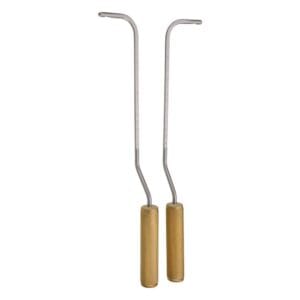
Engineered with sharp triangular blades angled at 45 degrees for lifting retained posterior molar roots once adjacent socket access is established. High torsional yield strength prevents blade deformation.

Request Specification →
Warwick James apical elevator set

Warwick-James & Heidbrink Elevators

Apical FragmentsMicro-Fine BladeStraight & Angled

Fine-tipped extraction instruments designed specifically for retrieving broken apical root tips deep within the periodontal socket without causing extensive cortical plate trauma.

Request Specification →
Coupland heavy duty root elevator

Coupland Heavy-Duty Elevators

Size 1, 2, 3Gouge-Shaped TipHigh Strength

Features a robust gouge-shaped blade with parallel side walls, designed for wedging into bone sockets during dense bone extractions. Hardened to HRC 52 to resist nicking and deformation.

Request Specification →

Dental Root Elevator Technical Specification Matrix

The following engineering data table outlines standard production parameters for global B2B procurement tenders and private-label orders:

Elevator Pattern Tip Width Range Blade Geometry Steel Grade Hardness (HRC) Primary Application Sterilisation Limits
Bein Standard 2.0mm – 4.5mm Straight Concave Bevel AISI 420 Martensitic 48 – 50 HRC Universal Root Elevation > 500 Autoclave Cycles
Luxating Hyotome 1.5mm – 5.0mm Tapered Ultra-Thin Flat AISI 420 High-Carbon 50 – 52 HRC Atraumatic PDL Severing > 500 Autoclave Cycles
Cryer Left / Right 3.0mm – 4.0mm Triangular Angled 45° AISI 420 Martensitic 49 – 51 HRC Mandibular Molar Roots > 500 Autoclave Cycles
Coupland Gouge 3.0mm – 4.5mm Parallel Deep Gouge AISI 420 Martensitic 50 – 52 HRC Heavy Dense Bone Wedging > 500 Autoclave Cycles
Heidbrink Apex 1.2mm – 2.0mm Micro Needle Apex Tip AISI 420 / Cryo Treated 50 – 52 HRC Deep Root Tip Extraction > 500 Autoclave Cycles
Warwick-James 2.0mm – 2.5mm Flat Curved Blade AISI 420 Martensitic 48 – 50 HRC Impacted 3rd Molar Luxation > 500 Autoclave Cycles
Get a Quote
Industry Intelligence

Future Sourcing & Manufacturing Trends in Dental Instrumentation

Strategic market analysis for dental product brand owners, importers, and clinical procurement teams preparing for 2025–2030 supply chain changes.

1. Global Demand Shift Toward Preservation-First Extractors

With the global rise in immediate dental implant placement, clinical protocols are shifting away from aggressive bone-levering instruments toward micro-luxating elevators and periotome-elevator hybrids. Global buyers are increasingly sourcing instruments with ultra-thin blade profiles (1.2mm to 2.5mm) that glide into the periodontal ligament space with minimal disruption to the buccal bone plate. Sialkot manufacturers capable of producing high-hardness thin blades without brittle snapping are capturing significant market share from traditional European brands.

2. Titanium Nitride (TiN) & PVD Ceramic Coating Integration

To reduce surface friction and extend cutting edge sharpness, high-end dental catalogs are adopting Physical Vapor Deposition (PVD) coatings. Gold Titanium Nitride (TiN), Titanium Aluminum Nitride (TiAlN), and Blue PVD coatings enhance surface hardness up to HV 2500, reducing steel wear and providing distinct color-coding for clinical staff. Fizza Surgical offers factory-integrated PVD coating options across all custom root elevator programs.

3. EU MDR 2017/745 & UDI Regulatory Traceability Mandates

Regulatory frameworks in Europe, the United States, and the GCC region now require mandatory Unique Device Identification (UDI) GS1 DataMatrix laser marking directly on instrument handles. Healthcare distributors must partner with ISO 13485-certified factories capable of supplying complete Technical Files, Material Test Reports (MTRs), and EUDAMED registration codes with every production batch. Fizza Surgical's direct-from-factory compliance pack mitigates regulatory risk for global importers.

4. Ergonomic Hollow Handles & Musculoskeletal Strain Prevention

Clinical fatigue and repetitive strain injuries among dental practitioners are driving demand for lightweight, large-diameter hollow handles (10mm to 12mm diameter). By utilizing precision deep-drawing and TIG welding of AISI 304 hollow handles paired with hardened AISI 420 blades, modern root elevators reduce overall instrument weight by up to 35% while retaining full torsional strength.

Fizza Surgical International Sialkot, Pakistan
Direct Factory OEM Advantage

Why Global Dental Buyers Trust Fizza Surgical International

Since 1980, Fizza Surgical International has operated as a vertically integrated manufacturer in Sialkot, Pakistan—the recognized global cluster for surgical hand instrument forging. By eliminating trading intermediaries, we provide hospital groups, dental supply brands, and government tenders with direct control over metallurgical quality, delivery schedules, and custom branding specifications.

Our dedicated dental forging division produces over 25,000 surgical and dental patterns, adhering strictly to DIN 58298 and ISO 7103 dimensional guidelines.

1980Established
German AISI 420Steel Grade
300 unitsOEM MOQ
  • Certified QMS: DEKRA-audited ISO 13485:2016 and ISO 9001:2015 quality management systems.
  • Regulatory Clearance: CE marked under EU MDR 2017/745 Class I, registered with US FDA (Reg. #3019842214) and EUDAMED.
  • Rigorous Inspection: 100% optical alignment check, tip hardness verification (HRC 48-52), and passivated anti-rust validation.
  • OEM Flexibility: Private label laser marking, custom handle designs, color-coded rings, and custom kit packaging from 300 units.
  • Comprehensive Logistics: 10–20 working day export turnaround via DHL, FedEx, air or sea freight with complete export documentation.
0Instrument Patterns
0Export Countries
0Forging Since
0Order Quality Rate

Source High-Precision Dental Root Elevators Direct From Sialkot

Partner with an established ISO 13485:2016 manufacturer. Contact our export desk today for volume pricing, sample requests, and OEM contract manufacturing technical specs.

B2B Procurement Intelligence

Frequently Asked Questions: Global Sourcing & Engineering

Technical answers to common questions asked by international buyers, purchasing directors, and medical device regulators.

Fizza Surgical dental root elevators are forged exclusively from high-grade German martensitic stainless steel AISI 420 (X20Cr13 / X30Cr13). Working tips are vacuum hardened to achieve an optimal Rockwell Hardness of HRC 48–52, providing high torsional rigidity, fracture resistance, and long-term edge sharpness through repeated 134°C autoclave sterilisation cycles.

Standard dental root elevators (such as Bein or Coupland patterns) are engineered with thicker, concave working blades designed to act as levers for applying rotational force and wedge torque to displace the root. Luxating elevators feature ultra-thin, razor-sharp tapered tips designed to cut the periodontal ligament (PDL) circumferentially by inserting axially along the root surface with minimal mechanical leverage, reducing trauma to the surrounding alveolar bone.

Our minimum order quantity for custom OEM private label branding is 300 units per elevator pattern or mixed kit configuration. This turnkey service includes high-precision fiber laser etching of your brand logo, custom catalog reference numbers, ergonomic handle pattern customization, and customized medical pouch or box packaging.

Yes. Fizza Surgical International operates an ISO 13485:2016 and ISO 9001:2015 certified quality management system audited by DEKRA. All reusable dental root elevators are CE marked as Class I medical devices under EU Regulation MDR 2017/745 with EUDAMED registration and are registered under US FDA Establishment Registration 3019842214.

We supply dental root elevators in multiple handle configurations, including classic octagonal solid handles, lightweight hollow anatomical handles, cross-serrated anti-slip grip handles, and T-bar handles for high-leverage posterior elevators. Available surface finishes include satin matte (glare-free), bright mirror polish, and high-durability Titanium Nitride (TiN) gold or blue PVD coatings for enhanced wear resistance.

Every elevator blade undergoes computerized heat treatment followed by sub-zero cryogenic quenching (-80°C) to refine the internal grain matrix of the stainless steel. Working tips undergo 100% mechanical torque stress testing up to 8.5 Nm and visual inspection under optical comparators to ensure conformity to ISO 7103 and DIN 58298 standards.

Evaluation samples are dispatched within 3–5 business days for clinical assessment. Bulk production orders are processed and dispatched within 10–20 working days. We manage global export logistics via DHL, FedEx, air freight, or ocean freight, complete with Certificate of Origin, Material Test Certificates, and Declarations of Conformity.

Request Factory Direct Quotation & Technical Specifications

Speak directly with our Sialkot manufacturing engineers for OEM quotes, catalog requests, and bulk distributor pricing.

Get a Quote