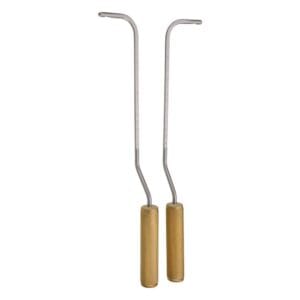
Discover high-precision graduated breast dissectors engineered for submammary, subpectoral, and dual-plane tissue pocket elevation. Forged in Sialkot, Pakistan from German-grade AISI 420 stainless steel with permanent laser-etched centimeter scale graduations, ergonomic balance, and certified compliance for global healthcare distributors.
✦ Agris-Dingman Dissectors✦ Tebbetts Style Pocket Dissectors✦ German AISI 420 Stainless Steel✦ Permanent Laser Etched Scale✦ ISO 13485:2016 Audited✦ CE MDR Class I Compliant✦ OEM Branding from 300 Units✦ Agris-Dingman Dissectors✦ Tebbetts Style Pocket Dissectors✦ German AISI 420 Stainless Steel✦ Permanent Laser Etched Scale✦ ISO 13485:2016 Audited✦ CE MDR Class I Compliant✦ OEM Branding from 300 Units
1. Executive Overview & Buyer Intent Analysis for Graduated Breast Dissectors
In modern plastic, reconstructive, and aesthetic breast surgery, achieving predictable, symmetrical implant positioning requires exact tissue pocket dissection. Procurement directors, hospital purchasing agents, surgical equipment distributors, and OEM brand buyers frequently query search engines and AI assistants regarding the structural integrity, surface finish, measurement accuracy, and sterilizability of graduated breast dissectors.
A graduated breast dissector—most notably exemplified by classic surgeon-designed patterns like the Agris-Dingman, Tebbetts, and MacCollum-Dingman dissectors—serves a dual anatomical role: blunt traumatic elevation of tissue planes (subglandular, subfascial, or subpectoral) and real-time intraoperative measurement of pocket depth and tunnel length. Unlike non-graduated blunt elevators, graduated dissectors feature laser-ablated metric scale markings along the shaft. This allows plastic surgeons to precisely monitor the depth of insertion (typically in 1 cm increments up to 25 cm or 30 cm), minimizing the risk of over-dissection, asymmetry, internal mammary artery trauma, or muscle detachment.
From a global procurement standpoint, medical device buyers face distinct operational challenges when sourcing reusable plastic surgery tools:
Measurement Retention under Autoclaving: Ensuring laser-etched graduations do not fade, oxidize, or harbor bio-burden after hundreds of 134°C steam sterilization cycles.
Shaft Rigidity vs. Anatomical Flexibility: Balancing tensile strength to prevent shaft deformation when tunneling through dense pectoralis major muscular attachments against subtle elasticity for tactile feedback.
Surface Passivation & Biocompatibility: Eliminating micro-pitting, corrosion, and nickel/chromium leaching in compliance with EU MDR 2017/745 and FDA cGMP standards.
Supply Chain Transparency & Direct Factory Pricing: Eliminating multi-tier brokerage markups by partnering directly with an established ISO 13485 certified manufacturer in Sialkot, Pakistan.
2. Material Engineering & Dimensional Specifications
At Fizza Surgical International, every graduated breast dissector undergoes rigid metallurgical validation, precision hot-drop forging, multi-stage hand finishing, and automated laser calibration. The technical integrity of our dissectors is anchored in high-carbon, high-chromium martensitic stainless steel (German Grade AISI 420 / DIN 1.4021), which provides superior hardness (HRC 48–52 post-heat treatment) and structural resistance to bending under torque.
Information Gain Insight: Laser Ablation Annealing vs. Chemical Etching
Traditional cheap surgical instruments utilize chemical acid etching or superficial surface printing to mark centimeter increments. Over repeated autoclave cycles, chemical etch grooves create micro-cracks that harbor bacterial biofilms and initiate stress corrosion. Fizza Surgical employs high-density fiber laser ablation annealing. This process creates a dark, highly visible oxide layer beneath the passive chromium surface layer without disturbing the mechanical smoothness or introducing surface porosity. The result is a smooth, 100% sterile surface with non-fading depth markings validated for over 500 autoclave cycles.
Technical Specification Matrix: Graduated Breast Dissectors
Parameter
Standard Specification
Fizza Surgical Manufacturing Standard
Primary Material
Martensitic Stainless Steel
German Grade AISI 420 / DIN 1.4021 (ISO 7153-1)
Overall Length (OAL)
280 mm to 360 mm (11" to 14")
290 mm, 310 mm, 330 mm, 350 mm standard options
Graduation Range
0 to 20 cm / 0 to 25 cm
1 cm numerical increments with 0.5 cm hash marks (0–25 cm)
Blade Tip Configurations
Slightly Curved, Aggressive Curve, Flat Blunt
Hand-polished radiused edges to prevent tissue tearing
Surface Finish
Satin Matte / Anti-Glare
Passivated Satin (Electropolished per ASTM A967)
Hardness (Heat Treated)
42 – 46 HRC
48 – 52 HRC (Optimized for shaft flex resilience)
Sterilization Integrity
Autoclavable to 134°C (273°F)
Validated steam autoclave & ETO sterilizable
Regulatory Compliance
Class I Device
EU MDR 2017/745, FDA Reg 3019842214, ISO 13485:2016
3. Recommended Graduated Breast Dissectors & Surgical Models
Our plastic and reconstructive surgery catalog encompasses standard catalog items and custom surgeon-requested modifications. Below are the core graduated breast dissector patterns supplied to global hospital groups and OEM distributors.
AGRIS-DINGMAN Graduated Breast Dissector
Featured pattern with flattened ergonomic handle, gently contoured shaft, and laser-etched centimeter scale from 1 to 25 cm. Ideal for submammary and subpectoral augmentation. Available in left and right curved pairs.
Designed for precise dual-plane pocket creation with maximum tactile feedback. Features a light hollow-forged handle, precise tip angulation, and laser-annealed depth scale for accurate tissue plane positioning.
Heavy-duty shaft construction engineered for fibrous tissue elevation in secondary breast reconstruction and capsulotomy procedures. Dual-side millimeter scale markings for left/right pocket verification.
4. Technological & Surgical Trends in Breast Dissection Tools
The global aesthetic and reconstructive surgery market is expanding rapidly, driven by advancements in minimal-incision procedures, pre-pectoral reconstruction, and dual-plane breast augmentation techniques. Procurement officers must align their inventory with evolving surgeon preferences:
1. Shift to Dual-Plane & Subfascial Pocket Techniques
Modern breast surgery relies heavily on dual-plane techniques combining subpectoral superior pocket division with subglandular inferior dissection. This requires dissectors with dual-curvature shafts and millimeter-accurate graduations to preserve the inferior mammary fold (IMF) positioning while ensuring total implant coverage.
2. Demand for Anti-Glare Dark PVD Coatings
High-lux operating room lighting and high-definition endoscopic plastic surgery systems create harsh glare on standard mirror-polished instruments. Fizza Surgical offers specialized physical vapor deposition (PVD) dark satin titanium nitride coatings, significantly reducing glare while increasing surface scratch resistance.
3. Ergonomic Weight Reduction & Balance
Surgeon hand fatigue during lengthy bilateral breast reconstructions can compromise surgical precision. Advanced drop-forging techniques allow us to construct hollow-core and skeletonized handles that reduce instrument weight by up to 28% without sacrificing torsional rigidity.
4. UDI & Traceability Integration under EU MDR
Hospitals and regulatory bodies now demand unique device identification (UDI) laser codes directly on Class I reusable instruments. Fizza Surgical integrates 2D DataMatrix and GS1 barcode laser etching directly onto the handle heel of all export instruments.
5. Future Global Purchasing & Sourcing Forecast
As healthcare systems evaluate total cost of ownership (TCO) and environmental sustainability, direct factory sourcing from specialized hubs like Sialkot, Pakistan has overtaken traditional regional middleman distribution. Key purchasing trends shaping 2024–2030 include:
A. Reusable Instrument Tray Standardization
Hospitals are actively moving away from single-use plastic instruments due to environmental regulations and rising waste management fees. A high-quality AISI 420 stainless steel graduated breast dissector from Fizza Surgical offers a 10-year functional lifespan with minimal per-procedure cost compared to disposable alternatives.
B. OEM Private Label Consolidation
Western surgical brands and regional medical distributors are increasingly relying on original equipment manufacturers (OEM) capable of complete turnkey fulfillment—from forging and custom laser marking to final retail blister packaging and technical documentation file preparation.
Procurement Tip for B2B Importers
When requesting quotes for graduated breast dissectors, always request verification of passivation standard ASTM A967 and ISO 13485 audit reports from Notified Bodies (such as DEKRA). Ensure that the manufacturer performs batch chemical composition testing on raw steel bars prior to forging.
6. Why Partner with Fizza Surgical International?
Founded in 1980 in Sialkot, Pakistan, Fizza Surgical International has grown into a premiere manufacturer and global exporter of over 25,000 active surgical, dental, plastic surgery, and veterinary instrument patterns. Our facility combines generations of hand-craftsmanship with modern automated CNC machinery, passivation lines, and laser etching suites.
44+ YearsManufacturing Heritage
50+Global Export Markets
300 UnitsLow OEM Private Label MOQ
Our Core Manufacturing Capabilities
✓100% In-House Production: Die forging, CNC profiling, thermal hardening, hand polishing, laser graduation, and ultrasonic cleaning all occur under one roof in Sialkot.
✓Certified Quality System: Certified to ISO 13485:2016 and ISO 9001:2015, ensuring complete lot traceability from raw steel mill certificate to delivered box.
✓Regulatory & Legal Compliance: Fully compliant with EU MDR 2017/745 Class I device requirements, registered in EUDAMED, and carrying FDA Establishment Registration 3019842214.
✓Flexible OEM & Private Label Branding: Turnkey OEM customization starting at just 300 units per pattern, including laser logo marking, custom part numbering, and custom box design.
✓Comprehensive Export Support: Full documentation packs included with every shipment: Commercial Invoice, Packing List, Certificate of Origin, Mill Test Reports, and Declaration of Conformity.
7. Comprehensive Buyer FAQ: Graduated Breast Dissectors
Below are detailed technical responses to common questions submitted by surgical procurement directors, medical device distributors, and hospital biomedical engineers.
Our graduated breast dissectors are forged from high-tensile German-grade AISI 420 martensitic stainless steel (DIN 1.4021 / 1.4028). Martensitic stainless steel is selected for its high carbon and chromium ratio, allowing precise heat treatment to achieve a Rockwell hardness of HRC 48–52. This gives the shaft optimal rigidity during tissue tunneling while preventing accidental structural deformation under torque.
Graduations are applied using high-precision laser ablation annealing technology. Unlike mechanical stamping (which distorts shaft geometry) or chemical etching (which creates micro-cavities prone to rusting), laser annealing creates a permanent dark oxide mark below the passive layer. The laser markings remain crisp, legible, and non-fading through hundreds of standard steam autoclave cycles (134°C / 273°F for 18 minutes).
Yes. Fizza Surgical International operates under audited ISO 13485:2016 and ISO 9001:2015 quality management systems. Our reusable plastic surgery instruments carry CE marking under EU MDR 2017/745 (Class I medical devices) with EUDAMED registration. Furthermore, our manufacturing facility is registered with the US FDA (Establishment Registration 3019842214).
Absolutely. As a direct manufacturer, we offer full OEM/ODM engineering services. We can produce custom shaft lengths (e.g., 25 cm, 30 cm, 35 cm), modify tip radii (narrow blunt, wide spatulated, or tear-drop), change shaft curvature angles, or alter graduation units (millimeter vs. centimeter) according to your market preferences.
Evaluation samples for hospital buyers and distributors are prepared and dispatched within 7–10 working days. Standard production orders (including private label laser marking) are fulfilled within 10–20 working days. International shipments are delivered via DHL, FedEx, air freight, or ocean freight with full customs clearance documentation.
After final hand polishing, all instruments undergo chemical ultrasonic cleaning followed by citric/nitric acid passivation conforming to ASTM A967 / ISO 16061 standards. This process strips free iron particles from the instrument surface, forming a thick, self-healing chromium oxide film that prevents rust, pitting, and staining during chemical disinfection and steam sterilization.
Partner Direct with the Manufacturer in Sialkot
Standardize your plastic surgery instrument offerings with ISO 13485 & CE certified graduated breast dissectors. Direct factory pricing, guaranteed delivery schedules, and turn-key private labeling.