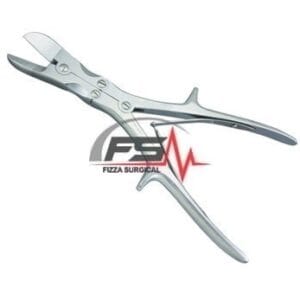
Lambotte Orthopedic Osteotomes
Flat, thin-blade osteotomes designed for clean cortical cuts in hip and femur procedures. Features laser-etched depth marks and a wide impact head.
 Surgical Instrument Manufacturer
 Fizza Surgical International manufactures premium bi-beveled orthopedic osteotomes, bone chisels, gouges, and rasps engineered for clean osteotomies, precise bone harvesting, and controlled axial force transmission. Certified under ISO 13485:2016 and compliant with EU MDR Class I standards.
Hardened to 50-54 HRC via vacuum heat treatment to eliminate edge dulling and tip chipping under repeated heavy mallet blows.
Forged, ground, hand-finished, passivated, and laser-marked under one roof in Sialkot, Pakistan. OEM starting at 300 units.
Fast global dispatch within 10–20 days via DHL, FedEx, air or sea freight with comprehensive EU MDR technical documentation.
Chemical acid passivation per ASTM A967 ensures absolute corrosion resistance over hundreds of steam autoclave sterilization cycles.
In modern orthopedic and traumatology procedures—ranging from total joint arthroplasty revisions to complex osteotomies and maxillofacial reconstructions—precision bone cutting instruments must deliver unyielding structural integrity, sharp cutting edge retention, and ergonomic tactile control. Global healthcare buyers and surgical procurement teams frequently ask critical technical questions regarding steel grades, micro-structural stress limits, and sterilization longevity.
While often grouped together under bone cutting tools, the functional biomechanics of these instruments differ substantially based on their cutting edge bevel profile and surgical intent:
At Fizza Surgical International, our orthopedic osteotomes are forged from premium German-grade AISI 420 (X20Cr13 / 1.4021) martensitic stainless steel. This alloy provides an optimal equilibrium between high tensile strength, elasticity, and micro-hardness. Key manufacturing controls include:
Vacuum Heat Treatment (Hardness 50–54 HRC): Controlled thermal quenching tempers the blade to achieve 50–54 HRC on the Rockwell scale. This exact range ensures the tip remains sharp enough to cleanly transect hard cortical bone while possessing sufficient ductility to absorb heavy mallet impacts without fracturing or micro-chipping.
Chemical Passivation per ASTM A967 / ASTM F899: Post-grinding, all instruments undergo rigorous chemical passivation in nitric and citric acid baths. This process removes free surface iron particles and forms a continuous, passive chromium oxide (Cr₂O₃) protective layer, guaranteeing zero micro-rusting during repeated high-pressure autoclave sterilization cycles (134°C / 273°F).
Fizza Surgical International eliminates intermediary trading markups by controlling the entire supply chain from forging dies to final packaging in Sialkot, Pakistan.
ISO 13485 AUDITED
Every instrument is inspected for tip alignment, bevel symmetry, and impact cap balance before dispatch.
Explore our flagship orthopedic osteotome series, engineered to standardized international patterns including Lambotte, Cottle, Lexer, Stille, and Brun. Each series is available with custom laser millimeter markings, straight or curved shafts, and ergonomic impact handles.
Flat, thin-blade osteotomes designed for clean cortical cuts in hip and femur procedures. Features laser-etched depth marks and a wide impact head.
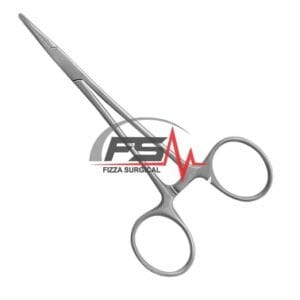
Engineered for delicate maxillofacial, nasal, and hand surgery. Includes precision millimeter depth lines and a solid cross-bar finger stop.
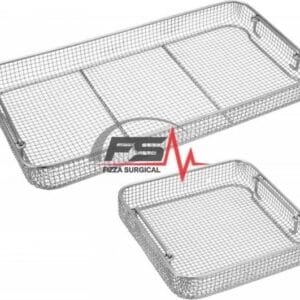
Fitted with ergonomic impact-absorbing synthetic fiber handles to minimize vibration transfer to the surgeon’s hand during prolonged bone resections.
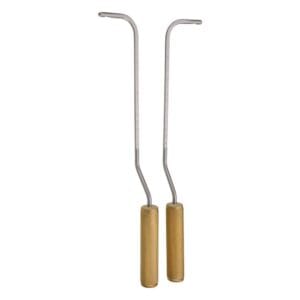
Designed with a textured hollow handle for optimal weight distribution, balance, and fatigue prevention during joint reconstruction surgeries.
Procurement teams can standardise instrument kits using the technical parameters detailed below:
| Pattern Series | Blade Configuration | Width Range (mm) | Overall Length | Handle Type | Steel Grade & Hardness | Primary Application |
|---|---|---|---|---|---|---|
| Lambotte | Straight / Curved, Bi-Beveled | 4mm, 6mm, 10mm, 15mm, 25mm, 38mm | 230mm – 245mm | Flat Solid Stainless Steel | AISI 420 (50-54 HRC) | Major Bone Resection & Hip Arthroplasty |
| Cottle | Graduated Single / Double Bevel | 2mm, 4mm, 7mm, 9mm, 12mm | 180mm – 200mm | Knurled with Cross-Bar Stop | AISI 420 Martensitic | Rhinoplasty & Maxillofacial Osteotomy |
| Lexer | Straight / Curved Bevel & Chisel | 7mm, 10mm, 15mm, 20mm, 30mm | 220mm – 250mm | Ferrozell Impact Synthetic Cap | AISI 420 (52-54 HRC) | Heavy Orthopedic & Traumatology Cuts |
| Stille | Bi-Beveled Tapered Blade | 10mm, 12mm, 15mm, 20mm, 25mm | 200mm | Ergonomic Hollow Stainless Handle | AISI 420 High-Carbon Steel | Knee Revision & Joint Reconstruction |
| Brun / Mini-Lambotte | Micro Bi-Beveled Blade | 2mm, 3mm, 4mm, 6mm, 8mm | 125mm – 170mm | Round Micro-Knurled Shaft | AISI 420 Stainless Steel | Hand, Foot & Small Bone Surgery |
The global market for orthopedic surgical instruments is experiencing rapid modernization driven by advancements in minimally invasive surgical techniques, strict international regulatory mandates, and automated central sterile services department (CSSD) workflows. Modern procurement officers must align with manufacturers capable of delivering technological innovations in blade mechanics and material coatings.
Traditional raw stainless steel surfaces are increasingly giving way to specialized PVD surface coatings such as Titanium Nitride (TiN) and Diamond-Like Carbon (DLC). Applying DLC to the cutting bevel of orthopedic osteotomes provides significant functional advantages:
As surgical techniques shift toward smaller incisions to minimize trauma and accelerate patient recovery, demand for ultra-slender micro-osteotomes has surged. These instruments feature fine blade widths (1.5mm to 4mm) with flexible shafts designed to navigate tight anatomical corridors without compromising structural resistance to torque or impact strain.
Repetitive strike impacts transmitted from surgical mallets through solid stainless steel handles can cause micro-trauma, fatigue, and loss of tactile sensation for orthopedic surgeons. To address this, modern osteotomes incorporate impact-resistant polymer caps (such as PEEK or high-density Ferrozell). These composite materials absorb acoustic shockwaves and mechanical recoil while maintaining full autoclave compatibility.
Under EU MDR 2017/745 and US FDA rules, full traceability of reusable surgical instruments is mandatory. Modern orthopedic osteotomes manufactured by Fizza Surgical feature high-resolution fiber laser etching:
Procuring surgical instruments for hospital networks, ministry tenders, and regional distribution portfolios requires balancing strict regulatory compliance, direct-factory cost management, and reliable supply chain agility.
Global procurement teams are bypassing European trading distributors to partner directly with certified Sialkot forging facilities. Direct sourcing reduces procurement costs by 35% to 50% while opening direct technical lines to engineering staff for custom modifications.
With transitional deadlines approaching for Class I reusable medical devices under EU MDR, hospital tenders require complete Technical Files, Declarations of Conformity, and bio-compatibility data. Fizza Surgical delivers pre-audited technical documentation with every batch.
Distributors are expanding proprietary brands to capture market share. Fizza Surgical supports private label projects with low Minimum Order Quantities (300 units per pattern), custom laser markings, colored ring codings, and branded packaging solutions.
Detailed technical, regulatory, and quality answers to common questions asked by hospital buyers, biomedical engineers, and medical device distributors.
Fizza Surgical manufactures high-impact orthopedic osteotomes using premium German-grade AISI 420 (X20Cr13 / 1.4021) martensitic stainless steel. This alloy undergoes vacuum heat treatment to achieve a Rockwell hardness of 50–54 HRC. Martensitic steel provides high mechanical tensile strength and superior impact toughness, ensuring the cutting edge does not chip, fracture, or roll under heavy mallet strikes when cutting through dense cortical bone.
The core difference lies in blade geometry and functional intended use: An Osteotome features a bi-beveled (symmetrically double-tapered) edge, distributing force evenly to cut straight through bone without deflecting. A Bone Chisel features a single-beveled edge (flat on one side, ground on the other) to shave or split bone along a flat plane. A Bone Gouge features a curved, trough-like blade designed to harvest bone grafts or clean out marrow cavity sections.
Yes. Fizza Surgical International operates an ISO 13485:2016 and ISO 9001:2015 certified Quality Management System. All reusable orthopedic osteotomes are CE marked under EU MDR 2017/745 as Class I reusable surgical devices and listed on EUDAMED. Furthermore, our manufacturing facility maintains US FDA establishment registration (# 3019842214), supplying full batch material certificates and Declarations of Conformity upon dispatch.
We provide full OEM and private-label customization starting at just 300 units per pattern. OEM capabilities include high-precision fiber laser branding (custom company logo, catalog SKU, UDI DataMatrix barcode), specialized handle finishes (micro-knurled round, octagonal, or synthetic Ferrozell impact handles), custom blade bevel angles, and laser-engraved millimeter depth indicators.
Post-forging and grinding, every osteotome undergoes automated chemical passivation in nitric and citric acid baths strictly following ASTM A967 and ASTM F899 standards. This chemical process eliminates free iron contamination from the metal surface, forming an impenetrable chromium oxide passive film. This prevents micro-pitting and rusting over hundreds of standard steam autoclave sterilization cycles (134°C / 273°F).
Standard catalog patterns are dispatched within 7–10 working days. Custom OEM orders and volume tender runs are manufactured and dispatched within 10–20 working days. Evaluation samples are available for hospital clinical trials and CSSD validation prior to full bulk order commitments.
Sialkot, Pakistan
Founded in 1980 in Sialkot, Pakistan—the world's premier cluster for reusable surgical instrument forging—Fizza Surgical International combines traditional artisanal hand-finishing with modern computer-controlled heat treatment and CNC machining processes.
Over 25,000 reusable instrument patterns are actively manufactured under our ISO 13485:2016 quality framework, serving hospital procurement teams, dental suppliers, and surgical distributors across more than 50 countries worldwide.
Streamline your medical instrument supply chain with factory-direct pricing, guaranteed German-grade stainless steel, full EU MDR technical dossiers, and fast 10–20 day export delivery.