 Surgical Instrument Manufacturer Surgical Instrument Manufacturer
 Choosing Bone rongeurs for international procurement requires more than comparing prices or catalog photographs. These instruments must match the intended surgical task, tissue density, access angle, and expected operating frequency. A compact rongeur may suit delicate work, while a stronger double-action model can provide greater control on dense bone. The difference is practical.
Experienced buyers should examine jaw shape, bite width, shaft length, handle design, and closing movement. Stainless steel grade matters, but it is not the only concern. Surface finishing, joint alignment, spring performance, and resistance to repeated sterilization also affect service life. Ask suppliers for dimensional drawings, material specifications, inspection records, and clear product images. Test samples whenever possible. A smooth hinge feels different from a loose one.
Global purchasing adds another layer of responsibility. Buyers should verify packaging quality, labeling, traceability, and documentation required in the destination market. Requirements can vary between countries and healthcare systems, so local regulatory guidance remains essential. Supplier experience, quality-control procedures, and after-sales communication deserve careful review. A low quotation may hide inconsistent tolerances or weak inspection practices. Even experienced buyers can overlook this.
This guide explains how to compare Bone rongeurs with greater confidence, from design details to supplier reliability. It also considers common purchasing mistakes, because selection is rarely perfect on the first attempt. A practical checklist can help. The best choice balances performance, safety, durability, compliance, and total ownership cost rather than focusing on one attractive feature.
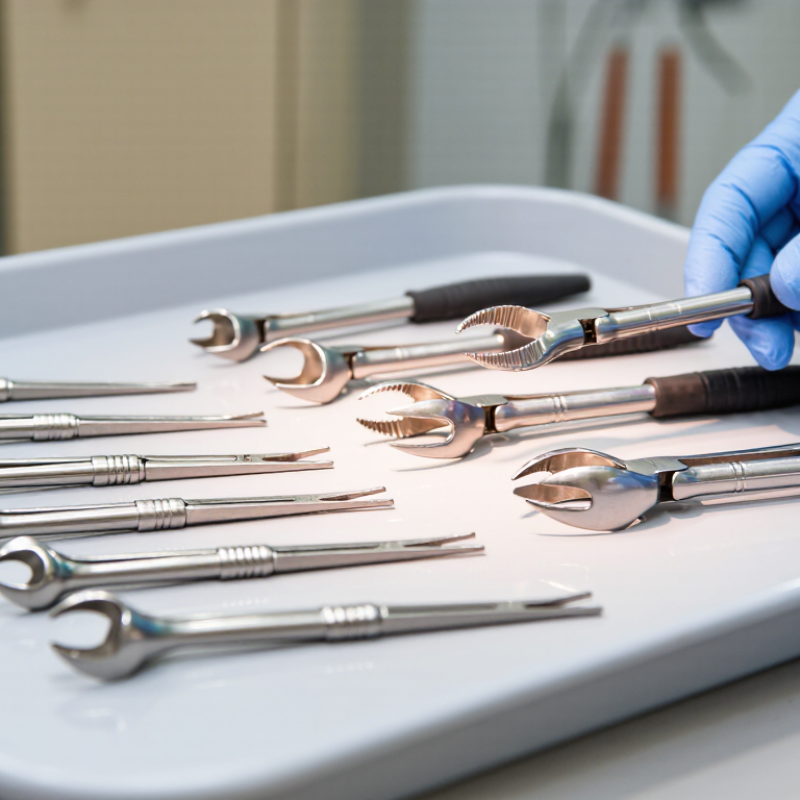
Bone rongeur types determine control, access, and cutting performance during surgery. Kerrison rongeurs provide narrow bites for spinal and cranial decompression. A 1–2 mm jaw suits delicate removal near nerves. Larger jaws remove thicker bone faster, but they demand steadier hand control.
Luer-style rongeurs work well in orthopedic and maxillofacial procedures. Their broader jaws can remove protruding bone and reshape edges. Straight patterns support open access, while angled shafts reach deep or obstructed sites. Double-action designs reduce hand pressure during repeated cuts. According to Grand View Research’s 2024 surgical instruments analysis, the global surgical instruments market continues expanding, driven by procedure volume and hospital investment. That growth makes repeatable quality increasingly important. Yet market growth does not guarantee safe selection. Jaw alignment, spring tension, surface finishing, and sterilization compatibility still require direct inspection.
Tips: Match the bite size to the bone, not only the procedure name. Check the hinge for smooth movement and inspect teeth under bright light. Confirm the instrument’s material and cleaning instructions before purchasing. AAMI ST79 emphasizes validated sterilization practices for reusable surgical instruments. Poor cleaning access can undermine an otherwise precise tool. No selection chart is perfect. Ask surgeons to test the rongeur with gloved hands before bulk procurement.
Match the jaw direction, size, shaft length, and cutting strength to the procedure. An upbiting or downbiting jaw can improve access in narrow spinal fields. Thicker bone may require a stronger, straight design. One shape rarely fits every case.
Smaller cup jaws offer better control near nerves, vessels, and other sensitive structures. A 1 mm or 2 mm jaw can limit tissue disruption. However, removal may become slower in dense bone. Precision has a trade-off.
A wider jaw can remove more bone with each bite. It may suit thicker bone during orthopedic procedures. The surgeon needs stronger hand control. More capacity is not always better.
Choose shaft length according to surgical depth and working access. A slim shaft can improve visibility in a narrow field. A longer shaft may reduce awkward wrist angles in deep cavities. Personal preference is not enough.
Request the declared steel grade, material certificate, and surface-treatment details. Good polishing supports cleaning and corrosion resistance. Passivation can reduce corrosion risks. It cannot fix rough workmanship.
Request validated cleaning, packaging, drying, and steam-sterilization instructions. Confirm temperature, exposure time, and permitted reprocessing cycles. Inspect hinges and joints for retained moisture. Low-temperature compatibility needs test evidence. Sales wording is not proof.
Check jaw alignment, cutting action, spring movement, grip texture, and hinge condition. Look for burrs, cracks, loose joints, and uneven closing pressure. Use magnification when inspecting the hinge. Wet gloves reveal weak grip designs quickly. Small defects matter.
Request samples, batch records, traceability documents, inspection results, and change-control procedures. Test the hinge, jaw alignment, closing force, and package protection. Certificates support consistency, but they do not prove every instrument works. One audit is not enough.
Include samples, testing, freight, insurance, duties, inspection, storage, and possible returns. Calculate the cost per usable instrument, not only the listed price. Confirm minimum orders, lead times, warranty terms, and payment conditions in writing. Leave room for delays. This part is often underestimated.
Choosing the right Bone rongeurs is essential for achieving safe, efficient, and precise bone removal across different surgical procedures. Buyers should first understand the main types, including straight, angled, double-action, and specialty designs, and match each configuration to the required access, cutting depth, and bone density. Important features to compare include jaw shape, opening capacity, bite strength, handle comfort, actuation smoothness, working length, and overall control. A well-matched design can improve surgical visibility, reduce hand fatigue, and support consistent performance.
For global purchasing, material quality, corrosion resistance, sterilization compatibility, and reliable manufacturing standards are equally important. Buyers should evaluate supplier documentation, quality-control processes, product traceability, packaging, lead times, after-sales support, and compliance with applicable medical-device requirements in the target market. Instead of focusing only on unit price, purchasers should calculate total purchasing cost, including shipping, sterilization needs, maintenance, replacement frequency, and training. A careful comparison helps hospitals and distributors select durable, clinically appropriate instruments while managing long-term supply and operational risks.