Choosing the right Instrument sterilizing drums is a practical decision, not a simple purchasing exercise. The drum must protect instruments, support sterilant penetration, and remain reliable during repeated handling. A poorly matched drum can create wet packs, damaged seals, or uncertain sterility.
Dr. William A. Rutala, a respected infection prevention specialist, has stated, “Sterilization is a process, not an event.” That principle matters when comparing drum size, material, filtration, locking systems, and maintenance requirements. Stainless steel may offer strength and easier inspection. Aluminum can reduce weight, but it may require closer attention to dents and surface wear. The best choice depends on the instruments, sterilizer cycle, workflow, and manufacturer’s instructions.
Look closely at the details. Can staff open the lid without touching the sterile interior? Does the filter remain secure after repeated cycles? Are hinges smooth, and are replacement parts available? These questions reveal more than a glossy product photograph. Instrument sterilizing drums should also support clear load identification and routine quality checks. Traceability matters.
No drum is perfect. Even a durable model may perform poorly when overloaded or used outside its validated cycle. This guide therefore considers real handling conditions, not only technical specifications. It also recognizes an uncomfortable point: purchasing the cheapest drum may increase long-term costs through repairs, delays, and reprocessing failures. Reliable selection requires evidence, staff experience, and careful attention to the instructions for use. The right drum should make safe practice easier, not merely look professional on a storage shelf.
What Are Instrument Sterilizing Drums and How Do They Work?
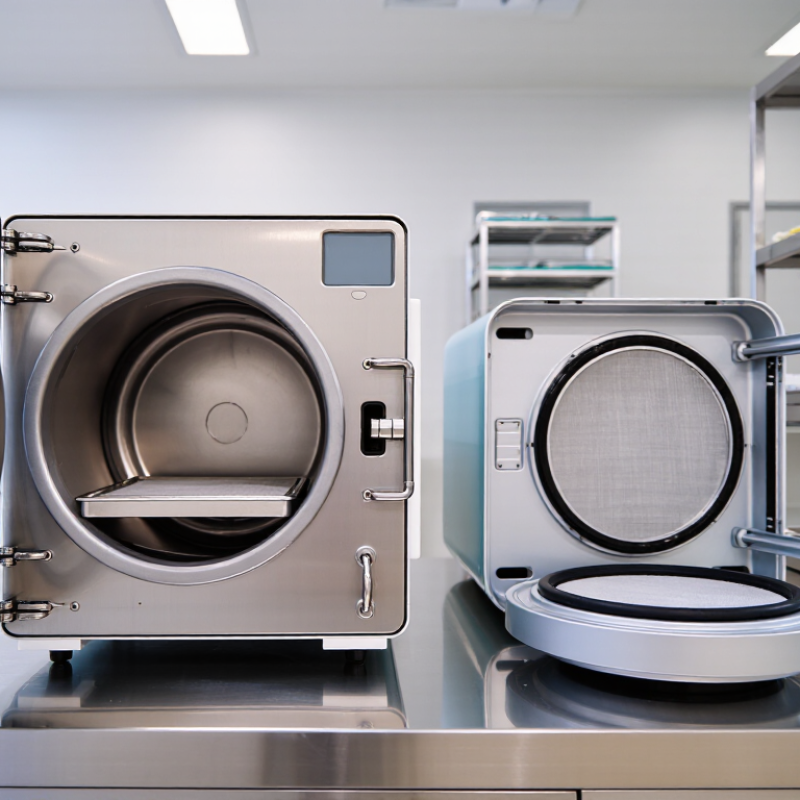
Instrument sterilizing drums are reusable metal containers designed to hold surgical and dental instruments during sterilization. Their perforated walls and lids allow steam, heat, and pressure to reach every exposed surface. After sterilization, the closed drum helps protect the instruments from dust and handling until use.
In a steam sterilizer, water becomes pressurized steam and enters the drum through its openings. The steam must contact instruments directly for the required time and temperature. Air pockets can block this contact. That is why instruments should be cleaned, opened, and arranged without crowding. Once the cycle ends, the drum needs proper drying before removal. Moisture can encourage contamination and corrosion. This step is easy to underestimate.
Choosing the right drum involves more than checking its size. Select a model that fits the sterilizer chamber and supports the facility’s validated cycle. Check the locking mechanism, ventilation design, handle strength, and corrosion resistance. A larger drum is not automatically better. It may restrict steam movement or encourage overloading. Internal trays should keep instruments separated, especially hinged tools and narrow channels. Sterilization indicators can provide useful evidence, but they do not replace routine process monitoring. Staff should inspect the lid, vents, seals, and hinges before every use. Even a spotless drum can perform poorly when damaged. In practice, small dents and worn closures deserve more attention than appearance alone.
Which Sterilizing Drum Size and Capacity Fit Your Instruments?
How to Choose the Best Instrument Sterilizing Drums?
Drum size should follow the instruments, not the sterilizer shelf. Measure the longest instrument first. Then measure the widest bundle, including protective wraps and handles. Leave room.
A drum that is too small can compress packs and block steam contact. A drum that is too large may waste chamber space and encourage overloading. AAMI ST79 emphasizes correct loading, package spacing, and direct contact with the sterilizing agent. These details affect drying and sterility maintenance.
For practical selection, group instruments by procedure. A minor set may need a compact drum, while orthopedic or surgical sets require deeper capacity. Keep hinged instruments open, separate heavy items, and avoid tightly stacking trays. The CDC identifies steam sterilization as the preferred method for heat-stable critical instruments. WHO’s 2022 Global report on infection prevention and control estimates that healthcare-associated infections affect about 7% of patients in high-income countries and 15% in low- and middle-income countries. Reliable sterilization preparation matters.
Calculate usable capacity from actual loading space, not the drum’s advertised volume. A simple trial load can reveal awkward gaps, unstable stacking, or poor lid clearance. I would choose a slightly larger drum when instruments fit loosely and circulation remains unobstructed. Bigger is not automatically better. Staff handling also matters; an oversized, heavy drum may increase lifting strain and handling errors. Review the load after several cycles. Your first choice may need revision.
How to Choose the Best Instrument Sterilizing Drums? - Which Sterilizing Drum Size and Capacity Fit Your Instruments?
Drum Size
(Diameter × Height) |
Approx. Nominal Volume |
Recommended Working Load |
Suggested Maximum Instrument Length |
Suitable Instrument Set |
Loading Guidance |
Best Choice When |
10 × 20 cm
(4 × 8 in) |
Approx. 1.6 L |
Approx. 1.0 L |
Up to 18 cm |
Small dressing sets, basic minor-procedure instruments, forceps, scissors and needle holders |
Place instruments loosely and keep hinged instruments open. Avoid compressing textiles or pouches. |
A compact drum is needed for a small number of short instruments. |
15 × 30 cm
(6 × 12 in) |
Approx. 5.3 L |
Approx. 3.4 L |
Up to 28 cm |
Routine minor-surgery sets, dental instruments, small gynecological or outpatient procedure sets |
Arrange instruments in a single loose layer where possible, with tips and hinges protected. |
A general-purpose size is required for everyday outpatient procedures. |
20 × 30 cm
(8 × 12 in) |
Approx. 9.4 L |
Approx. 6.0 L |
Up to 28 cm |
Medium surgical sets, orthopedic hand instruments, multiple wrapped instrument trays or larger dressing sets |
Separate heavy instruments from delicate items and leave space for effective steam circulation. |
The set contains more instruments but does not require extra instrument length. |
25 × 40 cm
(10 × 16 in) |
Approx. 19.6 L |
Approx. 12.8 L |
Up to 38 cm |
Large general-surgery sets, longer retractors, suction accessories and instrument groups with extended handles |
Distribute the load evenly. Do not fill the full internal volume because a free steam path is necessary. |
Longer instruments and medium-to-large sets must be processed together. |
30 × 50 cm
(12 × 20 in) |
Approx. 35.3 L |
Approx. 23.0 L |
Up to 48 cm |
Large specialty sets, long-handled instruments, extensive procedure sets and multiple compatible instrument groups |
Confirm the sterilizer chamber dimensions and weight limit before selecting this size. Use internal separators when available. |
High-volume processing is required and the sterilizer can safely accommodate a large drum. |
|
Selection note: Nominal volumes are approximate geometric estimates for cylindrical drums using the stated dimensions. The recommended working load is intentionally lower than the nominal volume to preserve steam circulation and drying space. Always verify the drum’s actual internal dimensions, sterilizer chamber compatibility, maximum load, sterilization cycle requirements and the instrument manufacturer’s instructions before use.
|
How Do Material and Construction Affect Drum Performance?
Choosing an instrument sterilizing drum requires more than checking its size. Material and construction directly affect steam circulation, durability, and cleaning reliability. High-quality stainless steel usually resists corrosion, repeated heating, and chemical exposure better than ordinary metal. It should also have a smooth interior, because scratches and rough welds can trap residue. A polished surface looks reassuring, but appearance alone proves little.
The drum’s perforations need careful attention. Evenly spaced openings allow steam to reach wrapped instruments and escape during drying. Holes that are too small may slow circulation, while oversized openings can reduce protection during storage. A well-fitted lid, secure clamps, and heat-resistant handles improve daily handling. The seal should remain flexible after repeated cycles, although no gasket lasts forever. Inspect it regularly for flattening, cracks, or looseness.
Construction details often reveal practical quality. Reinforced edges help prevent deformation when the drum is loaded or moved. Rounded corners make washing easier and reduce accidental contact with sharp metal. In my experience, a drum that feels slightly heavier often seems more stable, but weight alone is not proof of better performance. I would also check whether the design supports easy inspection and maintenance. Small manufacturing flaws can matter. A reliable drum should come with clear cleaning guidance, compatible sterilization instructions, and traceable quality information from the supplier.
Which Sterilization Method Should the Drum Support?
Choosing the best instrument sterilizing drum begins with one question: which sterilization method must it support?
For heat-resistant surgical instruments, saturated steam is usually the practical choice. The drum should allow steam to enter freely and air to escape completely. Check its filter, gasket, latch, and drainage design. A tightly packed drum may look secure but still block sterilant contact. It happens more often than expected. Follow the validated cycle, not an assumed timing.
Dry heat requires different evaluation. The drum must tolerate prolonged high temperatures without warping, discoloring, or damaging seals. Materials that perform well in steam may fail during dry heat exposure. Low-temperature methods need even more caution. Gas, vapor, or plasma systems may require specific packaging, ventilation, and material compatibility. A conventional drum may not be approved for these cycles.
Read the drum’s instructions for use carefully. Confirm the intended sterilizer, load size, temperature range, and maximum reuse conditions. Also review local facility procedures and applicable professional standards. A chemical indicator can show exposure, but it cannot prove that every instrument was sterile. Biological monitoring and process records provide stronger control. I have seen selection decisions focus on capacity alone. That is a weak measure. The right drum supports the complete validated process, protects instrument condition, and permits safe handling after sterilization.
How to Choose the Best Instrument Sterilizing Drums?
Which Sterilization Method Should the Drum Support?
The chart compares representative minimum exposure times used in widely recognized sterilization cycles.
Steam sterilization is generally preferred for heat- and moisture-resistant surgical instruments because it is
fast, effective, and easier to validate. Dry heat requires substantially longer exposure times and higher
temperatures, so the drum must be specifically rated for that process.
When selecting a sterilizing drum, confirm its validated temperature range, airflow or vent design, filter system,
load capacity, and compatibility with the sterilizer cycle. Exposure time alone does not guarantee sterility;
the complete cycle must be validated for the specific drum and instrument load.
Conclusion
Instrument sterilizing drums are reusable containers designed to hold surgical and medical instruments during sterilization, storage, and transport. Their perforated or filtered structure allows sterilizing agents such as steam to circulate effectively while helping protect the contents from contamination afterward. When selecting a drum, consider the number, size, and shape of the instruments it must accommodate. The right capacity should provide organized space without overcrowding, while still being practical to handle and store.
Material and construction strongly influence durability, heat resistance, and ease of cleaning. High-quality, corrosion-resistant materials and secure closures can support reliable daily use. The drum should also be compatible with the intended sterilization method, particularly the required temperature, pressure, and exposure conditions. Finally, evaluate safety features, maintenance requirements, replacement parts, and expected service life. A well-designed option should be easy to inspect, clean, assemble, and operate, offering dependable performance and long-term value without unnecessary complexity.
 Surgical Instrument Manufacturer