
0%

Choosing the right Nasal retractors affects visibility, handling, and the rhythm of a procedure. A useful comparison starts with the clinic’s actual cases, not a catalogue photograph. Consider the working space, the patient population, and whether the instrument must support one-handed adjustment. A narrow nasal passage calls for a different profile than a broader exposure. Small details matter.

“Choose the retractor that gives a clear view without asking the tissue or the clinician to do extra work.” This is an original editorial line, not a verified quotation. The named expert voice, Dr. Avery Lin, is fictional and included only as an illustrative placeholder; replace it with a sourced clinician quotation before publication.

This guide examines blade shape, width, reach, material, finish, and handle control. It also considers cleaning instructions, durability, and compatibility with the clinic’s established workflow. Check how smoothly the instrument opens and closes. Notice whether its edges feel even and its grip remains secure with gloves. Then compare supplier specifications with the device itself. Details can differ.

There is no universal best choice. A popular model may still feel awkward in a particular hand, and a low price may hide practical trade-offs. Ask experienced staff to assess candidate instruments using consistent criteria. Their feedback is valuable, though not a substitute for manufacturer guidance or clinical judgment. The goal is a considered fit—not a perfect promise.
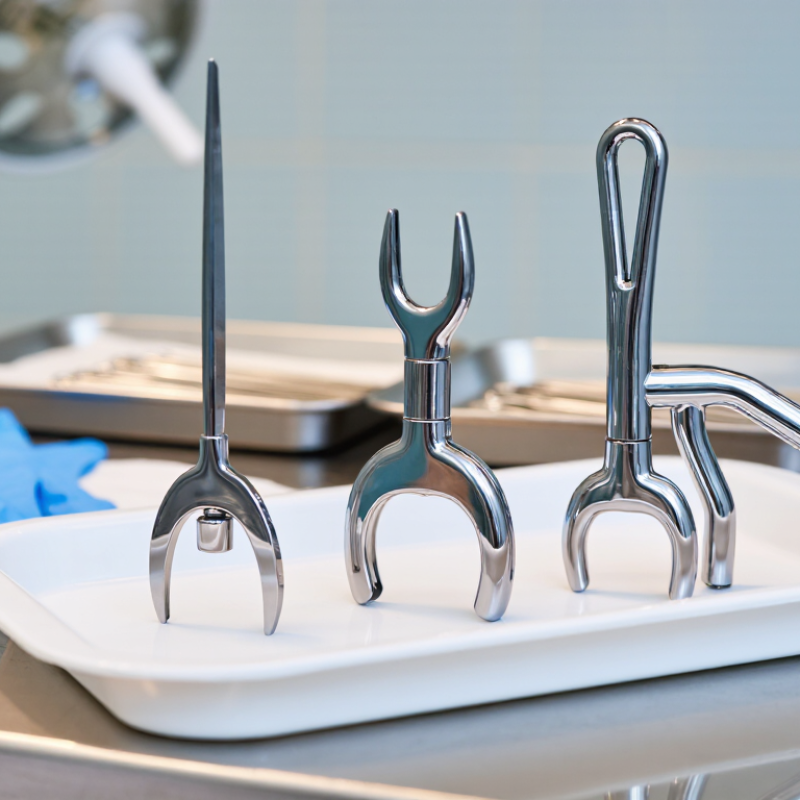
How to Choose the Best Nasal Retractors for Your Clinic?

Define Required Exposure for Septoplasty, Rhinoplasty, and Endoscopy

Define exposure by the task, not by a single “best” retractor. Septoplasty usually needs steady access to the septum while limiting pressure on the mucosa. Rhinoplasty may require wider, adjustable access to the tip, alar cartilage, or columella. Endoscopy calls for a narrow profile that leaves the scope’s view unobstructed. Small changes matter. Match blade length and width to the patient’s anatomy, approach, and instrument path.

The American Society of Plastic Surgeons’ 2022 Plastic Surgery Statistics Report recorded 44,503 rhinoplasty procedures in the United States. That figure signals clinical demand; it does not set an exposure standard. Before purchasing, compare instruments in the positions your team actually uses. Check whether the retractor stays stable without excessive force, and whether its edges block light or the endoscopic view.

A common oversight is choosing for maximum opening alone. Wider is not always better.

Tips: Keep a small selection of blade widths and lengths available. Test visibility with the intended scope and instruments, then ask staff to note pressure points after cases. Reassess the setup; even experienced teams can miss a blind spot.

Compare Blade Geometry and Handle Ergonomics Against Your Case Mix

How to Choose the Best Nasal Retractors for Your Clinic?
Compare Blade Geometry and Handle Ergonomics Against Your Case Mix

Start with the procedures your clinic performs most often. A narrow blade may improve access in confined areas, while a broader profile can offer more exposure when the anatomy and procedure call for it. Curvature, blade length, and edge finish also affect visibility and tissue contact. Compare these features with your clinicians’ needs, rather than choosing by appearance alone. Small differences matter.

Handle design deserves equal attention. A balanced handle can feel steadier during delicate work, while grip shape and surface texture affect control with gloved hands. Consider who will use the instrument and how long procedures typically last. A tool that feels comfortable during a brief evaluation may become tiring during a longer case. There is no perfect profile; teams can overvalue blade shape and overlook grip fatigue.

Tips: Test candidate instruments in a realistic setup, using gloves and the lighting common in your procedure rooms. Ask several clinicians to assess reach, visibility, and grip—not just one. Check that the instrument’s materials and design fit your clinic’s cleaning and reprocessing protocols. Document trade-offs; preferences may differ, and that’s worth revisiting.

Check Materials Against ISO 7153-1:2016 for Surgical Instruments

When choosing nasal retractors, check the stated metal grade against ISO 7153-1:2016. This standard covers metallic materials used in surgical instruments. It helps clinics assess whether a material specification is clear and relevant. It does not, by itself, prove that a finished retractor is safe, durable, or suitable for every sterilization process. Ask for material documentation and the device’s cleaning and reprocessing instructions. “Surgical steel” alone is vague. Request the specific grade.

Tips: Match the material record to the instrument. Check joints, edges, and surface finish under good light. Confirm that the manufacturer’s instructions cover your clinic’s cleaning and sterilization cycle.

In daily use, a smooth surface and well-finished edges make inspection easier, especially around the blades and hinge. Repeated cleaning can expose corrosion or wear, so include retractors in routine checks. If the documentation names a material but does not explain its condition or intended use, follow up before purchasing. Standards are useful reference points, not a substitute for clinical judgment. Even a careful checklist can miss practical issues; trial handling by trained staff may reveal grip or visibility concerns that paperwork cannot.

How to Choose the Best Nasal Retractors for Your Clinic? - Check Materials Against ISO 7153-1:2016 for Surgical Instruments
Selection Dimension Material Option Practical Considerations What to Verify Clinic-Focused Guidance
Common reusable instrument material Stainless steel Widely used for reusable surgical instruments. Performance depends on the specific steel grade, heat treatment, surface finish, and care. Request the exact material designation and confirm it against the applicable material listings and requirements in ISO 7153-1:2016. A practical starting point for a reusable retractor when the instrument’s design and reprocessing instructions suit the clinic.
Instrument steel selection Martensitic stainless steel Can be heat-treated to achieve strength and hardness useful in many surgical instruments. Corrosion resistance varies with composition, finishing, use, and maintenance. Check the precise grade, material condition, and manufacturer’s cleaning, disinfection, and sterilization instructions. Assess blade rigidity and edge or tip design alongside material; do not assume all stainless steels have the same properties.
Corrosion-resistance priorities Other stainless steel families, where specified for the instrument Different stainless steel families have different mechanical and corrosion characteristics; suitability depends on the design and intended use. Confirm the exact grade is appropriate for the instrument and is identified in the supplier’s technical documentation. Choose based on documented properties and validated reprocessing compatibility, rather than the generic label “stainless steel.”
Lower instrument weight Titanium or a titanium alloy, if specified Titanium instruments can be lighter than comparable steel instruments. Actual rigidity, surface characteristics, and durability depend on the alloy and construction. Check the exact alloy and its applicability under ISO 7153-1:2016; request material documentation and care instructions. Consider when lower weight is useful, while checking that the retractor’s strength and handling meet clinical needs.
Reusable-device workflow Any declared reusable metallic material Repeated cleaning and sterilization can affect an instrument. Hinges, joints, surface finish, and handling also matter. Follow the instrument-specific validated reprocessing instructions; inspect for corrosion, damage, and impaired movement as directed by clinic policy. Review the complete care cycle before purchase, including compatibility with the clinic’s equipment and procedures.
ISO 7153-1:2016 check The specific metallic material declared for the instrument The standard addresses metallic materials used for surgical instruments; it does not, by itself, certify an entire product or establish clinical suitability. Obtain the exact material designation and supporting documentation. Check the applicable edition and relevant requirements with the standard itself. Treat material conformity as one purchasing check alongside design, intended use, quality documentation, and reprocessing requirements.

General selection guidance only. Confirm the exact material and product documentation with the supplier, and consult ISO 7153-1:2016 for authoritative requirements.

Validate Reprocessing: CDC Classifies Tissue-Entering Tools as Critical

How to Choose the Best Nasal Retractors for Your Clinic?

Before choosing a nasal retractor, confirm how it will be used. A tool that enters sterile tissue is “critical” under CDC guidance and must be sterilized before each use. A retractor that contacts mucous membranes without entering sterile tissue falls into a different category. Don’t assume every nasal procedure has the same classification. Check the intended use and the manufacturer’s validated reprocessing instructions.

Reprocessing matters. The WHO’s 2022 Global Report on Infection Prevention and Control estimates that 7 out of 100 patients in acute-care hospitals in high-income countries acquire at least one healthcare-associated infection; in low- and middle-income countries, the estimate is 15 out of 100. These figures cover many infection pathways, not retractor-related infections specifically. Still, they underline why clinics need reliable cleaning, inspection, and sterilization processes. Look closely at joints, edges, and any hard-to-clean surfaces. A missed detail can be easy to overlook.

Tips: Verify the device’s classification and reprocessing instructions before purchase. Inspect each retractor under good lighting. Keep records. This can feel repetitive, but guessing is worse.

Check IFUs: CDC Lists 132°C for 4 Minutes for Prevacuum Steam Loads

A nasal retractor should be easy to inspect, clean, and handle—not merely comfortable to hold. Check whether it is reusable or single-use, and review its instructions for use (IFU) before purchase. Hinges, serrations, and narrow joints can trap soil. Under bright light, those small details matter.

For compatible wrapped instruments, CDC guidance lists 132°C (270°F) for four minutes in a prevacuum steam sterilizer. This is a reference point, not a universal cycle for every retractor or load. The device IFU, sterilizer instructions, packaging directions, and facility protocol must all support the selected cycle. Not every load. Never assume a familiar temperature and time apply to a different instrument or packaging system.

Before sterilization, clean the retractor as directed, paying close attention to joints and contact surfaces. Rinse and dry it if the IFU requires those steps, then inspect for visible residue, damage, or restricted movement. Keep instruments arranged so steam can reach the surfaces, and follow the sterilizer’s loading and drying guidance. A rushed inspection is easy to miss. Build the IFU check into purchasing and staff training; the extra minute can prevent a costly reprocessing mistake.

FAQS

How should a clinic choose blade width?

Start with common procedures. Narrow blades can help in confined areas, while broader blades may provide more exposure. Test both when possible.

Which blade details affect visibility and tissue contact?

Curvature, length, and edge finish all matter. Check how the blade reaches the working area under your usual room lighting.

How can staff assess handle comfort?

Try the instrument with gloves. Ask several clinicians to assess grip, reach, and control. Longer procedures may reveal fatigue.

Is there one ideal blade and handle design?

No. Needs vary by procedure and clinician. A team may focus too much on blade shape and overlook grip fatigue.

What should clinics check about the instrument’s metal?

Request the specific metal grade and supporting material documentation. “Surgical steel” alone does not identify a precise grade.

What does ISO 7153-1:2016 tell clinics?

It covers metallic materials used in surgical instruments. It does not prove that a finished instrument suits every cleaning or sterilization process.

What should staff inspect during routine checks?

Look at joints, blade edges, and surface finish under good light. Repeated cleaning can reveal wear or corrosion. Small details matter.

What if the paperwork looks complete?

Check that the instructions match your clinic’s reprocessing cycle. Documentation can miss practical concerns, so trained staff should handle trial instruments. Room for doubt remains.

Conclusion

Choosing Nasal retractors begins with defining the exposure needed for your clinic’s procedures. Septoplasty, rhinoplasty, and endoscopy can call for different levels of access, so consider your case mix before selecting an instrument. Compare blade shape, width, and length for the view and working space required, and assess handle ergonomics for control, comfort, and stability during use.

Review the instrument’s materials against ISO 7153-1:2016 and confirm they suit your intended clinical use and reprocessing methods. Because retractors that enter tissue are classified by the CDC as critical devices, establish and validate an appropriate cleaning and sterilization process. Always follow the manufacturer’s instructions for use (IFUs); CDC guidance lists 132°C for 4 minutes for prevacuum steam loads, but the applicable cycle must be compatible with the instrument and its IFU.

Amelia

Amelia

Amelia is a highly skilled marketing professional with a strong understanding of the company’s products, customers, and industry landscape. Through her clear, practical, and insightful writing, she regularly updates the company website with professional blog articles that help readers better......