 Surgical Instrument Manufacturer Surgical Instrument Manufacturer
Choosing the right Cuticle scissors is a small decision with a noticeable effect on comfort, control, and finish. A narrow, well-aligned blade can help trim loose cuticle without tugging at the surrounding skin. Yet appearance alone tells you little about balance or precision. The U.S. Bureau of Labor Statistics projects employment for manicurists and pedicurists to grow 7% from 2023 to 2033, faster than the average for all occupations. Its Occupational Outlook Handbook points to a continuing professional field, though that figure does not measure demand for any particular tool. Grand View Research’s nail-care market report offers broader context on product and category trends, but market growth cannot tell you which scissors will suit your hand. The details matter. Consider blade shape, tip alignment, handle comfort, steel quality, and how easily the tool can be cleaned. A pair that feels steady between your fingers may be more useful than one with impressive packaging.
This guide explains how to compare those features and choose scissors for home or salon use. Look for smooth opening and closing, a secure grip, and blades that meet evenly at the tips. Avoid using the tool to cut living skin; trim only loose, visible dead cuticle, and stop if the area hurts or bleeds. “Professional” on a label is not proof of quality. A higher price is not proof, either. It is easy to focus on sharpness and forget control. That is a mistake worth reconsidering. Small differences become obvious when working close to delicate skin, especially under bright task lighting. We will weigh practical evidence over marketing claims, while recognizing that hand size and personal technique affect comfort. Use the criteria here to make a considered choice, not to chase a perfect tool.
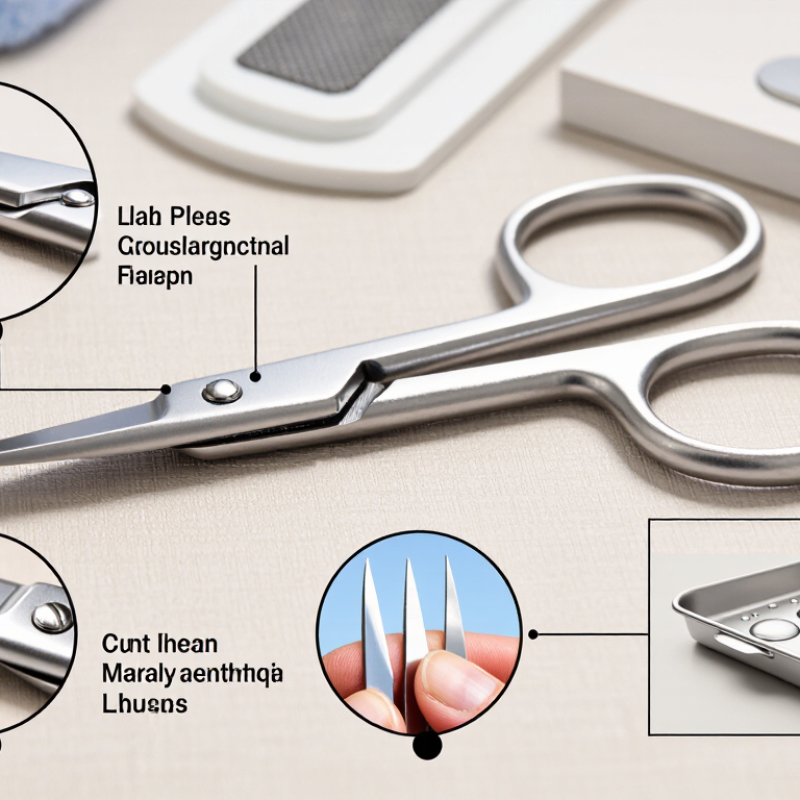
Cuticle scissors are designed for small, controlled trimming around the nail, not for cutting the nail itself. Their slim blades reach narrow sidewalls, while a fine, curved tip can follow the nail’s contour. That shape offers precision, but it also makes careless pressure risky. The cuticle helps protect the area where skin meets nail. Usually, trim only loose, dead skin; do not cut attached or painful tissue.
Look closely at the blades before choosing a pair. They should meet evenly at the tips, without a visible gap or snagging motion. A smooth pivot helps the blades open and close with light pressure. Handles should feel steady in your fingers, not cramped or slippery. Try holding the scissors as you would during grooming. A tool that feels precise in a display may feel awkward in your hand.
Clean the scissors after each use and dry them fully, especially around the joint. Store them with the tips protected to prevent damage. If the blades pull at skin, stop rather than pressing harder. There is no universally best shape: nail contours, grip, and comfort vary. Even a well-made pair takes practice, and that part is easy to underestimate.
Curved blades follow rounded nail edges. Straight blades offer a clearer line near the sidewall. Narrow tips can reach small curves, while broader blades may feel steadier on dry hangnails.
Hold them as you would during a manicure. Your fingers should move freely, and the loops should not pinch. If your wrist twists or your grip feels tense, reconsider the fit.
Open and close the scissors gently. The blades should meet smoothly from tip to base without catching, wobbling, or requiring force. Test under bright light.
Not necessarily. A fine, curved tip can follow nail edges, but an extremely pointed tip may feel less forgiving. Small mistakes are easy to make.
Choose a handle that feels balanced and secure. A larger loop may feel steadier, but hand size and grip habits vary. Try several slow openings.
Wipe away residue, dry the blades, and follow the maker’s cleaning instructions. Store them in a dry case, not loose in a damp drawer.
Dull or misaligned blades can tug instead of cut. Check the tips and hinge regularly. A tiny flaw may hide near the joint.
No. Check blade alignment, hinge stability, repair options, and cleaning guidance. Packaging can look convincing, but the tool’s fit and upkeep matter more.
Choosing the best cuticle scissors starts with understanding their purpose: they are designed to trim loose cuticle skin carefully, not to cut nails or healthy skin. Consider the blade shape and size in relation to your needs. Fine, narrow blades can offer precision in small areas, while a shape that feels easy to guide may help you work more comfortably.
Assess the steel quality, sharpness, and overall construction, since clean, controlled cutting depends on well-aligned blades and durable materials. Handle comfort matters too: a balanced pair with a secure grip can make detailed work easier. Before choosing, check for practical safety features, such as a protective cap, and consider how easy the scissors are to clean and maintain. The best Cuticle scissors are those that feel comfortable, provide reliable control, and offer lasting value for your routine.