
Surgical Instrument Manufacturer In professional nail care, precise cuticle work depends on more than a sharp edge. The right tool should feel balanced, open smoothly, and allow controlled trimming of loose, dead tissue without tugging. Salon cuticle nippers vary in jaw shape, blade length, handle comfort, and spring tension, so a popular model may not suit every technician. Small details matter. A stiff joint can tire the hand during a busy day, while blades that do not meet cleanly may crush rather than cut.
This guide to top salon cuticle nippers focuses on practical features professionals can assess: cutting alignment, stainless-steel construction, grip, durability, and ease of cleaning according to the maker’s instructions. It also considers how different jaw sizes may suit detailed work or routine salon use. No single pair is ideal for every hand or service. A tool can feel excellent in one hand and awkward in another; that is worth admitting. Careful technique matters, too. Nippers are intended for controlled work on loose cuticle, not forceful cutting of living skin. The comparisons ahead aim to help nail professionals choose with greater confidence, while keeping comfort, precision, and responsible tool care in view.
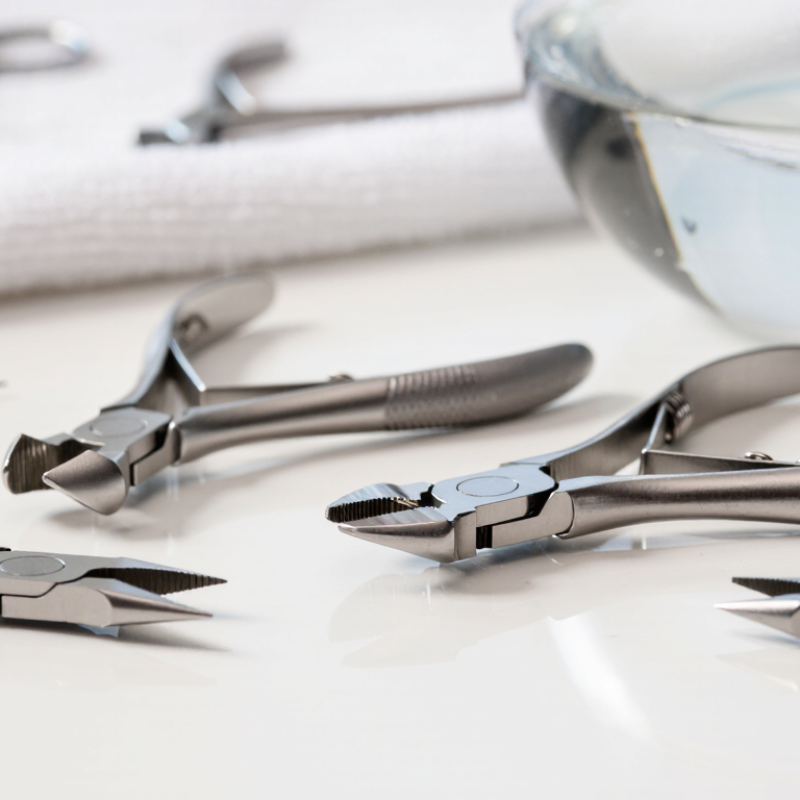
Salon cuticle nippers are small, hinged hand tools designed to trim loose, dead skin around the nail fold. Their short, pointed jaws meet when the handles are squeezed. A spring or flexible joint reopens them, allowing controlled cuts in tight areas. The hinge should move smoothly, and the jaws should align without a visible gap. That matters.
In professional nail care, nippers are used after the skin has been softened and gently eased back. They should remove only detached, excess tissue, not living skin or the seal at the nail’s base. A precise cut can tidy a snag; pulling or digging can cause pain and damage. Good lighting helps. So does a steady hand. Tools should be cleaned and disinfected according to their care instructions and applicable salon hygiene procedures.
Nippers are not a shortcut to a better manicure. It is easy to give the tool too much credit when careful preparation does most of the work. Even skilled technicians can misjudge where loose skin ends, especially on dry or irritated fingers. When the edge is unclear, leaving the skin alone is often the safer choice. The result may look less dramatic, but restraint is part of professional care.
Professional-grade cuticle nippers should feel controlled, not merely sharp. Their cutting edges need to meet evenly, with no visible gap when the jaws close. A clean, precise cut helps avoid tugging at loose, dead cuticle. Never use the blades to trim living skin around the nail.
Check the hinge closely. It should open and close smoothly without wobbling or catching. A double spring can make repeated movements easier, though some technicians prefer a single spring for a firmer feel. Handle shape matters, too: rounded, balanced grips are less likely to press painfully into the fingers during detailed work. Feel matters. A tool that is technically well made may still feel awkward in a particular hand.
Material and maintenance are part of professional quality. Stainless steel resists corrosion, but it is not automatically suitable for every sterilization method; follow the tool’s care instructions. Keep the blades protected between services, and inspect the joint for debris or looseness. A simple test is to close the jaws slowly under good light and check whether the tips align. That check can be easy to overlook. Replace or service nippers that snag, develop play, or require force, since forcing a dull tool can reduce control.
Top Salon Cuticle Nippers for Professional Nail Care
How to Choose Nippers for Different Nail Care Needs
Choose nippers for control, not maximum jaw size. A small jaw suits precise trimming around narrow nail plates and hangnails. A wider jaw can cover more loose, dead cuticle, but it should never encourage cutting living skin. The cuticle is a protective barrier; avoid digging into the surrounding nail fold. Sharp, aligned blades should meet cleanly, without squeezing or pulling. Check that the spring returns smoothly and the handles sit comfortably in your hand. Even a good tool can feel awkward after a full day of appointments.
Match the shape to the service and your technique. For detailed work, look for a compact head with a clear view of the cutting edge. For routine manicures, choose a comfortable grip and consistent closing action. The U.S. Bureau of Labor Statistics projects 7% employment growth for manicurists and pedicurists from 2023 to 2033, suggesting continued demand for skilled services. That is not a tool-use study, but it makes comfort during repeated work worth considering. The World Health Organization’s 2009 hand-hygiene guidelines recommend 20–30 seconds for hand rubbing; instrument cleaning and disinfection require their own appropriate procedures.
Tips: Test the nippers on loose skin only. If the blades snag, stop and inspect them. Clean and process tools according to their material and your workplace protocol. A tiny nick can change how a client feels about the whole service.
Safe Techniques for Using Cuticle Nippers in the Salon
Before trimming, inspect the client’s nails and surrounding skin under bright, direct light. Ask about tenderness, recent cuts, or visible irritation; postpone the service if the skin is broken or inflamed. Use clean, dry hands and disinfected tools, then remove any visible residue. CDC infection-control guidance emphasizes reprocessing tools that contact nonintact skin. Follow local salon requirements, and use sterilization when required. Keep the nipper’s joint smooth and its blades aligned. A dull edge can tug.
Trim only loose, dead cuticle tissue. Do not cut living skin or pull attached tissue; even careful hands can slip. Keep the blades in view and make small, controlled snips, with the tool angled away from the nail plate. Keep the edge visible. Never chase a hangnail. If bleeding occurs, stop immediately, put on gloves, and follow the salon’s blood-exposure procedure. OSHA estimates that 5.6 million healthcare and related workers face occupational bloodborne-pathogen exposure; that figure is not salon-specific, but it underlines why even a tiny nick deserves care.
After the service, clean and reprocess the nippers according to product instructions and applicable salon standards. Store them dry in a clean, covered container. Record the incident if your salon policy requires it, and review what happened without blaming the client or technician. I still find it easy to rush when a small flap catches the eye. That is exactly when slowing down matters.
How to read this chart: Each bar counts the safety checkpoints in that stage of a salon service. These are checklist counts, not measured outcomes or a ranking of risk.
Before service, check the client’s skin, perform hand hygiene, and ensure the nippers have been reprocessed according to product instructions and local requirements. During service, do not cut living cuticle tissue; use nippers only for loose hangnails, and stop if pain or bleeding occurs. After service, reprocess the tool and clean the work area.
Cuticle nippers need cleaning before disinfection. Skin flakes and product residue can collect around the hinge, where a quick wipe may miss them. Wash reusable nippers with detergent and water, using a small brush on the joint. Rinse and dry them fully. Then apply a disinfectant labeled for salon implements, keeping every surface wet for the label’s stated contact time.
The time matters. A surface that dries too soon may not receive the intended disinfection.
If an implement is visibly contaminated with blood, follow your workplace’s exposure-control procedure and the product instructions.
The risk of poor salon sanitation is not theoretical, though one outbreak cannot be attributed to nippers. A 2002 New England Journal of Medicine report described 110 women with boils after pedicures; cultures confirmed Mycobacterium fortuitum in 34 cases. The investigation concerned footbaths, not cuticle tools, but it shows why cleaning steps deserve care.
After disinfection, dry nippers and store them in a clean, covered area. Lubricate the hinge only as the manufacturer directs, and keep maintenance products off cutting edges.
A rushed wipe can look convincing. It is still not a substitute for the full process. These small steps are easy to skip on a busy day, which is exactly when a written routine helps.
No. A small jaw offers better control around narrow nails and hangnails. Small jaws help.
The blades should meet cleanly without pulling. Check that the spring moves smoothly and the handles feel comfortable.
No. Trim only loose, dead skin. Avoid cutting living skin or digging into the protective nail fold.
Stop and inspect them. Snagging can make trimming less controlled, so do not force the cut.
Wash them with detergent and water. Use a small brush around the hinge, then rinse and dry them fully.
Follow the product label’s contact time and keep every surface wet for that period. The time matters.
Follow your workplace exposure-control procedure and the product instructions. A quick wipe is not enough.
Dry them after disinfection and store them covered in a clean area. Lubricate the hinge only as directed, keeping oil off the blades. I can still see how this step gets rushed.
Salon cuticle nippers are precision tools designed to trim loose, excess cuticle tissue during professional nail care. Their small, sharp jaws allow controlled cutting in areas that are difficult to reach with larger tools. Professional-grade nippers are typically selected for comfortable grip, smooth movement, sturdy construction, and a jaw shape suited to the technician’s working style. Choosing the right pair depends on factors such as the client’s nail condition, the desired level of precision, and the technician’s experience.
Safe use begins with careful preparation and gentle handling: trim only loose, clearly visible tissue, avoid pulling or cutting living skin, and use light pressure to reduce the risk of irritation. After each service, remove debris, clean and disinfect the tool according to appropriate salon procedures, then dry it thoroughly. Regularly checking the cutting edges, hinge, and alignment helps keep Salon cuticle nippers effective and in good working condition.