
Surgical Instrument Manufacturer Buying Orthopedic osteotomes is not a simple matter of choosing the sharpest-looking instrument. In a real operating room, a few millimeters can affect bone preparation, handling, and surgical confidence. The right choice depends on design, alloy quality, edge retention, balance, and the procedure’s demands.
Dr. James H. Beaty, an orthopedic surgeon and respected educator, has emphasized, “A good instrument should feel predictable in the surgeon’s hand.” That principle matters when comparing straight, curved, narrow, and broad osteotomes. The handle should remain stable, even with a gloved hand. The blade should cut cleanly without excessive force. Small details matter.
This guide presents seven practical tips for evaluating Orthopedic osteotomes before purchase. It considers surgical application, stainless-steel performance, surface finishing, impact resistance, sterilization compatibility, and supplier reliability. Look closely at the cutting edge. Check the heel and shoulder. Examine how the instrument feels during controlled tapping.
Do not rely on appearance alone.
A polished surface can hide poor balance or weak edge geometry. Product descriptions may also leave important details unclear. Request material specifications, test documentation, and maintenance instructions from the manufacturer. Confirm that the instruments can be tracked and reprocessed according to your facility’s protocols.
Even experienced buyers can overlook grip comfort or long-term sharpening needs. That is worth admitting. A thoughtful purchasing decision combines clinical experience, engineering evidence, and feedback from the surgeons and sterile-processing staff who use these tools daily.
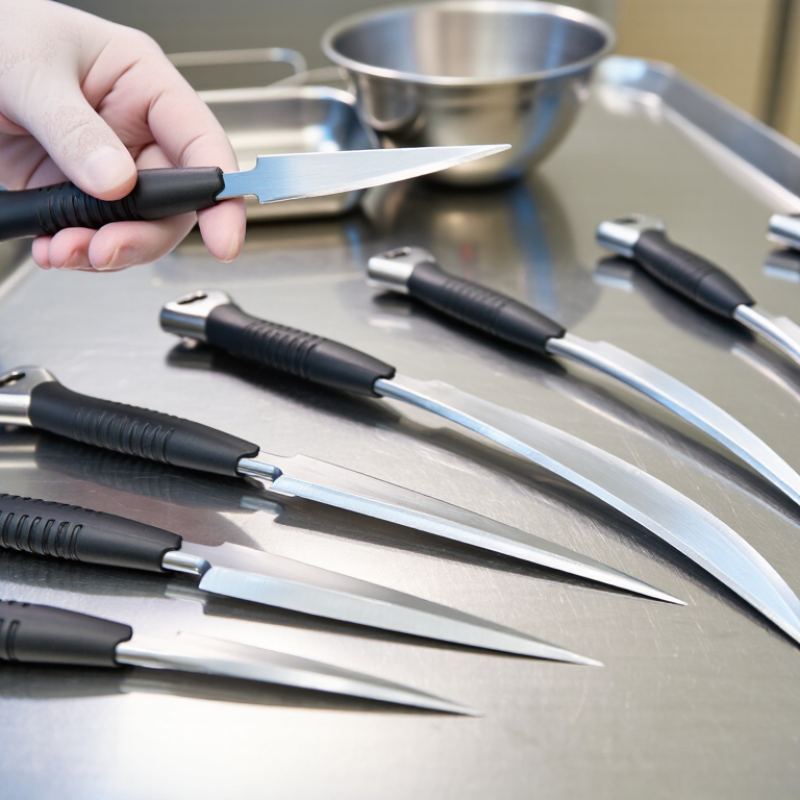
7 Tips for Buying Orthopedic Osteotomes
Choosing an orthopedic osteotome starts with identifying its surgical purpose. A straight osteotome supports controlled bone cutting, while a curved design can follow anatomical contours. A gouge osteotome removes bone from concave areas. Select the type according to the procedure, access angle, and expected bone density. Do not rely on appearance alone. Tip one: verify the working length and shaft balance. Tip two: match the width to the intended cut. Tip three: confirm that the handle supports a secure, gloved grip.
Edge profile strongly influences performance. A single-beveled edge directs force toward one side and may improve controlled removal. A double-beveled edge can support central splitting and balanced cutting. A blunt or rounded shoulder may reduce unwanted tissue contact during careful positioning. Tip four: inspect edge symmetry under bright light. Tip five: avoid instruments with uneven grinding, chips, or visible deformation. Small defects matter.
Surgical application should guide the final purchase. Spine, trauma, joint, and reconstructive procedures may require different lengths, widths, and edge angles. Tip six: check compatibility with the surgeon’s mallet technique and access limitations. Tip seven: review cleaning, sterilization, and maintenance instructions before ordering. Stainless steel does not remove the need for inspection. I would also question overly sharp edges when control matters more than aggressive cutting. That judgment can be imperfect. Test handling with gloved hands, compare visibility at the operative angle, and obtain feedback from experienced surgeons and sterile-processing staff. Surgical suitability depends on the complete instrument system, not one impressive feature.
7 Tips for Buying Orthopedic Osteotomes?
Verify Instrument Steel Under ASTM F899 and ISO 7153-1
Orthopedic osteotomes face repeated impacts, bending forces, and difficult cleaning cycles. Their steel matters as much as their shape. Ask the supplier for the exact material grade, not only “surgical stainless steel.” ASTM F899 identifies stainless steel types used for surgical instruments. ISO 7153-1 helps assess suitable metallic materials for these instruments. Neither standard replaces practical inspection.
Request a material certificate with the heat number and manufacturing batch. Check whether the stated grade matches ASTM F899 requirements. Compare the certificate with ISO 7153-1 material guidance. Also ask about heat treatment, hardness, and corrosion testing. A polished surface should look even under bright light. Watch for pits, grinding lines, or dark marks near the cutting edge. Small defects can become larger problems after repeated sterilization.
Test the osteotome in your real workflow. Hold it with a gloved hand and inspect balance, grip texture, and edge alignment. The handle should feel stable, not slippery. Ask how the edge is inspected after production. Do not rely on a certificate alone. Certificates can be incomplete, and human review can miss details. I have seen buyers focus on hardness while overlooking poor finishing. That is an easy mistake. Confirm traceability, cleaning compatibility, and packaging integrity before purchase. A strong steel grade does not guarantee a dependable instrument.
The chart compares the primary verification scope of ASTM F899 and ISO 7153-1. A value of 1 means the topic is directly addressed by the standard’s scope; a value of 0 means it is not the standard’s primary focus. ASTM F899 is used to verify wrought stainless-steel grades, chemical composition, and mechanical requirements for surgical instruments, while ISO 7153-1 provides guidance on metallic materials used for surgical instruments.
Before purchasing, confirm the steel grade, request material certificates, compare chemistry with the applicable specification, review heat treatment and hardness records, assess corrosion resistance for the intended cleaning process, inspect cutting-edge geometry and surface finish, and use independent sample testing when traceability or documentation is incomplete.
Tip 1: Match blade width to the bone and cutting goal. Narrow osteotomes support controlled cuts in confined spaces. Wider blades distribute force across larger surfaces. A wider blade is not automatically safer. It can demand greater impact energy and reduce tactile feedback. The World Health Organization’s Safe Surgery Saves Lives report estimated 234 million major operations worldwide each year. That scale highlights why predictable, repeatable instruments matter across different procedures.
Tip 2: Treat length as a load variable, not a comfort choice. Longer osteotomes improve access around deep anatomy, but they can increase leverage and deflection. Shorter shafts usually provide firmer control during precise cuts. Check the working distance, expected impact, and available clearance before selection. The FDA’s human-factors guidance emphasizes evaluating devices within their real use environments, including user posture, visibility, and force application.
Tip 3: Choose the handle for the actual load path. A palm-friendly handle can support axial strikes, while a contoured grip may improve rotation control. Textured surfaces matter when gloves are wet. Inspect the transition between handle and shaft; abrupt edges can concentrate stress. In tray evaluations, I would not judge comfort after a few dry swings. Repeated impact changes the decision. That is easy to overlook. When uncertain, compare two sizes on similar bone models and record control, rebound, and hand fatigue.
Buying orthopedic osteotomes requires more than checking a polished finish. Sharpness should be supported by test data, not appearance alone. Ask for edge-retention results, cutting-force measurements, and the test method used. A consistent edge should enter bone smoothly without excessive force or visible chipping. Inspect several samples, because one excellent instrument proves very little.
Hardness data deserves equal attention. Request the hardness scale, testing location, sample size, and acceptable range. Excessive hardness may improve edge retention but increase brittleness. Lower hardness can reduce fracture risk yet cause faster dulling. Material certificates and heat-treatment records add useful traceability. However, a certificate is not clinical evidence. It must match the delivered instrument and its production batch.
Dimensional tolerances affect handling, fit, and surgical control. Check blade width, thickness, length, bevel angle, and handle alignment against stated specifications. Ask whether measurements use calibrated equipment and whether results include minimum, maximum, and average values. Tolerance data should be recent and statistically meaningful. A small deviation may seem harmless, but repeated variation can change cutting depth or seating. I have seen purchasing teams focus on price and overlook sampling plans. That decision can create avoidable uncertainty. Review independent inspection records when available, and compare test results with the actual instruments before approval. Test data is valuable only when its methods, limits, and traceability are clear.
When buying orthopedic osteotomes, verify the supplier’s ISO 13485 certificate, scope, and validity. The ISO Survey 2022 reported more than 26,000 ISO 13485 certificates worldwide. Certification matters, but it does not prove every instrument performs well. Ask for material specifications, hardness data, dimensional inspection records, and traceability from steel batch to shipment. A sharp edge should feel consistent, not fragile. Handles should remain secure during repeated impact.
Reprocessing evidence deserves equal attention. ISO 17664-1:2021 requires manufacturers to provide validated processing information for reusable medical devices. Request clear instructions for point-of-use treatment, cleaning, rinsing, disinfection, sterilization, drying, inspection, and storage. Look for details such as detergent concentration, water temperature, cycle limits, and acceptable sterilizer parameters. “Clean before sterilizing” is too vague. It is not useful guidance.
ECRI’s 2024 Top 10 Health Technology Hazards continues to identify cleaning and disinfection failures as patient-safety concerns. Therefore, test whether the osteotome’s grooves, serrations, and handle junctions can be brushed and inspected easily. Ask for validation evidence using worst-case configurations, not only a new instrument. A certificate can look reassuring. Weak instructions may still create risk. I would also compare post-cycle edge retention after repeated use, because one laboratory cycle rarely reflects a busy orthopedic theatre.
Choose a straight osteotome for controlled cuts. A curved design follows anatomical contours. A gouge removes bone from concave areas. Consider the procedure, access angle, and bone density. Do not choose by appearance alone.
A single bevel directs force toward one side. A double bevel supports central splitting and balanced cutting. A rounded shoulder may reduce unwanted tissue contact. Inspect the edge under bright light. Small defects matter.
Narrow blades suit confined spaces. Wider blades distribute force across larger surfaces. However, wider blades may require more impact energy. Longer shafts improve deep access but can increase leverage and deflection. Shorter shafts often improve precise control.
Choose a handle that stays secure inside a gloved hand. Textured surfaces help when gloves are wet. Palm-friendly handles support axial strikes, while contoured grips assist rotation. Inspect the handle-to-shaft junction carefully.
Compare different sizes on similar bone models. Test the actual mallet technique and working angle. Record control, rebound, visibility, and hand fatigue. A few dry swings may mislead. Repeated impact changes the decision.
Request a valid ISO 13485 certificate and confirm its scope. Ask for material specifications, hardness data, dimensional inspections, and traceability records. Certification supports confidence, but it does not prove excellent performance. That distinction matters.
Instructions should cover point-of-use treatment, cleaning, rinsing, disinfection, sterilization, drying, inspection, and storage. They should state detergent concentration, water temperature, cycle limits, and sterilizer parameters. “Clean before sterilizing” is too vague.
Avoid uneven grinding, chips, visible deformation, loose handles, or abrupt junction edges. Check grooves and serrations for easy brushing and inspection. Compare edge retention after repeated processing cycles. One laboratory cycle proves little. My judgment can still be imperfect.
Choosing Orthopedic osteotomes requires more than selecting a sharp, attractive instrument. First, identify the osteotome type, edge profile, and intended surgical application, since different procedures demand different cutting behaviors. Next, verify that the instrument steel aligns with ASTM F899 and ISO 7153-1 requirements. Blade width, length, and handle design should match the procedure’s access needs, expected loads, and surgeon control preferences.
Before purchase, request test data covering sharpness, hardness, dimensional tolerances, and resistance to deformation. Examine whether the instrument is designed for reliable performance over repeated use, and confirm that its markings and dimensions are consistent. Finally, review the manufacturer’s ISO 13485 quality system and ensure clear ISO 17664-1 reprocessing guidance is available. A careful evaluation of materials, geometry, testing, quality controls, and maintenance instructions helps facilities select osteotomes that support predictable handling, durability, and safe integration into orthopedic workflows.