China’s top suppliers of Macintosh laryngoscope blades deserve careful evaluation, not a quick online ranking. Hospitals, distributors, and medical-equipment buyers need more than attractive prices. They need dependable illumination, smooth finishing, accurate blade geometry, and documented quality control.
Dr. Richard M. Levitan, a recognized airway-management expert, has stated, “The Macintosh blade is the most commonly used laryngoscope blade in the world.” This observation explains its continuing importance in operating rooms, emergency departments, and training centers. Yet familiarity should not become complacency. A blade that looks polished may still have weak light transmission, poor fitting, or inconsistent curvature.
This guide examines ten China-based Macintosh laryngoscope blades suppliers through practical criteria. These include manufacturing experience, material selection, product testing, sterilization compatibility, packaging, export capability, and after-sales support. Samples should be inspected closely. Check the blade’s hinge, tip, hook, connector, and illumination path. Small defects matter.
Supplier transparency matters too.
Reliable manufacturers should provide clear specifications, inspection records, relevant certifications, and traceable production information. Buyers should also confirm whether the supplier offers reusable, disposable, stainless-steel, or fiber-optic models. Product descriptions can be incomplete. That is worth remembering.
A top-ten list cannot replace clinical validation or procurement due diligence. It can, however, narrow the field and support better questions. The strongest suppliers are not always the loudest advertisers. They are the ones that consistently deliver safe, compatible, and well-finished Macintosh laryngoscope blades for real clinical use.
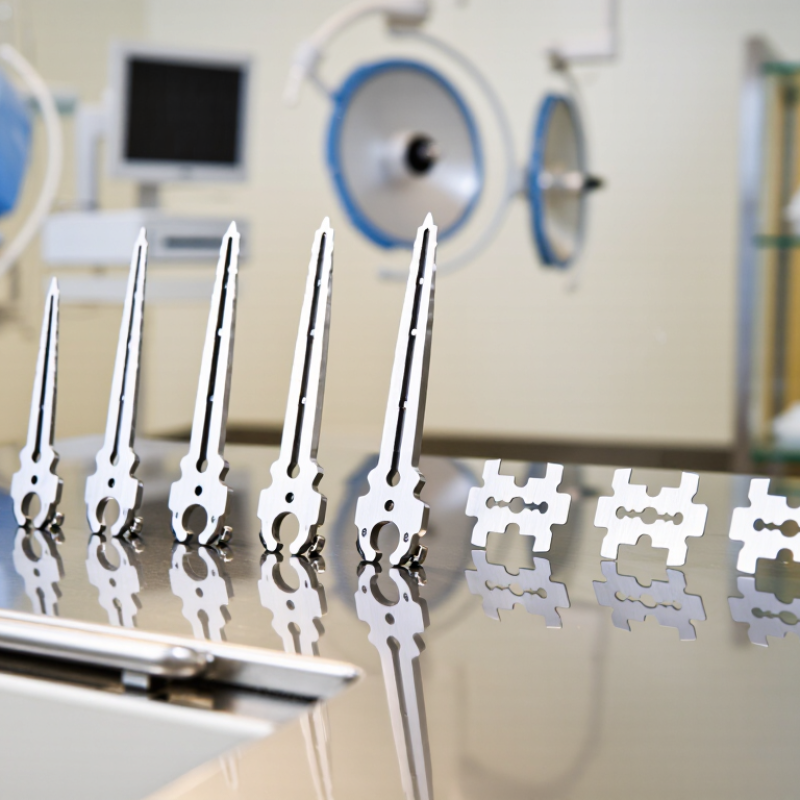
Macintosh Laryngoscope Blade Types and Clinical Applications
Macintosh laryngoscope blades remain widely used for direct tracheal intubation. Their curved design lifts the epiglottis indirectly through the vallecula. This creates space for viewing the vocal cords. Common sizes range from small pediatric blades to larger adult versions. Blade selection depends on age, anatomy, and the airway procedure.
Standard Macintosh blades support routine operating-room intubation. Pediatric versions have narrower profiles and shorter lengths. Some models use reinforced construction for repeated clinical handling. Stainless steel supports durability and cleaning, while compatible illumination improves visibility in a dim airway. Hospitals comparing suppliers should examine size consistency, surface quality, light transmission, and sterilization instructions. Supplier documentation also matters. Reliable records support safer purchasing decisions.
Tips: Match blade size to the patient, not only body weight. Check the hinge, lamp, and locking connection before use. A curved blade is not automatically suitable for every airway. Limited mouth opening, cervical movement restrictions, or unusual anatomy may require another approach. In practice, experienced clinicians still reassess their first choice after positioning the patient. That small pause can prevent a poor view. No single blade design solves every intubation challenge.
Key Criteria for Ranking Chinese Suppliers
China Top 10 Macintosh Laryngoscope Blades Suppliers? Key Criteria for Ranking Chinese Suppliers
Ranking Chinese suppliers requires more than comparing unit prices. The World Health Organization reports that about one in ten patients experiences harm during healthcare, with over half considered preventable. This makes blade reliability, surface finish, and cleaning compatibility essential screening points. Suppliers should provide traceable material records, dimensional inspection data, and documented quality controls under ISO 13485.
Practical testing matters. Check blade curvature, connector fit, light transmission, and resistance to repeated sterilization. A qualified supplier should explain testing frequency, sampling methods, and corrective-action procedures. ISO 14971 risk-management principles can support this review. Ask for batch records, inspection reports, and independent laboratory evidence where possible. Pictures are not enough.
Supplier ranking should also consider production consistency, response time, packaging protection, and export documentation. The WHO Global Patient Safety Action Plan 2021–2030 stresses safer medical-product systems and stronger supply-chain oversight. A low price may hide unstable tolerances or weak after-sales support. I would score technical evidence higher than marketing claims. Still, no ranking method is perfect; factory audits can miss problems between production batches. Sample verification remains necessary.
China’s Top 10 Macintosh Laryngoscope Blade Suppliers
China’s top 10 Macintosh laryngoscope blade suppliers should be assessed by quality, consistency, and clinical usability. Reliable manufacturers usually offer stainless steel blades with smooth edges, strong illumination compatibility, and accurate curvature. Their production systems should include documented inspections, batch traceability, and medical-device quality controls. Experience matters. Suppliers serving hospitals or surgical distributors often understand fitting, packaging, and repeated handling better.
A practical comparison should examine blade sizes, surface finishing, connector stability, and resistance to routine cleaning. Ask for material certificates, inspection records, and samples from different production batches. A supplier may look impressive online but provide uneven polishing in real samples. That weakness deserves attention. Public rankings can also be incomplete because factory data, export history, and customer feedback are not always fully available. A perfect top-ten list is unrealistic, so transparent evidence should guide the selection.
Tips: Check the blade under bright light for scratches, rough edges, or weak joints. Test its connection with compatible handles before placing a larger order. Confirm packaging details, storage requirements, and replacement procedures in writing. Keep evaluation records, even for approved suppliers. Small details matter. A lower price may become expensive when returns, delays, or inconsistent fit affect clinical workflows.
China Top 10 Macintosh Laryngoscope Blade Suppliers
| Rank |
Supplier Profile |
Typical Manufacturing Region |
Blade Configuration |
Common Size Range |
Primary Material |
Product Type |
Surface Finish |
Typical Sterilization Route |
Quality Documentation Commonly Requested |
Indicative MOQ |
Typical Production Lead Time |
| 1 |
Supplier Profile 01 |
East China |
Standard curved Macintosh |
Sizes 0–4 |
Medical-grade stainless steel |
Reusable |
Polished or satin finish |
Steam sterilization |
Material certificate, inspection report, quality-system evidence |
100–500 pieces |
20–35 working days |
| 2 |
Supplier Profile 02 |
South China |
Standard curved Macintosh |
Sizes 1–4 |
Stainless steel |
Reusable |
Anti-glare satin finish |
Steam or low-temperature sterilization, subject to instructions |
Dimensional inspection, packaging specification, traceability records |
100–300 pieces |
25–40 working days |
| 3 |
Supplier Profile 03 |
Yangtze River Delta |
Macintosh blade with integrated light channel |
Sizes 2–4 |
Stainless steel with polymer light guide |
Reusable |
Electropolished surface |
Steam sterilization where validated |
Optical function test, electrical safety records, cleaning instructions |
50–200 pieces |
30–45 working days |
| 4 |
Supplier Profile 04 |
Central China |
Conventional Macintosh profile |
Sizes 0–3 |
Stainless steel |
Reusable |
Mirror-polished finish |
Steam sterilization |
Raw-material specification, visual inspection, cleaning validation information |
200–500 pieces |
20–30 working days |
| 5 |
Supplier Profile 05 |
Southwest China |
Adult and pediatric Macintosh series |
Sizes 00–4 |
Medical-grade stainless steel |
Reusable |
Satin or polished finish |
Steam sterilization |
Size chart, inspection records, packaging and labeling controls |
100–500 pieces |
25–40 working days |
| 6 |
Supplier Profile 06 |
North China |
Macintosh blade for standard laryngoscope handles |
Sizes 1–4 |
Stainless steel |
Reusable |
Low-reflection finish |
Steam sterilization according to validated cycle |
Handle compatibility test, dimensional report, batch traceability |
100–300 pieces |
30–45 working days |
| 7 |
Supplier Profile 07 |
East China |
Standard and reinforced Macintosh variants |
Sizes 2–4 |
Stainless steel |
Reusable |
Polished surface with rounded edges |
Steam sterilization |
Mechanical strength test, edge inspection, material documentation |
50–200 pieces |
30–50 working days |
| 8 |
Supplier Profile 08 |
South China |
Single-use Macintosh-style blade option |
Sizes 2–4 |
Medical polymer with metal reinforcement |
Single-use |
Smooth molded finish |
Supplied sterile or non-sterile, depending on configuration |
Biocompatibility information, packaging validation, sterility records where applicable |
500–1,000 pieces |
35–60 working days |
| 9 |
Supplier Profile 09 |
Yangtze River Delta |
Macintosh blade with replaceable light assembly |
Sizes 2–4 |
Stainless steel and optical polymer |
Reusable |
Satin finish |
Steam sterilization after removal of non-sterilizable components |
Light-output test, connector compatibility data, maintenance instructions |
50–150 pieces |
35–50 working days |
| 10 |
Supplier Profile 10 |
Central and North China |
Basic curved Macintosh blade |
Sizes 0–4 |
Stainless steel |
Reusable |
Polished finish |
Steam sterilization |
Product drawing, batch inspection report, user and reprocessing instructions |
200–1,000 pieces |
20–45 working days |
The supplier profiles are anonymized market-reference categories. Final specifications, regulatory status, sterilization compatibility, minimum order quantity, and delivery time should be confirmed directly with each manufacturer before purchase.
Conclusion
This article presents a practical overview of China’s top 10 Macintosh laryngoscope blades suppliers, focusing on how manufacturers are evaluated rather than promoting specific brands. It explains the main Macintosh laryngoscope blades types, their curved designs, available sizes, and common clinical applications in routine and difficult airway management. The ranking criteria include product consistency, material quality, manufacturing capability, customization options, delivery reliability, technical support, and overall value for healthcare procurement teams.
The comparison also examines stainless steel and other medical-grade material choices, surface finishing, blade strength, illumination compatibility, cleaning requirements, and production quality control. In addition, the article reviews relevant quality standards, certifications, traceability systems, packaging, warranty policies, and supplier communication practices. By considering these factors together, hospitals, distributors, and medical equipment buyers can make more informed purchasing decisions and select dependable suppliers that meet clinical, regulatory, and operational requirements.