 Surgical Instrument Manufacturer Surgical Instrument Manufacturer
China has become an important manufacturing base for veterinary equipment, including Veterinary balling guns used in routine livestock care. This guide introduces ten Chinese suppliers for buyers comparing quality, customization, and service.
The evaluation considers manufacturing experience, product materials, and quality-control practices. Stainless steel tubes should resist corrosion after repeated cleaning. The plunger should move smoothly without sharp edges or excessive force. A secure grip matters when treating cattle, sheep, or goats in busy farm settings. Supplier reviews also examine sample availability, packaging, lead times, and communication.
Documentation matters. Reliable manufacturers should explain dimensions, compatible bolus sizes, operating instructions, and inspection procedures. Buyers may also request production photos, test samples, and evidence of export experience. These details do not replace independent verification, but they can reveal how seriously a supplier manages risk.
Not every low-priced option is efficient. A cheaper gun may require earlier replacement. That hidden cost deserves attention. Product rankings can change as factories update models, certifications, or service policies. Public supplier information is also incomplete in some cases. Therefore, this overview should support careful comparison rather than serve as a final purchasing decision. Practical users may discover that one supplier offers stronger customization, while another provides better consistency for standard orders. Small differences matter. The best choice depends on animal size, treatment frequency, cleaning routines, budget, and destination-market requirements. Each supplier should be contacted directly before ordering, with specifications confirmed in writing.
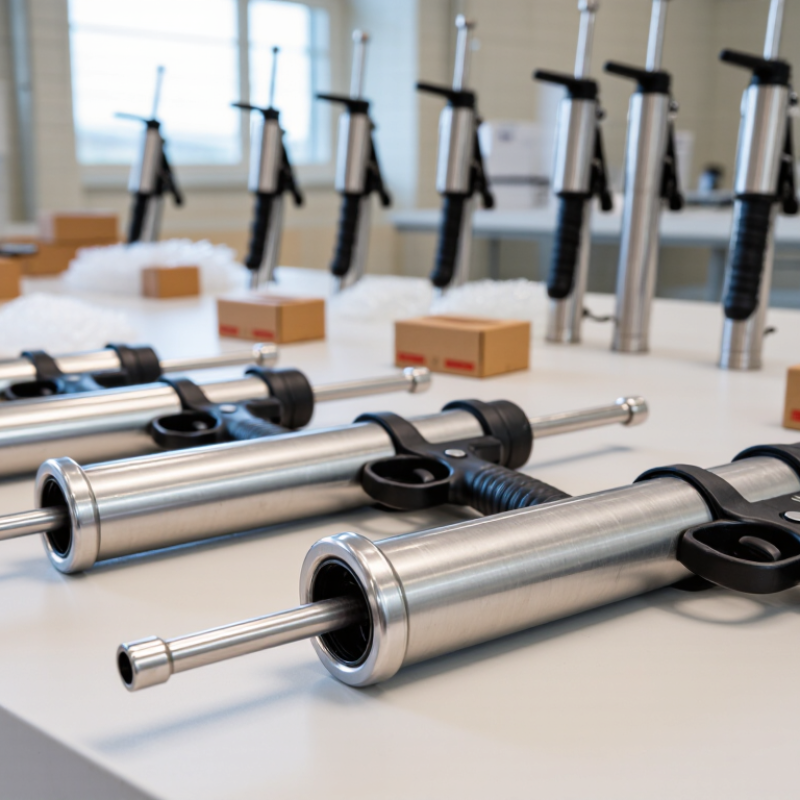
Veterinary balling guns are handheld applicators for delivering boluses to cattle, sheep, and goats. A plunger pushes the dose toward the back of the mouth. The operator must control the animal’s head and avoid forceful insertion. Small errors can cause injury. The tool is simple, but technique matters.
Oral dosing supports mineral supplementation, parasite control, and selected veterinary treatments. It can reduce handling time when the animal accepts the procedure calmly. FAO livestock statistics show that cattle, sheep, and goats remain major global production animals, creating steady demand for practical dosing equipment. The MarketsandMarkets Veterinary Equipment Market report projected continued growth through 2028, supported by herd health management and farm mechanization. These figures do not measure balling guns directly, but they explain the surrounding demand.
Common types include single-dose stainless-steel guns, plastic applicators, adjustable models, and multi-dose designs with replaceable tubes.
Stainless steel offers easier cleaning and stronger impact resistance. Plastic versions are lighter and often less costly. Adjustable guns suit different bolus sizes, while multi-dose tools improve speed during larger herd work.
For China’s top ten suppliers, buyers should inspect tube diameter, plunger smoothness, grip design, material certificates, and cleaning instructions. ISO-style quality systems can support reliability, but certification alone proves little. The distinction is not always clean. A cheaper gun may perform well, while an expensive model may jam under field conditions. Testing with the intended bolus is still necessary.
Request current ISO 13485, GMP evidence, and export documents. Check the issuing body, certificate scope, and manufacturing site. The certificate must cover the actual production line. A trading office is not enough.
Ask for batch records, traceability codes, inspection standards, and calibration logs. Request samples from regular production. Do not accept specially prepared units only. Missing records should lower the supplier’s score.
Check plunger movement, tube alignment, edge smoothness, grip comfort, and cleaning access. Test several operating cycles. Look for burrs and leakage. One sample can mislead you.
Match the tube length, internal diameter, and usable dose volume to the animal and tablet size. Small livestock models differ from larger cattle designs. Ask for exact measurements, not general descriptions. The listed capacity may need practical testing.
Stainless steel usually provides strength and durability. Medical-grade or food-grade polymers can reduce weight. Rounded tips may improve safety during handling. Material quality alone does not prove good workmanship.
Compare trial-order options with larger minimum quantities. A low MOQ may increase the unit price. A large MOQ can create excess inventory. Start with a controlled sample order when possible.
Request the latest twelve months of capacity, lead times, defect rates, and inspection steps. Ask whether figures include custom colors or packaging. Compare production claims with shipment records. Some estimates remain uncertain.
Consider price, lead time, quality, and after-sales support. A practical weighting is 30% price, 25% lead time, 30% quality, and 15% support. Compare landed cost, not factory price. My ranking could still change after one delayed shipment.
Test at least three samples from different production batches. For stronger evidence, test ten units. Record force, leakage, cleaning time, and repeated-cycle performance. Keep photographs and inspection notes. Perfection in one sample proves very little.
This guide explains how Veterinary balling guns support safe and efficient oral dosing for livestock and other animals. It introduces common product types, including manual and adjustable-dose models, and outlines important selection factors such as dose capacity, tube length, material durability, animal comfort, and ease of cleaning. The review also presents a practical framework for screening Chinese suppliers through ISO 13485 quality systems, GMP practices, export documentation, and transparent production information.
Ten suppliers are compared using objective criteria, including minimum order quantity, manufacturing capability, customization options, lead time, pricing, and after-sales service. Product safety is assessed through material compatibility, sterilization procedures, biocompatibility considerations under ISO 10993, inspection records, and functional testing. The final ranking balances cost with reliability, delivery performance, quality consistency, documentation, and customer support, helping buyers identify suitable suppliers for professional veterinary distribution and responsible animal-care applications.