 Surgical Instrument Manufacturer Surgical Instrument Manufacturer
 Engineered from premium surgical-grade stainless steel with precision-honed edges and ergonomic balance. Designed for rigorous operating theater conditions and repeated autoclave cycles.
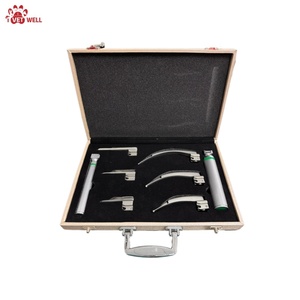
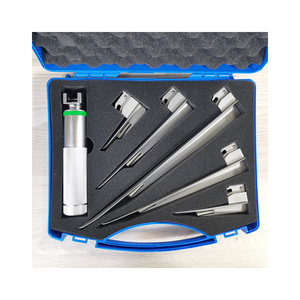
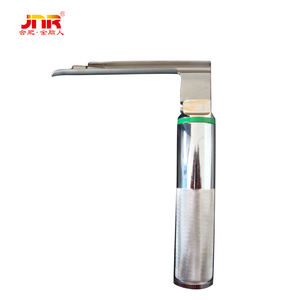
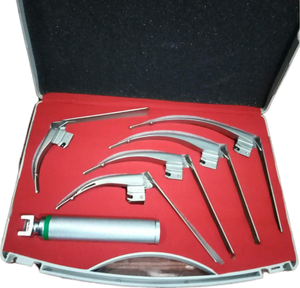
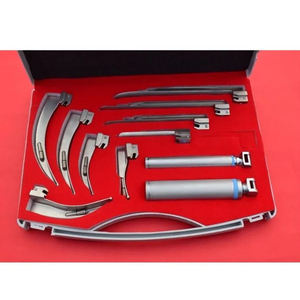
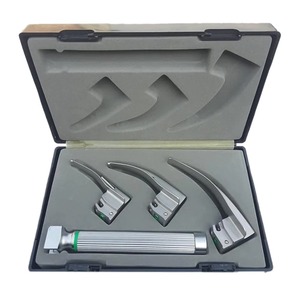
Surgical scissors represent one of the most critical foundational categories in operative instrumentation. Whether utilized in delicate ophthalmic procedures, intricate neurosurgery, or high-tensile orthopedic tissue dissection, the mechanical performance of a surgical scissor depends directly upon metallurgical composition, blade geometry, tensioning systems, and surface treatment protocols. As a leading manufacturer and exporter in China, our manufacturing facilities integrate traditional artisanal grinding expertise with advanced 5-axis CNC processing to manufacture over 25,000 instrument variations under strict compliance with ISO 13485:2016 and EU MDR Class I regulations.
To achieve an optimal balance between razor-sharp cutting friction and long-term corrosion resistance, selecting the appropriate stainless steel alloy is paramount. Our metallurgical standards strictly utilize medical-grade martensitic and austenitic stainless steel imported from premium steelmakers, conforming to ASTM F899 and DIN 58298 specification baselines.
Characterized by high carbon and chromium content, AISI 420 provides exceptional hardenability (achieving Rockwell C Hardness HRC 52–56 after vacuum heat treatment). Ideal for standard operating room scissors like Mayo and Metzenbaum patterns, providing long-lasting edge retention without brittle fracture risk.
For high-frequency surgical suites, scissors integrated with vacuum-brazed Tungsten Carbide (WC/Co) jaw inserts offer hardness levels exceeding HRC 70. Identified by gold-plated ring handles, TC scissors extend cutting lifespan by up to 500% compared to standard stainless steel tools.
SuperCut technology features one razor-sharp edge paired with a micro-serrated opposing blade. The micro-serrations lock slippery soft tissue into place during shear stress, preventing tissue slip while achieving clean, trauma-free anatomical transection.
The cutting action of surgical scissors relies on a dual-force mechanism: direct compression shear paired with lateral tension maintained by the central screw assembly. If the pivot tension is too loose, tissue bends between the blades; if too tight, friction leads to rapid metal degradation and surgeon hand fatigue. Our automated torque-calibration systems ensure every scissor blade pair exhibits smooth, uniform resistance throughout its entire arc of motion, minimizing mechanical force requirements for attending surgeons.
Understanding the material nuances helps hospital procurement committees and distributor buyers select the exact scissor grade matching their clinical requirements and sterilization infrastructure.
| Feature Parameter | Standard Surgical Grade | SuperCut Series | Tungsten Carbide (TC) Insert | Ceramic / TiN Coated |
|---|---|---|---|---|
| Metallurgical Base | AISI 420A / 420B Stainless | AISI 420C High Carbon | AISI 420 + WC/Co Matrix | AISI 440C + Titanium Coating |
| Hardness Rating (HRC) | HRC 50 - 54 | HRC 54 - 57 | HRC 68 - 72 (At Cutting Edge) | HRC 75+ Surface Hardness |
| Identification Feature | Polished / Satin Finish | One Black Handle Ring | Gold-Plated Handle Rings | Black / Rainbow PVD Coating |
| Primary Application | General Dissection, Suture Cutting | Delicate Tissue, Plastic Surgery | Heavy-Duty OR, High-Volume Central Sterile Supply (CSSD) | Micro-Neurosurgery, Cardiovascular Procedures |
| Autoclave Resistance | Standard Steam (134°C) | Standard Steam (134°C) | Validated High-Temp Autoclave | Superior Chemical & Plasma Resistance |
The global market for surgical scissors and reusable operative instrumentation is undergoing a structural transition driven by economic pressures, regulatory tightening, and sustainability mandates across healthcare systems worldwide. B2B medical procurement officers must align their sourcing strategies with several overarching trends:
While disposable single-use plastic instruments surged over the past decade, institutional environmental sustainability initiatives (ESG goals) and increasing biomedical waste management costs are prompting hospitals in North America and Europe to re-adopt validated reusable stainless steel instruments. High-quality surgical scissors capable of withstanding 500+ autoclave cycles offer a significantly lower total cost of ownership (TCO) and reduce carbon footprints by up to 70% over a 5-year lifecycle.
Regulatory scrutiny has escalated globally. Regulatory bodies now require full raw material batch traceability, Unique Device Identification (UDI) laser marking, validated cleaning protocols, and clinical evaluation documentation. As a certified Chinese manufacturer operating under ISO 13485:2016 and holding active FDA establishment registration (Reg. No. 3019842214) alongside EUDAMED listing readiness, our products ensure seamless custom compliance for international medical device distributors.
Modern hospital networks and healthcare distributors increasingly demand customized surgical trays tailored to specific clinical disciplines—such as specialized pediatric surgery, equine veterinary orthopedic sets, or plastic surgery packs. Suppliers capable of offering low Minimum Order Quantities (MOQs from 300 units), custom laser branding, color-coded rings, and bespoke packaging configurations represent the future of agile B2B medical trade.
With over four decades of dedicated manufacturing heritage originating from established surgical forging hubs, our enterprise merges precision metallurgy, rigorous quality assurance, and direct factory pricing to service hospital networks, veterinary clinics, and distributor brands in over 50 countries.
From closed-die hot drop forging and annealing to automated 5-axis CNC grinding, hand-honing, passivation, and laser marking—every step occurs under one continuous quality-managed facility.
Every instrument undergoes automated ultrasonic cleaning and chemical passivation according to ASTM A967 standards, forming a continuous chromium-oxide passive barrier to eliminate pitting corrosion.
We provide full technical documentation—including material certificates of analysis (CoA), ISO 13485 audit certificates, CE declarations of conformity, IFU artwork, and biocompatibility test reports.
Addressing core technical, logistical, and commercial inquiries to streamline your supplier evaluation process.
Reusable surgical scissors and cutting instruments are forged from martensitic stainless steels such as AISI 410, 420A, 420B, and 440C, which contain sufficient carbon to achieve high hardness (HRC 50–58) via heat treatment. In contrast, non-cutting hospital holloware (kidney trays, sterilizing drums, and gallipots) utilize austenitic stainless steels like AISI 304 or 316, prioritizing max corrosion resistance and ductility over edge retention.
Our standard Minimum Order Quantity for private label OEM branding starts at 300 units per individual pattern. This includes fiber-laser logo etching, custom catalog number marking, custom ring color coding, individual pouch/blister packaging, and branded outer cartons. Consolidated order support is available for multi-pattern distributor catalog setups.
All finished instruments undergo rigorous quality verification testing, including Copper Sulfate Testing (ASTM A380/A967) to confirm the complete removal of free surface iron, Boiling Water Autoclave Immersion Tests to ensure zero rust formation, and 100% optical alignment checks under magnification for edge uniformness and pivot screw torque.
Yes. Our Quality Management System is audited and certified to ISO 13485:2016 and ISO 9001:2015. Our reusable surgical devices hold CE marking under EU MDR 2017/745 as Class I medical devices, supported by registered UDI numbers and active FDA establishment registration (Registration No. 3019842214).
Standard catalog sample orders are dispatched within 7–10 working days. Full OEM production orders typically require 10–20 working days depending on batch size and surface finishing specifications. Shipments can be arranged via express air freight (DHL/FedEx/UPS), air cargo, or ocean freight with full customs export documentation.
Yes, we provide a 3-year factory warranty against manufacturing defects in material or craftsmanship for all premium surgical scissor ranges and instrument sets. Any unit exhibiting material defects or premature corrosion under compliant processing conditions will be replaced immediately under our guaranteed replacement policy.
Contact our expert technical export team today to request comprehensive catalog pricing, material certificates, or custom OEM quotation files for your procurement tenders.