 Surgical Instrument Manufacturer Surgical Instrument Manufacturer
 Engineered for difficult airway intubation, clinical emergency operations, and veterinary practice. Crafted with German-grade stainless steel optics and advanced CMOS camera technology.
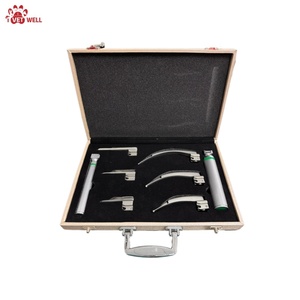
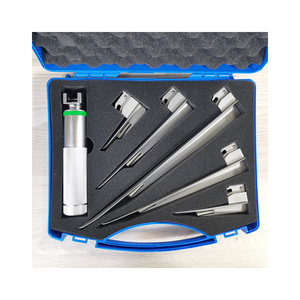
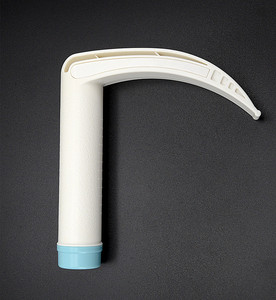
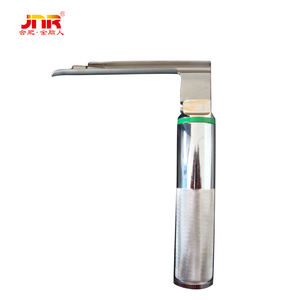
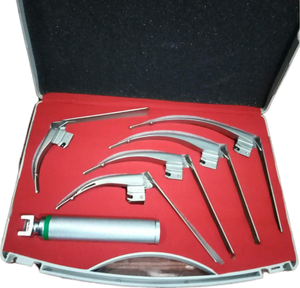
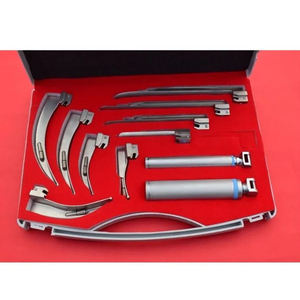
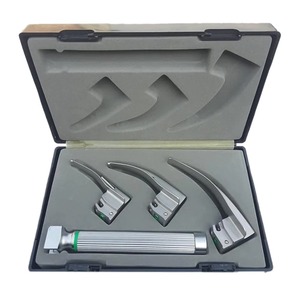
Integrating traditional precision drop-forging metallurgy with modern optoelectronic micro-assembly.
Our reusable blades are forged exclusively from German-grade AISI 410 and 420 martensitic stainless steel. Every batch undergoes chemical passivating according to ASTM A967 standards to guarantee extreme corrosion resistance under repeated 134°C autoclave sterilizing cycles.
Equipped with 2.0 Megapixel high-definition CMOS sensors and anti-fog LED illumination arrays. The optical assemblies deliver real-time 60fps video feeds with zero latency, providing clinicians with high-contrast glottic exposure during difficult airway management (DAM).
We simplify hospital tender submissions and regional medical device registration. All video laryngoscope lines hold CE Marking under EU MDR 2017/745, DEKRA-audited ISO 13485:2016 quality management certification, and US FDA Establishment Registration (No. 3019842214).
Endotracheal intubation remains one of the most critical interventions performed in emergency departments, intensive care units (ICUs), and operating theatres worldwide. Historically, direct laryngoscopy (DL) using conventional Macintosh and Miller blades relied entirely on establishing an unassisted, direct line of sight from the clinician's eye to the patient's laryngeal inlet. However, anatomical variations—such as limited mouth opening, cervical spine immobilization, short muscular necks, and severe facial trauma—frequently obscure visual access, leading to difficult intubations or catastrophic "cannot intubate, cannot oxygenate" (CICO) scenarios.
The introduction of Video Laryngoscopy (VL) has fundamentally transformed the standard of care in clinical airway management. By positioning a digital micro-camera lens near the distal tip of the blade, video laryngoscopes project a magnified, high-definition view of the vocal cords and epiglottis onto an integrated or external monitor. This optical breakthrough bypasses the line-of-sight requirement, turning difficult airways into manageable procedures and drastically reducing the incidence of airway trauma.
To assist hospital procurement committees, biomedical engineering departments, and medical device importers in making data-driven purchasing decisions, the table below provides a comprehensive comparison between traditional Direct Laryngoscopy, Fiber Optic Systems, and Next-Generation Digital Video Laryngoscopes.
| Performance Parameter | Conventional Direct Laryngoscope | Standard Fiber Optic Laryngoscope | Advanced Video Laryngoscope (China OEM) |
|---|---|---|---|
| Optical Technology | Direct Line-of-Sight / Bulb Light | Glass Fiber Bundle / Halogen LED | Full HD CMOS Sensor / Micro-LED Array |
| Cormack-Lehane Grade Improvement | Baseline (Line-of-sight required) | Moderate Improvement | Significant (Improves Grade III/IV to Grade I/II) |
| First-Pass Success Rate (Difficult Airway) | 58.2% - 68.5% | 74.0% - 82.1% | 94.8% - 99.1% |
| Anti-Fog Capability | N/A (Direct visual) | Manual Defogging Solution Needed | Automatic Micro-Thermal Heating Lens |
| Data Capture & Recording | None | Requires External Adapter | Integrated MicroSD / Real-Time HDMI & Wi-Fi |
| Decontamination & Turnover Time | Autoclave (30-45 mins) | High-Level Disinfection (HLD) (20 mins) | Instant (Disposable Blade) / Autoclave (Reusable) |
| Total Cost of Ownership (5-Year TCO) | Low initial / High labor maintenance | High maintenance (Broken fibers) | Optimal ROI & Reduced Patient Trauma Costs |
As healthcare systems face increasing budgetary scrutiny alongside tightening infection control regulations (such as the European Union MDR 2017/745 and US FDA 510(k) mandates), hospital purchasing directors and regional medical device distributors are adjusting their procurement strategies. Key procurement shifts include:
Global buyers are aggressively bypassing multi-tier trading intermediaries in favor of direct contracts with vertically integrated OEM/ODM manufacturers in China. Direct sourcing yields a 25% to 42% reduction in landed unit costs while establishing transparent, traceable quality control protocols from raw alloy forging to final optical calibration.
The global veterinary healthcare market has experienced unprecedented growth in advanced clinical equipment adoption. Equine clinics, canine surgical centers, and exotic animal hospitals are increasingly adopting specialized veterinary video laryngoscopes. Our extended blade geometry options (such as elongated Macintosh #5 blades and modified Miller #3/4 blades) cater directly to this expanding sector.
Mid-sized distributors are seeking customized product offerings to build local brand equity. We support flexible OEM agreements starting from modest minimum order quantities (MOQs of 300 units), providing custom laser branding, tailored UI language localized displays, bespoke carrying cases, and private-label user manuals.
Everything you need to know about our video laryngoscope manufacturing standards, compliance, ordering, and global shipping logistics.
A: Our reusable laryngoscope blades are manufactured using premium German-grade AISI 410 and 420 martensitic stainless steel. These alloys feature high carbon and chromium content, offering high tensile strength, precise blade rigidity, and exceptional resistance to pitting corrosion under repeated steam autoclave sterilization cycles (up to 134°C / 273°F).
A: Standard stock shipments have no strict MOQ requirements. For custom OEM private label contracts—including custom logo laser etching, bespoke screen boot animations, localized packaging, and customized catalog numbering—our production MOQ starts at 300 units per order batch.
A: Yes. Our manufacturing facility operates under an ISO 13485:2016 and ISO 9001:2015 audited Quality Management System certified by DEKRA. Our medical devices are CE Marked under EU MDR 2017/745 (Class I medical devices with EUDAMED listing) and registered with the US FDA (Establishment Registration No. 3019842214).
A: All of our digital video laryngoscopes feature built-in smart anti-fog technology. An integrated micro-heating element at the distal camera tip automatically heats the sapphire glass cover lens to 37°C–40°C within seconds of powering on, preventing optical fogging upon mucosal contact.
A: In-stock standard catalog configurations dispatch within 7 to 10 working days. Customized OEM bulk production orders require 10 to 20 working days. Express international air freight (via DHL, FedEx, or UPS) typically arrives within 4 to 7 business days worldwide, complete with full customs export documentation.
A: Yes, we provide evaluation sample units to verified medical device distributors, hospital purchasing departments, and clinical trial teams. Samples allow engineering teams to evaluate optical clarity, battery longevity, structural balance, and autoclave durability before placing bulk orders.
Contact our international engineering and sales desk today to receive complete technical datasheets, full compliance certificates, product catalogs, and direct factory pricing.