 Surgical Instrument Manufacturer Surgical Instrument Manufacturer
 Direct factory recommendations manufactured under ISO 13485:2016 standard, utilizing German-grade stainless steel and certified fiber optic illumination bundle technology.
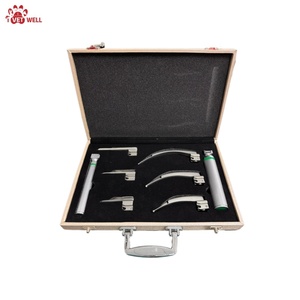
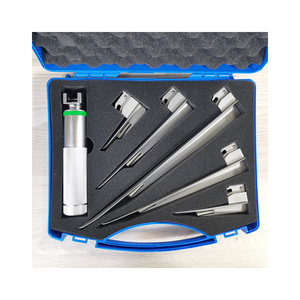
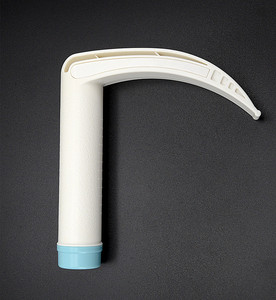
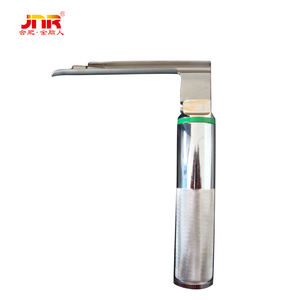
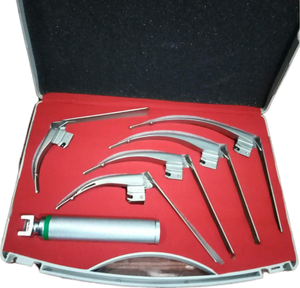
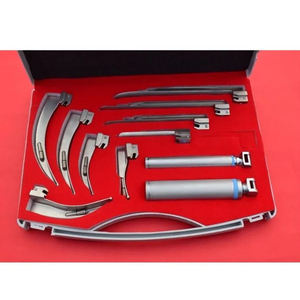
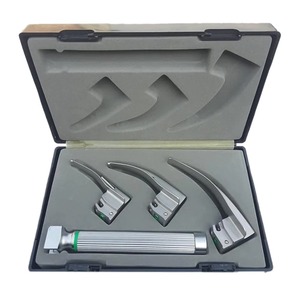
The international supply chain for reusable medical instruments, surgical devices, and airway management tools is experiencing a fundamental structural shift. Procurement heads, hospital consortium buyers, and medical distribution brands require more than traditional price-competitiveness; they demand verifiable metallurgical integrity, complete regulatory compliance (EU MDR 2017/745 Class I devices and US FDA Establishment Registration), and robust Total Cost of Ownership (TCO) optimization. As a premier original equipment manufacturer (OEM) and wholesale production hub, our manufacturing network bridges advanced Chinese automated metallurgical processing with classic precision craftsmanship.
The performance of any surgical scissors, dissecting forceps, orthopedic osteotome, or airway laryngoscope blade depends heavily on raw material metallurgy. In our certified facilities, instrument production adheres strictly to ASTM F899 and DIN EN ISO 7153-1 standard specifications for surgical instruments.
| Steel Classification | Material Standard | Hardness (HRC) | Primary Clinical Application | Autoclave Longevity |
|---|---|---|---|---|
| Martensitic Stainless Steel | AISI 420 / DIN 1.4021 | 48 - 52 HRC | Cutting instruments, scissors, bone Rongeurs, osteotomes | 500+ Sterilization Cycles |
| High-Carbon Martensitic | AISI 440C / DIN 1.4125 | 54 - 58 HRC | Micro-surgical blades, premium tungsten carbide inserts | 800+ Sterilization Cycles |
| Austenitic Stainless Steel | AISI 304 / AISI 316L | Non-hardened (Work Hardened) | Hospital holloware, sterilizing drums, kidney trays, handles | 1,500+ Sterilization Cycles |
| German Martensitic Alloy | DIN 1.4117 (X38CrMoV15) | 50 - 54 HRC | Fiber-optic Macintosh/Miller blades, specialty retractors | 1,000+ Sterilization Cycles |
Every batch of raw stainless steel undergoes spectral analysis, chemical composition testing, and tensile strength validation prior to hot drop forging. Passivation processes are conducted in automated nitric and citric chemical baths complying with ASTM A967 standards, removing free iron atoms from instrument surfaces to generate an impenetrable, passive chromium oxide ($Cr_2O_3$) protective layer.
Operating as an integrated manufacturer with over four decades of industry expertise, our enterprise delivers end-to-end production governance. We eliminate multi-layer trading markups, supplying healthcare organizations, private labels, and government tenders directly from our production floor.
Certified to ISO 13485:2016 and ISO 9001:2015. Reusable Class I devices are fully CE marked under EU MDR 2017/745 with EUDAMED listing and US FDA registration (#3019842214).
Low Minimum Order Quantity (MOQ) starting at 300 units per pattern for custom private label marking, unique laser-etched SKU coding, ring color identification, and custom packaging.
Integrated high-density glass fiber bundles providing over 4,000 to 10,000 Lux illumination with minimal attenuation, maintaining lumen output through rigorous autoclave cycles.
To uphold E-E-A-T (Experience, Expertise, Authoritativeness, and Trustworthiness) criteria, our manufacturing plant operates a 4-tier inspection workflow for all 25,000+ instrument patterns:
Strategic sourcing managers must anticipate regulatory, technological, and environmental developments shaping the medical device market over the coming decade. As healthcare systems globally demand greater transparency and durability, several critical trends are redefining B2B procurement strategies:
While digital video laryngoscopes and visualization blades are growing rapidly in clinical airway management, conventional fiber-optic LED instruments remain essential due to their reliability, immediate deployment capability, and zero reliance on electronic display screens during battery failure. Future procurement strategies increasingly focus on modular hybrid systems—where handles accommodate both high-intensity LED fiber-optic blades and digital video monitors using universal quick-connect mounts.
Under EU MDR and FDA mandates, direct part marking (DPM) of UDI barcodes (GS1 DataMatrix) onto reusable surgical instruments is becoming compulsory. Wholesale buyers must select manufacturers capable of high-precision fiber laser etching that survives repeated chemical washing, ultrasonic cleaning, and high-pressure steam autoclaving without degradation of readability or creation of microscopic corrosion sites.
Single-use plastic medical tools face mounting environmental scrutiny and waste disposal taxes worldwide. Reusable stainless steel instruments—engineered for 500+ autoclave cycles—provide superior sustainability and drastic TCO savings. Hospitals are shifting back to premium reusable tools, provided manufacturers supply comprehensive Reprocessing Instructions for Use (IFU) validated according to ISO 17664 standards.
Global distributors are consolidating vendor pools to mitigate geopolitical and freight vulnerabilities. Partnering directly with accredited Chinese manufacturers offering direct factory pricing, centralized warehouse buffer stocking, and rapid air/sea freight documentation dramatically decreases stock-outs and stabilizes operational margins.
The evolution of surgical instrumentation—from basic manual tools to high-precision ergonomic systems—reflects continuous advancement in clinical techniques, material science, and manufacturing technology.
Historical laryngoscope designs relied on small tungsten bulbs mounted on the blade tip, which posed risks of thermal tissue trauma, electrical contact failures, and limited illumination. The development of integrated fiber-optic bundles transformed airway management. Light generated by high-output LED cartridges inside the handle is transmitted through thousands of bundled glass fibers directly to the blade tip. This delivers cool, daylight-quality light (5,000K to 6,500K color temperature), illuminating vocal cords and anatomical structures without heat transfer or glare.
Modern operating room environments utilize intense overhead surgical lights. High-gloss polished stainless steel can create distracting reflections for surgeons. Industry development has pushed toward non-reflective satin finishes, bead-blasted surfaces, and specialized Physical Vapor Deposition (PVD) titanium coatings. Titanium nitride (TiN) gold coatings applied to tungsten carbide needle holders provide high surface hardness, reduced friction, and clear visual differentiation in surgical trays.
Direct answers to technical, regulatory, and commercial inquiries routinely addressed by our international sales engineering department.
Elevate your wholesale distribution line or hospital tender capabilities with factory-direct precision tools, complete regulatory backing, and competitive pricing. Contact our engineering team today for technical catalogs, instant quotations, and OEM sample kits.
Contact Us