 Surgical Instrument Manufacturer Surgical Instrument Manufacturer
 Explore our premium CE-marked and FDA-registered medical trays, intubation sets, and surgical holloware manufactured under strict ISO 13485 quality controls.
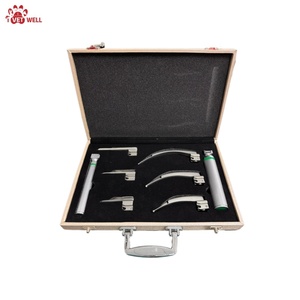
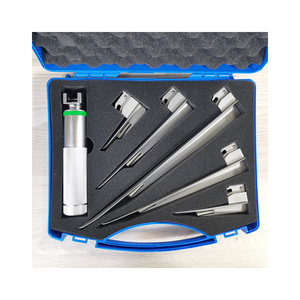
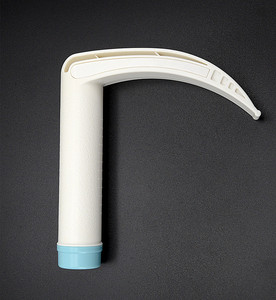
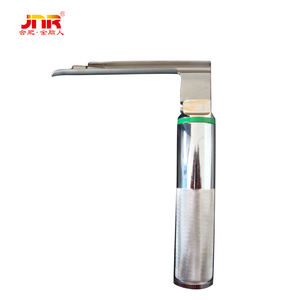
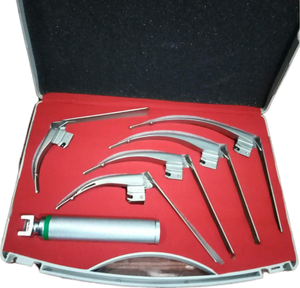
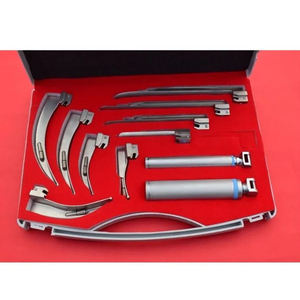
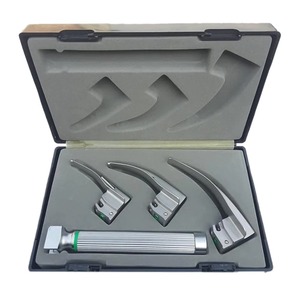
An authoritative guide on metallurgical specifications, sterilization standards, supply chain strategy, and regulatory compliance for medical buyers worldwide.
In modern Central Sterile Supply Departments (CSSD) and surgical operating theatres, the standard of hospital holloware directly correlates with cross-contamination prevention and instrument longevity. As a leading China wholesale medical tray exporter & exporters enterprise, maintaining structural integrity across hundreds of automated steam autoclave cycles requires precise metallurgical selection and advanced surface treatment.
Medical trays are primarily fabricated from surgical-grade stainless steel alloys, tailored to specific chemical exposure and mechanical load profiles. Austenitic stainless steel grades—most notably AISI 304 (DIN 1.4301) and AISI 316L (DIN 1.4404)—represent the benchmark for surgical holloware, kidney trays, mesh sterilization baskets, and instrument container systems.
| Steel Grade Standard | Metallurgical Composition | Corrosion Resistance Level | Primary Clinical Application |
|---|---|---|---|
| AISI 304 (1.4301) | 18% Cr / 8% Ni | High (Standard Autoclaving) | Kidney Trays, Gallipots, General Instrument Trays |
| AISI 316L (1.4404) | 16% Cr / 10% Ni / 2.5% Mo | Ultra-High (Saline & Chemical Resistant) | Perforated Sterilization Baskets, Implant Trays |
| AISI 420 (1.4021) | 12-14% Cr (Martensitic) | Moderate (High Hardness) | Surgical Cutting Instruments, Tray Latches |
To eliminate surface contaminants, free iron, and micro-burrs introduced during press-forming and deep drawing operations, our manufacturing protocol enforces rigorous dual-phase chemical passivation compliant with ASTM A967. By subjecting raw medical trays to controlled citric or nitric acid baths, a dense chromium oxide ($\text{Cr}_2\text{O}_3$) passive layer is established. Furthermore, electro-polishing reduces surface roughness to below $\text{Ra } 0.4\,\mu\text{m}$, effectively eliminating microscopic micro-crevices where bioburden and protein residues could harbor pathogens during reprocessing.
Navigating global healthcare distribution requires strict adherence to international quality management frameworks. Operating as an accountable manufacturer and global exporter, our facility maintains fully audited manufacturing processes backed by accredited international certifications.
Our quality management ecosystem is audited and certified to ISO 13485:2016 and ISO 9001:2015 standard operating procedures. Every production batch of medical trays, hospital holloware, and laryngoscope instrument sets is tracked from raw billet melting certificates down to final box seals.
For European Union distributors, our reusable medical trays and Class I medical instruments fully comply with the European Medical Device Regulation (EU MDR 2017/745), complete with full technical documentation, CE marking, and EUDAMED listing. For North American markets, our manufacturing plant maintains an active FDA Establishment Registration (Registration No. 3019842214), enabling seamless customs clearance and commercial compliance for medical device importers.
Custom fiber laser etching for brand logos, catalog numbers, UDI barcodes, and color-coded silicone insert placement from 300 units.
Manufactured in alignment with DIN and ASTM dimensional tolerances, ensuring perfect fitment into standard DIN sterilizing container systems.
Comprehensive documentation provided with every shipment: Steel Grade Certificates, Certificate of Analysis (CoA), and Declaration of Conformity.
The global medical tray and surgical holloware sector is undergoing a rapid technological evolution. As hospitals move toward automated workflow management and heightened infection control protocols, purchasing directors must align their procurement strategies with several emerging industrial developments:
Traditional solid-bottom medical trays are increasingly being replaced by micro-perforated side and wire-mesh bottom tray architectures. These structural configurations optimize steam penetration and condensate drainage during high-temperature autoclave cycles ($134^\circ\text{C}$ steam sterilization), dramatically reducing the incidence of "wet packs" and accelerating drying times.
To satisfy global regulatory directives (such as US FDA UDI regulations and EU MDR traceability mandates), modern sterilization trays are engineered with dedicated, smooth laser-etched zones. These areas accommodate high-density 2D DataMatrix codes or heat-resistant RFID tags, enabling surgical suites to automate tray inventory tracking, sterilization cycle logging, and maintenance history logging.
In high-intensity operating rooms equipped with modern surgical shadowless lamps, high-gloss mirror finishes can cause optical glare for surgical teams. Leading exporters are transitioning toward micro-bead-blasted satin finishes and anti-reflective physical vapor deposition (PVD) titanium nitride coatings that improve visual comfort and enhance scratching resistance.
Environmental sustainability and lifecycle cost analysis have become core metrics in institutional hospital tenders. Single-use plastic trays generate tons of hazardous medical waste annually, leading top-tier medical networks back to high-durability reusable stainless steel trays.
High-quality AISI 316L stainless steel sterilization trays offer a service lifespan exceeding 10 to 15 years under daily reprocessing conditions. Choosing heavy-duty, reusable medical trays significantly reduces the lifetime cost-per-procedure while directly contributing to hospital carbon-reduction initiatives. Furthermore, 100% of high-grade surgical stainless steel is fully recyclable at the end of its clinical operational lifespan.
Direct factory manufacturing, rigorous quality inspection gates, and dedicated export logistics designed for wholesale healthcare procurement.
From deep-draw hydraulic pressing and robotic trimming to manual edge finishing and electrolytic polishing, all production operations take place in our owned facility. No external trade margins, complete process oversight, and direct accountability.
Consolidate your medical device sourcing with our extensive catalog covering surgical instruments, dental extracting forceps, orthopedic osteotomes, fiber optic laryngoscopes, and complete hospital holloware lines under one roof.
Standard catalog items ship within 7-10 working days, while custom OEM branding production runs complete within 10-20 business days via DHL, FedEx, air charter, or ocean freight with complete customs documentation.
Essential technical and commercial answers for hospital procurement officers, CSSD leads, and wholesale medical equipment buyers.
Connect directly with our engineering and export team to request OEM catalogs, material test reports, or bulk contract quotations for your regional healthcare market.
Inquire Now