
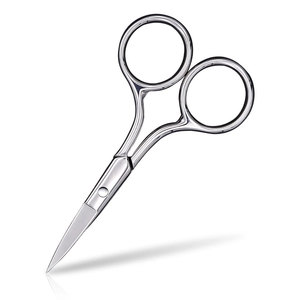
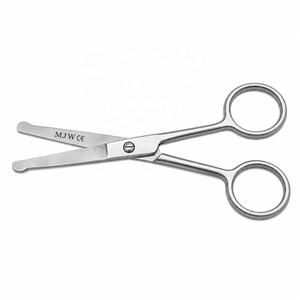
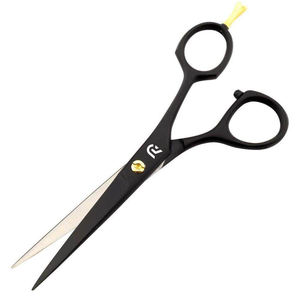
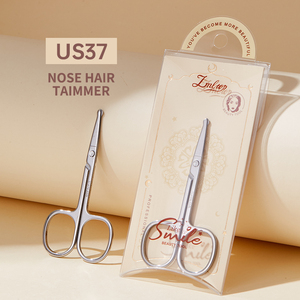
Executive Industry Report: Technical OEM/ODM Beauty Scissors Manufacturing
The global professional beauty scissors market has undergone a dramatic transformation driven by rising ergonomic awareness, stringent hygienic standards, and the rapid expansion of direct-to-consumer premium grooming brands. As a established OEM/ODM manufacturer headquartered in Sialkot—the premier international cluster for surgical and beauty instrument forging—we combine heritage hand-craftsmanship with modern CNC machining, vacuum heat treatment, and automated surface finishing technology.
Procurement directors and brand owners evaluating OEM/ODM manufacturing partners must navigate complex technical specifications ranging from steel alloy compositions and Rockwell hardness testing to cutting-edge edge geometries and passivating treatments. This whitepaper provides a comprehensive engineering and sourcing analysis to empower enterprise buyers in building high-margin, reliable beauty scissors product lines.
1. Metallurgical Selection & Material Engineering
The performance, edge retention, and corrosion resistance of manicuring, nail, and professional barber scissors depend fundamentally on the chosen stainless steel substrate. Unlike consumer-grade scissors fabricated from low-cost stamped 201 or 304 austenitic steel, high-performance beauty cutlery demands martensitic stainless steel alloys capable of undergoing thermal hardening.
| Steel Alloy Grade | Carbon Content (%) | Chromium Content (%) | Achievable Hardness (HRC) | Primary OEM Application |
|---|---|---|---|---|
| AISI 410 / 420A | 0.15 - 0.25% | 12.0 - 14.0% | 48 - 51 HRC | Entry-level cuticle & nail scissors, travel kits |
| AISI 420J2 / 420C | 0.26 - 0.38% | 12.0 - 14.0% | 52 - 55 HRC | Professional manicure scissors, eyebrow shears |
| AISI 440C (German/Japanese standard) | 0.95 - 1.20% | 16.0 - 18.0% | 58 - 60 HRC | High-end salon barber shears, thinning scissors |
| VG-10 / Cobalt Alloy (Custom ODM) | 1.00% + 1.5% Co | 15.0% + 1.0% Mo | 60 - 62 HRC | Ultra-premium ergonomic hairdressing shears |
During our drop-forging process, steel billets are heated to over 1,100°C to align the crystalline grain structure, drastically improving fatigue resistance compared to cold-stamped alternatives. Subsequent cryogenic tempering at sub-zero temperatures (-80°C to -120°C) transforms retained austenite into hard martensite, ensuring the blades retain razor sharpness through thousands of sterilization and cutting cycles.
2. Blade Geometry, Sharpening Dynamics & Tension Engineering
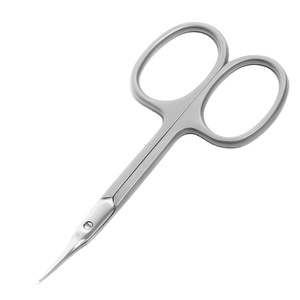
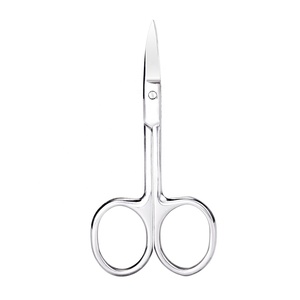
In precision beauty tools—especially delicate curved cuticle scissors and eyebrow shaping shears—blade alignment (the "set") and edge beveling dictate cutting action. Unlike general utility shears that pinch or shear via force, beauty cutlery relies on continuous sliding point contact along the inner blade concave curvature.
- Convex Edge (Hamaguri Grind): Engineered primarily for premium salon barber shears. Offers ultra-smooth, hair-gliding slice cuts with minimal force, requiring microscopic precision during robotic or master-artisan grinding.
- Micro-Serrated Bevel Edge: Ideal for precision cuticle and brow trimming scissors. Laser-etched micro-serrations trap delicate skin tissue or fine facial hair, preventing slippage during execution.
- Hollow-Ground Inner Cavity: Reduces surface contact between opposing blades, friction, and user hand fatigue while maintaining smooth tension across the entire cutting stroke.