 Surgical Instrument Manufacturer Surgical Instrument Manufacturer
 Explore medical-grade martensitic stainless steel rongeurs engineered for orthopedic, neurosurgical, dental, and veterinary procedures. Certified under ISO 13485:2016 and EU MDR Class I standards.
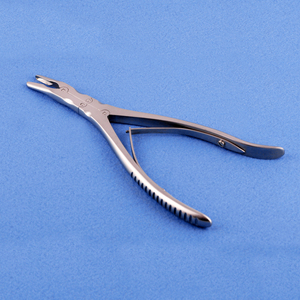
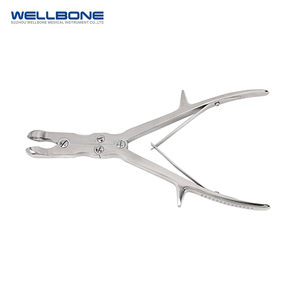
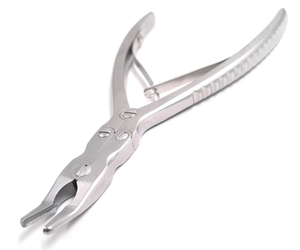
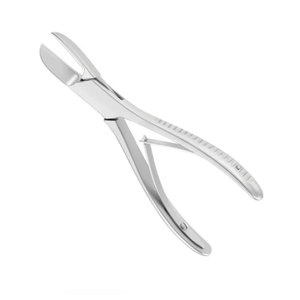
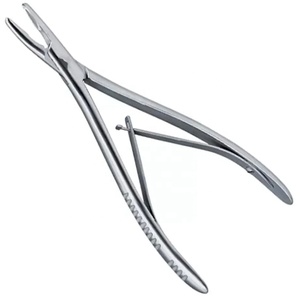
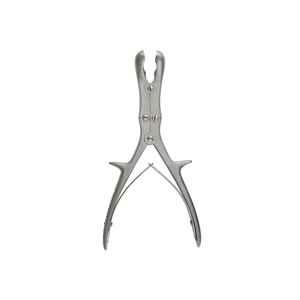
In modern orthopedic, neurological, spinal, and maxillofacial surgery, the bone rongeur (derived from the French word rongeur, meaning "chewer" or "nibbler") serves as an indispensable manual cutting instrument designed to excise dense osseous tissue, gouge out cancellous bone fragments, and trim sharp cortical ridges. Unlike standard surgical scissors or dissecting forceps, a rongeur must withstand immense compressive mechanical forces while preserving razor-sharp cutting cup alignment across thousands of autoclave sterilization cycles.
The biomechanical transformation of hand pressure into shearing force at the cup jaws depends on the mechanical linkage mechanism utilized within the fulcrum architecture:
Compound double-action joints multiply user input force threefold, preventing physical fatigue during prolonged spine and total joint reconstruction procedures.
Forged from Japanese AISI 410 and German AISI 420 martensitic steel, vacuum-hardened to HRC 50–52 to prevent jaw chipping under peak loading.
Chemical citric/nitric passivation according to ASTM F899 standards forms a self-healing chromium oxide layer resisting saline pitting and autoclave staining.
A major quality differentiator in bone rongeur manufacturing is steel selection. Reusable cutting instruments require high carbon content for hardness, combined with sufficient chromium for corrosion resistance. Premium manufacturers specify the following alloys:
Following precision CNC machining and manual hand-lapping of the bite cups, instruments undergo electrochemical passivation compliant with ASTM F899 and ISO 7153-1. This process removes free surface iron and enhances the passive chromium oxide coating ($\text{Cr}_2\text{O}_3$), shielding the instrument against intergranular corrosion during harsh steam autoclaving cycles at 134°C.
An objective comparative matrix evaluating the leading global original equipment manufacturers (OEM) and suppliers based on regulatory compliance, material selection, manufacturing depth, minimum order quantities (MOQ), and market positioning.
| Manufacturer / Supplier | Headquarters | Primary Steel Grades | Certifications | OEM / Private Label | Key Strengths & Market Position |
|---|---|---|---|---|---|
| Fizza Surgical International | Sialkot, Pakistan | AISI 410, 420, 440 Japanese/German | ISO 13485:2016, CE MDR Class I, FDA Reg. 3019842214 | Yes (Low MOQ 300 units) | Direct factory manufacturer, 25,000+ patterns, custom laser branding, high cost-to-quality ratio. |
| B. Braun Aesculap | Tuttlingen, Germany | German High-Grade Martensitic Steel | ISO 13485, CE MDR, FDA Cleared | Limited (Tier 1 Direct Brand) | Gold-standard premium surgical brand; exceptional engineering, premium tier pricing for top hospitals. |
| KLS Martin Group | Tuttlingen, Germany | Proprietary Surgical Stainless & TC | ISO 13485, CE MDR, FDA Cleared | No (Direct Brand Distribution) | Global leader in maxillofacial, cranial, and orthopedic hand tools with highly specialized pattern designs. |
| Sklar Surgical Instruments | West Chester, PA, USA | German / American Grade Stainless | ISO 13485, CE Marked, FDA Registered | Yes (Wholesale / Repackaging) | Extensive distribution network across North America; robust catalog covering OR-grade to diagnostic sets. |
| Integra LifeSciences | Princeton, NJ, USA | Martensitic & Titanium Alloys | ISO 13485, CE MDR, FDA Cleared | No | Specializes in neurosurgical and spine care (Jarvis, Kerrison, and Leksell rongeur lines). |
| Medtronic Surgical | Minneapolis, MN, USA | Surgical Grade Stainless & DLC Coated | ISO 13485, CE MDR, FDA Cleared | No | Integrates manual rongeurs into complex spinal surgery procedure packs and navigation-guided tools. |
| DePuy Synthes (J&J) | Raynham, MA, USA | High-Tensile German Stainless Steel | ISO 13485, CE MDR, FDA Cleared | No | Dominant global orthopedic brand; supplies rongeurs customized for total joint arthroplasty trays. |
| Schwert (A. Schweickhardt) | Tuttlingen, Germany | German Martensitic Stainless Steel | ISO 13485, CE MDR | Yes (Selected OEM Partners) | Historic German maker specializing in high-precision dental, oral, and micro-orthopedic rongeurs. |
| TeKno Surgical | Tuttlingen, Germany | German Grade Stainless AISI 420/440 | ISO 13485, CE MDR Class I | Yes (Distributor Private Label) | Comprehensive portfolio of general, spinal, and orthopedic rongeurs with high surface finish standards. |
| Hu-Friedy Group | Chicago, IL, USA | Immunity Steel® Custom Alloy | ISO 13485, CE Marked, FDA Registered | No | Premier brand for dental oral surgery, periodontal rongeurs, and alveolar bone trimming tools. |
When selecting a bone rongeur supplier for hospital tenders, wholesale distribution, or private-label medical device lines, procurement executives must look beyond surface aesthetics. Critical technical evaluation metrics include:
The global market for orthopedic and spinal surgical instruments is undergoing rapid evolution driven by minimally invasive surgery (MIS), stringent cross-contamination controls, and advanced surface engineering. Hospital purchasing groups and distributors should align their sourcing strategies with the following emerging industry trends:
Physical Vapor Deposition (PVD) coatings apply ultra-hard DLC ceramic layers on rongeur cutting tips, reducing friction, eliminating glare under theatre lights, and extending sharp edge life by over 300%.
Integrating hollow-recessed handles and high-strength Japanese 410 stainless steel reduces total instrument weight by up to 25%, drastically minimizing hand fatigue during lengthy spine decompressions.
Veterinary surgical practices represent the fastest-growing buyer segment. Pet-specific double-jointed rongeurs engineered for small-animal TPLO and spinal procedures require high precision at accessible price points.
In response to enhanced Central Sterile Supply Department (CSSD) protocols globally, traditional double-action rongeurs—which tend to trap bio-burden, blood, and tissue debris within internal pivot crevices—are being updated. Next-generation designs feature take-apart hinge mechanisms or open-channel double-action linkages, enabling CSSD technicians to flush, clean, and inspect internal contact surfaces efficiently prior to autoclaving.
Established in 1980 in Sialkot, Pakistan—the internationally recognized capital of surgical instrument craftsmanship—Fizza Surgical International has earned a global reputation as a direct manufacturer of high-precision surgical, dental, orthopedic, laryngoscope, and veterinary instruments. Spanning over four decades of metallurgical mastery, the enterprise serves hospital networks, procurement agencies, and private-label distributors across more than 50 countries.
From initial hot drop-forging of raw steel bars to precision CNC milling, hand heat treatment, micro-lapping, laser etching, and passivation, every manufacturing stage occurs under one roof in Sialkot.
Our Quality Management System is audited by DEKRA and certified to ISO 13485:2016 and ISO 9001:2015. Devices carry the CE Mark under EU MDR 2017/745 Class I and maintain FDA Establishment Registration (3019842214).
We empower healthcare distributors to scale their own brands with custom laser logos, specialized catalogue numbering, custom box packaging, and fast production lead times of 10 to 20 business days.
Expert technical answers to common questions raised by medical device buyers, hospital CSSD managers, and surgical instrument distributors.
Cutting and clamping manual rongeurs are primarily forged from martensitic stainless steel grades AISI 410, AISI 420, and AISI 440. AISI 420 provides optimal hardness (HRC 50–52) for edge retention in bone cutting cups. Non-cutting structural components, sterilization trays, and holloware utilize austenitic AISI 304 or 316 stainless steel to ensure maximum corrosion resistance during steam autoclaving.
Custom OEM private-label production begins at 300 units per pattern. OEM services include custom fiber laser etching of your brand logo and catalogue numbers, ring color coding, custom pouch packaging, and tailored technical documentation packs compatible with local medical device regulatory filings.
Double-action (compound leverage) rongeurs utilize a dual-pivot mechanism that multiplies hand force by approximately 3:1. This allows surgeons to cut through dense cortical bone and lamina with significantly reduced physical effort. Single-action rongeurs feature a 1:1 leverage ratio, offering finer tactile feedback for delicate micro-surgical or pediatric applications.
All reusable surgical instruments manufactured by Fizza Surgical International are produced under an ISO 13485:2016 and ISO 9001:2015 certified Quality Management System. Instruments bear the CE Mark as Class I devices under EU MDR 2017/745, are listed in EUDAMED, and operate under FDA Establishment Registration 3019842214.
Immediately following surgery, rongeurs should be rinsed with enzymatic detergent to prevent dried organic debris inside pivot joints. Neutral pH (6.5–7.5) detergents must be used. Pivots should be lubricated with steam-permeable surgical milk before autoclaving at standard 134°C (273°F) cycles. Avoid dipping heated instruments into cold water to prevent micro-fissures in martensitic steel.
Stock instrument patterns are dispatched within 7 to 10 working days. Custom OEM orders, volume tenders, or private-label production runs are manufactured and dispatched within 10 to 20 working days via express air freight (DHL/FedEx) or sea freight, accompanied by complete export documentation including Certificates of Origin, Material Test Reports, and IFU documentation.
Whether you are seeking high-grade OR instruments for hospital tenders, expanding your distribution catalog, or developing a custom OEM surgical product line, Fizza Surgical International delivers direct-from-factory precision, certified quality, and competitive wholesale pricing.
Send an Inquiry