Whitepaper: Metallurgical Excellence in Medical-Grade Titanium Manufacturing
In modern surgical procedures—ranging from delicate micro-neurosurgery and ophthalmology to heavy-load orthopedic reconstruction—titanium has shifted from an exotic alternative to an imperative industry standard. Choosing top-tier titanium instruments is no longer merely a preference for ergonomics; it is a clinical and economic necessity driven by biomechanical performance, patient safety parameters, and sterilisation resilience.
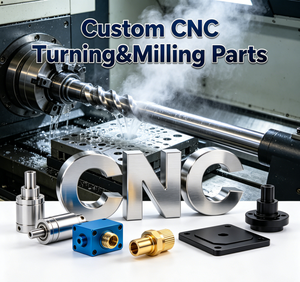
At Fizza Surgical International (manufacturing out of Sialkot’s premier surgical industrial zone since 1980), our advanced forging and 5-axis CNC machining divisions utilize strict certified medical titanium alloys complying with ASTM F136 (Ti-6Al-4V ELI) and ASTM F67 (Commercially Pure Titanium Grades 1–4). Understanding the mechanical differences between these grades is critical for hospital procurement boards, medical device distributors, and private-label brand partners.
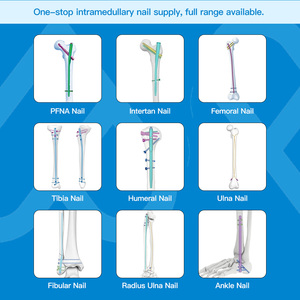
Key Metallurgical Insight: Ti-6Al-4V ELI (Extra Low Interstitial) contains reduced levels of oxygen, nitrogen, carbon, and iron. This ultra-pure chemical formulation yields exceptional fracture toughness and superior fatigue strength, making it ideal for high-stress orthopedic aiming instruments, intramedullary nails, and micro-forceps.
Technical Comparison: Titanium Grade 5 vs. Grade 2 vs. German Stainless Steel (AISI 420)
| Performance Metric |
Ti-6Al-4V ELI (Grade 5 ASTM F136) |
Commercially Pure Ti (Grade 2 ASTM F67) |
Martensitic Stainless Steel (AISI 420) |
| Density (g/cm³) |
4.43 (45% lighter than steel) |
4.51 (43% lighter than steel) |
7.75 (Standard weight) |
| Tensile Strength (MPa) |
860 - 960 MPa |
345 - 480 MPa |
650 - 850 MPa |
| Yield Strength (MPa) |
790 - 880 MPa |
275 - 450 MPa |
450 - 600 MPa |
| MRI Compatibility |
100% Non-Magnetic (Zero Torque) |
100% Non-Magnetic (Zero Torque) |
Ferromagnetic Artifact Risk |
| Corrosion Resistance |
Immune to pitting & physiological fluids |
Immune to pitting & saline solution |
Prone to pitting after 500+ autoclave cycles |
| Modulus of Elasticity (GPa) |
114 GPa (Close to human bone) |
105 GPa |
200 GPa (Rigid shock transfer) |
Clinical Advantages of Titanium in Operative Environments
From the perspective of surgical teams operating during 6- to 12-hour complex procedures, titanium surgical tools provide distinct physiological advantages:
- Surgeon Fatigue Reduction: Because titanium exhibits a density of 4.43 g/cm³ compared to 7.75–8.0 g/cm³ for stainless steel, titanium micro-scissors, needle holders, and retractors weigh roughly half as much. This dramatically reduces hand tremor and muscular tension during micro-vascular and neurological surgery.
- Zero Magnetic Field Interference: Under modern intraoperative MRI (iMRI) imaging protocols (3.0 Tesla and 7.0 Tesla systems), steel instruments present severe risks of displacement due to magnetic pull, while creating massive image distortion artifacts. Titanium is completely non-paramagnetic, allowing real-time MRI guided tumor resection and spinal alignment.
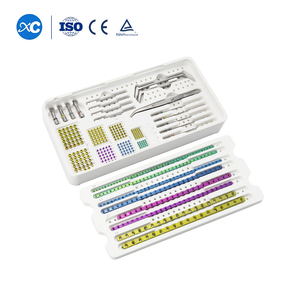
- Natural Oxide Anodization (Color Coding): Titanium forms a self-passivating surface layer of titanium dioxide (TiO2). Through Electrochemical Anodization (Type II and Type III), we create vibrant, permanent color coding (Gold, Blue, Magenta, Green) without synthetic coatings or toxic dyes, enabling instant instrument size recognition during rapid intraoperative setups.
Global Procurement Trends: Strategic Sourcing of Titanium Surgical Instruments (2025–2035)
As healthcare systems face increasing fiscal scrutiny paired with stricter regulatory mandates (such as the transition from EU MDD to EU MDR 2017/745), procurement managers and medical device distributors must overhaul their supply chain criteria. Sourcing titanium instruments is no longer just a transaction—it is a long-term compliance and risk management partnership.
1. MDR & UDI Full Traceability
Global regulations mandate Unique Device Identification (UDI) laser etched directly onto reusable surgical tools. Enterprise buyers demand fully traceable batch raw material certification (MTR) from ingot to final passivated tool.
2. Total Cost of Ownership (TCO)
While initial capital expenditure for titanium instruments is 35%–50% higher than stainless steel, their operational lifecycle is 3x to 4x longer. Resistance to chemical corrosion during harsh enzymatic cleaning cuts replacement rates by 65% over 5 years.
3. Agility in OEM Private Labeling
Distributors are moving away from monolithic brands toward agile OEM manufacturers who offer custom laser branding, bespoke tray configurations, and flexible Minimum Order Quantities (starting at 300 units for custom runs).
According to recent global medical procurement benchmarks, hospital central sterile supply departments (CSSD) report up to 40% reduction in instrument refurbishing costs when transitioning orthopedic sets to anodized titanium alloys. Fizza Surgical International supports this transition by supplying full Technical Documentation Packs, Material Safety Sheets, and EU MDR Class I & III Compliance Dossiers.
Future Development & Manufacturing Trends in Medical Titanium
The manufacturing ecosystem for surgical instruments is undergoing a technological revolution driven by micro-machining, additive manufacturing, and artificial intelligence-driven quality control.
Key Technological Directions Driving Next-Generation Titanium Tools:
- Hybrid Additive-Subtractive Manufacturing: 3D printing (Direct Metal Laser Sintering - DMLS) of porous titanium handles combined with 5-axis CNC high-precision edge grinding. This allows the creation of ultra-lightweight hollow-handle surgical clamps with ergonomic grip textures previously impossible to forge.
- Femtosecond Laser Edge Honing: Traditional manual polishing of micro-cutters is giving way to femtosecond laser ablation. This technology achieves sub-micron cutting edge radii on titanium scissors, dramatically improving micro-vascular vessel incision accuracy without creating micro-burrs.
- PVD Nano-Coating Innovations: Combining titanium bases with Physical Vapor Deposition (PVD) coatings such as Titanium Aluminum Nitride (TiAlN) and Diamond-Like Carbon (DLC) increases surface hardness up to 2,800 HV (Vickers), eliminating blade dulling in bone-cutting rongeurs and osteotomes.
- Automated In-Line Optical Quality Control (AOI): To achieve zero-defect production, advanced factories utilize high-resolution 3D optical scanners during CNC turning to verify dimensional accuracy against CAD drawings within ±0.002mm tolerances before passivation.
Enterprise Excellence: Why Partner with Fizza Surgical International?
Rooted in Sialkot, Pakistan—the globally recognized capital of surgical instrument craftsmanship—Fizza Surgical International combines over four decades of traditional hand-finishing mastery with state-of-the-art German CNC machinery and rigorous quality control protocols.
Certified Quality Management
Fully certified under ISO 13485:2016 and ISO 9001:2015, audited by DEKRA. Registered with the US FDA under Establishment Registration 3019842214.
25,000+ Tooling Catalog
Extensive master pattern library covering General Surgery, Dental Implantology, Orthopedic Trauma (AO ALPS Systems), Laparoscopy, Veterinary Science, and Plastic Surgery.
Factory-Direct Manufacturing
Zero trading middlemen. From drop-forging and vacuum heat treatment to ultrasonic cleaning, passivation, and laser marking—all processes occur under one roof.
Contact Us
Frequently Asked Questions (FAQ) for Global Procurement Officers
Clear, direct answers regarding materials, custom manufacturing, regulatory compliance, and logistics.
Q1: Which titanium alloy grades do you use for surgical vs dental instruments?
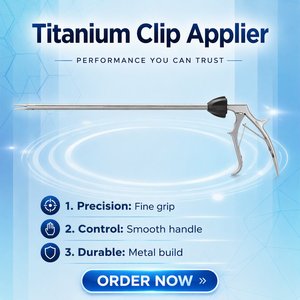
We primarily utilize Ti-6Al-4V ELI (Grade 5, ASTM F136) for high-stress structural instruments such as intramedullary nail aiming sets, orthopedic plate benders, laparoscopic clip appliers, and bone forceps. For dental implant components, impression cylinders, and micro-dissectors requiring precise ductility, we utilize Commercially Pure Titanium (Grade 2, ASTM F67). All raw materials are supplied with mill test certificates confirming mechanical and chemical properties.
Q2: What is the Minimum Order Quantity (MOQ) for OEM private-label manufacturing?
Our standard OEM minimum order quantity starts at 300 units per pattern. This includes custom fiber-laser logo marking, private catalog numbering, custom color-anodized ring identification, and specialized sterile barrier pouch packaging or custom printed box packaging.
Q3: How do you verify biocompatibility and corrosion resistance after CNC machining?
All titanium tools undergo automated ultrasonic multi-stage degreasing followed by citric or nitric acid passivation according to ASTM F86 standards. This process removes free surface iron particles introduced during CNC tooling and accelerates the growth of a uniform, corrosion-resistant Titanium Oxide (TiO2) passive film. We perform copper sulfate testing and boiling water boil tests to guarantee zero surface contamination.
Q4: Are your titanium surgical instruments fully compliant with EU MDR 2017/745?
Yes. Our quality management system is certified to ISO 13485:2016 by DEKRA. Reusable surgical instruments are CE marked as Class I devices under EU MDR 2017/745 and registered in the EUDAMED database. For Class III implant sets (such as intramedullary nails), we provide full technical dossiers, risk management files (ISO 14971), and clinical evaluation reports (CER).
Q5: What are the standard lead times for custom prototype sampling and bulk orders?
Stock catalog patterns dispatch within 7 to 10 working days. Custom OEM prototypes developed from CAD drawings or physical samples take 15 to 20 working days. Bulk production orders generally ship within 20 to 30 working days via DHL, FedEx, air cargo, or ocean freight, complete with full customs documentation and Certificate of Conformance.
Q6: Can you manufacture custom surgical instrument sets based on surgeon samples or CAD drawings?
Yes. Our engineering division features experienced CAD/CAM designers operating SolidWorks and Mastercam software. We can reverse-engineer physical surgical tools or work directly from STEP/IGES CAD files to produce high-precision CNC prototype samples for surgeon evaluation prior to mass production.
Q7: How do titanium instruments perform under repeated hospital steam sterilization?
Titanium possesses exceptional resistance to thermal shock and chemical attack. Our titanium tools are rated for over 3,000 autoclave cycles at 134°C (273°F) and 2.1 bar pressure without experiencing stress-corrosion cracking, color fading of anodized layers, or mechanical joint stiffness.
Q8: How can prospective distributors request evaluation samples?
Distributors, hospital purchasing managers, and OEM partners can request sample instruments by clicking our instant live chat portal below. Our technical sales team will assist in selecting appropriate patterns and dispatching evaluation samples along with technical documentation packs.
 Surgical Instrument Manufacturer