 Surgical Instrument Manufacturer Surgical Instrument Manufacturer
 Precision-crafted from German-grade AISI 316L/304 stainless steel, compliant with ISO 11607 sterile barrier standards and engineered for 5,000+ autoclave steam cycles.
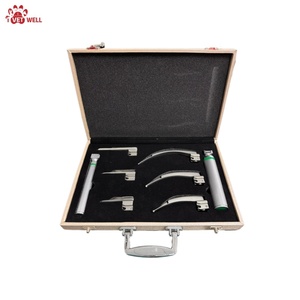
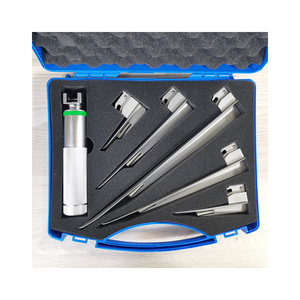
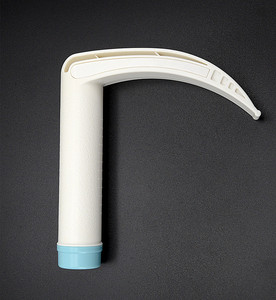
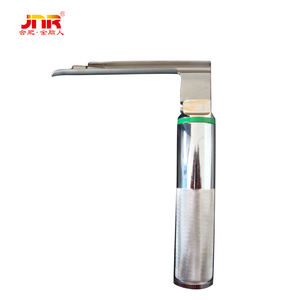
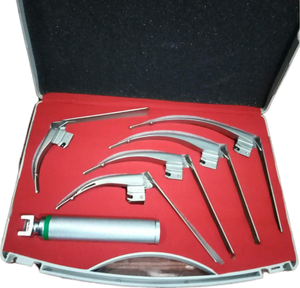
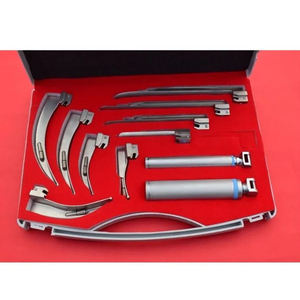
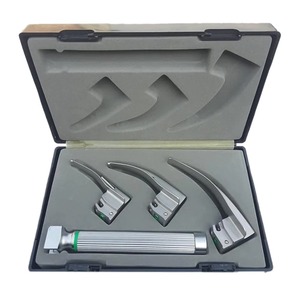
In modern hospital Central Sterile Supply Departments (CSSD), surgical centers, and dental clinic chains, the integrity of an autoclave box (sterilization cassette/rigid container system) dictates both patient safety and instrument longevity. As a leading manufacturer and global exporter based in China, our manufacturing facilities engineer rigid container systems and custom medical trays designed to maintain absolute sterile barrier integrity (ISO 11607-1/2) across hundreds of high-pressure moist heat cycle stress tests.
The core cause of premature autoclave box degradation, micro-pitting, and surface discoloration during high-temperature steam sterilization ($134^\circ\text{C}$ at $2.1\text{ bar}$) lies in inferior steel alloy selection. Our engineering team utilizes strict German-grade martensitic and austenitic alloys to match specific mechanical stress profiles:
| Material Alloy | Composition Breakdown | Corrosion Resistance | Primary Medical Application |
|---|---|---|---|
| AISI 304 (1.4301) | 18% Cr / 8% Ni | High (Standard Steam Cycle) | Sterilization Box Covers, Perforated Trays, Wire Baskets |
| AISI 316L (1.4404) | 16% Cr / 10% Ni / 2% Mo | Superior (Chlorides & Chemical Resistance) | Heavy-Duty Autoclave Containers, Implants & High-Wear Trays |
| Anodized Aluminum (5000 Series) | Magnesium-Stabilized Al | Excellent (Lightweight Thermal Distribution) | Rigid Sterilization Box Covers, Color-Coded Filter Lids |
| Medical Silicone (50-60 Shore A) | Platinum-Cured Elastomer | Heat Resistant up to 200°C | Internal Fixation Mats, Instrument Retaining Strips |
Every stainless steel autoclave box manufactured in our facility undergoes chemical electropolishing to achieve a Surface Roughness Average ($Ra$) of $< 0.4\,\mu\text{m}$. This mirror-smooth, ultra-passivated finish prevents biofilm adhesion, reduces chemical residue buildup, and facilitates rapid moisture evaporation during the drying phase of the autoclave cycle.
Unpassivated steel retains free iron particles on the surface left by machining, stamping, and laser cutting processes. Under high-temperature steam, these particles oxidize, producing unsightly rust spots (tea staining). To eliminate this risk, our production workflow mandates automated nitric and citric acid passivation adhering strictly to ASTM A967 and ISO 16061 guidelines. Furthermore, salt-spray chamber testing (ASTM B117) is conducted on batch samples for over 100 continuous hours without corrosion failure.
An effective autoclave box must balance two conflicting functional objectives: maximizing steam penetration during the sterilization phase while ensuring rapid steam evacuation during the vacuum drying cycle to avoid "wet packs" (a primary cause of post-autoclave contamination). Our engineered perforated cassettes utilize an optimized 40% surface open-area ratio combined with hydrophobic PTFE permanent filter discs or single-use paper filters, ensuring air displacement and complete microbicidal lethality without compromising physical barrier security.
Combining four decades of surgical engineering heritage with high-volume automated manufacturing under ISO 13485:2016 governance.
Our quality management system is fully certified to ISO 13485:2016 and ISO 9001:2015 by DEKRA. Reusable medical devices and sterilization containers are CE marked under EU MDR 2017/745 with complete EUDAMED registration.
We support global distributors and medical device brands with custom private label solutions. From laser logo marking, customized cassette sizing, ring color coding, to specialized silicone instrument holders starting at just 300 units.
Holding active FDA Establishment Registration (3019842214), our factory products enter North American and European hospital markets seamlessly with total regulatory compliance, Device Master Files (DMF), and UDI traceability.
Supplying major hospital groups, dental clinic chains, and surgical distributors across North America, Europe, the Middle East, and Asia with 10–20 day dispatch turnaround times and reliable export documentation.
From die forging, stamping, deep drawing, to progressive CNC laser welding, every phase of production is managed in-house under strict quality gates, avoiding third-party markup and guaranteeing dimensional uniformity.
We back our German-standard instrument sets and autoclave boxes with a 3-year structural performance warranty and a 14-day hassle-free replacement guarantee on initial delivery inspections.
As healthcare procurement shifts toward sustainable lifecycle costing, sterile processing automation, and strict regulatory compliance under EU MDR, B2B buyers must align with forward-thinking manufacturing partners. Here are the core technological trends defining the future of autoclave box sourcing:
Modern CSSDs are replacing manual logbooks with RFID-embedded autoclave boxes and laser-engraved 2D DataMatrix UDI codes. Our next-generation cassettes feature recessed slots designed specifically for autoclavable ceramic RFID transponders, enabling automated cycle logging, instrument counts, and maintenance alerts.
Hospitals are actively phasing out single-use blue sterilization wrap and disposable paper filters to minimize clinical waste. Rigid container systems equipped with permanent PTFE microbial retention filters (rated for over 5,000 autoclave cycles without integrity loss) deliver significant ROI within 12 months of procurement.
With operating rooms demanding rapid tray turnaround, standardized DIN cassette sizes (1/1, 1/2, 1/4 DIN) with snap-in, reconfigurable platinum-cured silicone studs allow surgical technicians to reconfigure tray layouts internally without buying entirely new container shells.
Reducing container weight while enhancing thermal conductivity accelerates steam condensate evaporation. Advanced hybrid boxes combining deep-drawn thin-wall AISI 316L bases with anodized aluminum lids reduce drying cycle times by up to 25%, saving valuable sterilizer energy.
Addressing the technical, regulatory, and supply chain queries raised most frequently by international medical equipment buyers.
Request comprehensive OEM catalogues, material technical specifications, or custom prototype quotations for your medical distribution network today.
Get a Quote