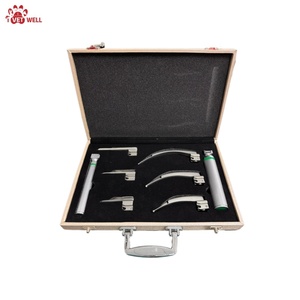
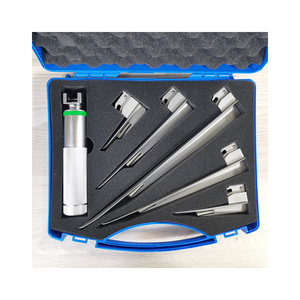
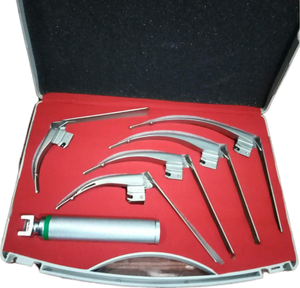
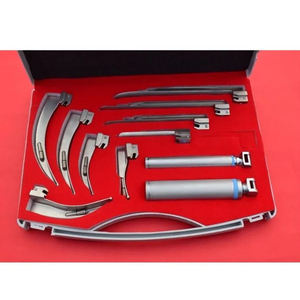
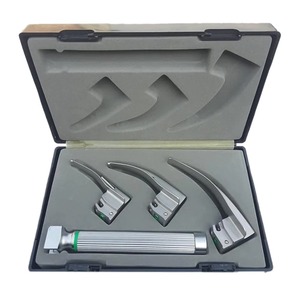
Featured Surgical & Airway Instrumentation Systems
Rigidly passivated, dimensionally verified according to DIN & ASTM standards, designed for repeated autoclave sterilization and demanding clinical environments.
1. Executive Market Intelligence: The Shift in Global Orthopedic & Surgical Sourcing
The international supply chain for medical devices—specifically reusable surgical instruments, bone surgery sets, and specialized airway management kits—is undergoing a structural realignment. Procurement directors, hospital purchasing alliances, and OEM contract clients across Europe, North America, and the APAC region are facing unprecedented regulatory scrutiny under frameworks such as the European Union’s Medical Device Regulation (EU MDR 2017/745) and US FDA 21 CFR Part 820 cGMP requirements.
China and established precision cluster hubs (including integrated manufacturing ecosystems with legacy forging centers like Sialkot) have positioned themselves as critical global nodes for high-grade surgical instruments. By integrating advanced CNC multi-axis milling, automated die-forging, and vacuum heat treatment with meticulous hand-finishing, leading manufacturers can deliver instruments forged from medical-grade AISI 420 (Martensitic stainless steel) and AISI 316L (Austenitic steel) at cost structures 35% to 50% lower than traditional Western European brands—without sacrificing metallurgical performance or clinical ergonomics.
Information Gain Insight for Sourcing Officers: Sourcing high-load surgical tools (such as orthopedic bone rongeurs, osteotomes, and fiber-optic laryngoscope assemblies) requires evaluating non-linear wear resistance. Martensitic steels must maintain a Rockwell Hardness (HRC) between 50 and 55 following double-tempering processes to prevent brittle fracture under heavy levering forces during trauma surgery.
Understanding raw material selection is paramount when evaluating surgical instrument factories. Top manufacturers utilize distinct steel formulations certified via mill test reports (MTR) according to ISO 7153-1 specifications. The mechanical profile must align precisely with the operational function of the clinical instrument:
Steel Grade & Type
Composition Profile
Target Hardness (HRC)
Primary Clinical Application
Corrosion & Autoclave Endurance
AISI 420 / 420J2 (Martensitic)
12–14% Cr, 0.15–0.40% C
50 – 54 HRC
Bone Shears, Rongeurs, Scissors, Forceps Jaws
High hardness; requires chemical passivation per ASTM A967
AISI 410 (Martensitic)
11.5–13.5% Cr, <0.15% C
40 – 45 HRC
Retractors, Specula, Handles, Surgical Trays
Moderate tensile strength; excellent ductility against bending shock
AISI 304 (Austenitic)
18–20% Cr, 8–10.5% Ni
Non-Hardenable
Sterilization Drums, Kidney Bowls, Holloware Kits
Superior chemical resistance to saline and enzymatic detergent wash cycles
AISI 316L (Austenitic Low-Carbon)
16–18% Cr, 10–14% Ni, 2–3% Mo
Non-Hardenable
Implantable Devices, Micro-Vascular Clamps
Maximum resistance to pitting corrosion in chloride-rich biological fluids
Tungsten Carbide (TC) Inserts
WC-Co Sintered Composite
> 70 HRC
Gold-Handle Needle Holders & Super-Cut Scissors
Extends cutting edge life span by 5x compared to standard stainless steel
Quality assurance during manufacturing requires a rigorous four-stage gate: Gate 1 Raw Material Spectrophotometry & Forging Grain Inspection; Gate 2 CNC Machining & Vacuum Heat Treatment; Gate 3 Chemical Electropolishing & Passivation (Nitric/Citric per ASTM A967); and Gate 4 Ultrasonic Cleaning & Final Dimensional Inspection against DIN and ASTM tolerances.
3. Future Sourcing Trends: 2025–2030 Global Procurement Outlook
As hospital procurement teams pivot toward total cost of ownership (TCO) models, several key macro trends are defining the future of surgical and orthopedic instrument purchasing:
UDI & GS1 DataMatrix Integration
Global regulatory bodies require direct part marking (DPM) laser etching on reusable instruments. Machine-readable 2D DataMatrix codes enable automated hospital tray tracking and sterilization audit trails.
EU MDR Class Ir Certification
Under EU MDR 2017/745, reusable surgical instruments (Class Ir) demand verified technical documentation, Notified Body (e.g., DEKRA, TÜV SÜD) audit certificates, and documented biological evaluations (ISO 10993).
Hybrid Sourcing Models
Distributors are leveraging direct factory partnership networks to secure high-volume core tooling (like osteotomes and forceps) directly from certified original equipment manufacturers with low 300-unit OEM thresholds.
4. Technological Evolution in Orthopedic Instrument Manufacturing
Modern orthopedic procedures—ranging from total joint arthroplasty to complex spinal reconstruction and trauma fixation—demand surgical hand tools that eliminate user fatigue while offering supreme tactile feedback. Technological developments in China’s top manufacturing facilities focus on three critical engineering vectors:
A. Ergonomic Dynamic Weight Distribution & Anti-Glare Finishing
Surgeons performing multi-hour procedures require lightweight, balanced handles. The integration of hollow-core stainless steel handles, coupled with bead-blasted satin or matte finishes, prevents specular reflection under high-intensity operating theater lighting. This reduces eye fatigue for operating room personnel while maintaining a tactile non-slip grip under fluid-exposed conditions.
B. Advanced PVD & Titanium Nitride Coating Systems
Physical Vapor Deposition (PVD) coatings, including Titanium Nitride (TiN) and Diamond-Like Carbon (DLC), are increasingly applied to high-wear contact zones like bone cutting edges, drill guides, and reamer shafts. These coatings increase surface hardness beyond 80 HRC, drastically lower friction coefficients, and protect against premature galling during high-speed bone cutting.
C. Optical Bundle Transmission Optimization in Airway & Endoscopic Instrumentation
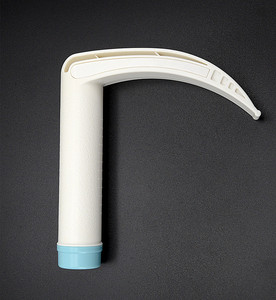
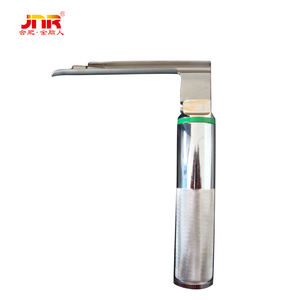
For fiber-optic airway intubation sets and laryngoscope blades (such as Macintosh and Miller patterns), optical transmission efficiency depends on bundle glass purity. High-end production uses fused multi-filament fiber optics containing over 5,500 individual glass strands, encased in seamless stainless steel sheathing. This optical layout maximizes light output (> 12,000 Lux at 35mm distance) while withstanding hundreds of automated washer-disinfector and steam autoclave cycles without optical clouding.
When conducting supplier audits for medical device manufacturing partners, purchasing managers should implement an objective, weighted scorecard. The matrix below outlines the critical audit parameters required to verify operational stability, legal compliance, and technical capabilities:
Audit Dimension
Evaluation Criteria & Verification Documents
Critical Benchmark / Passing Requirement
Risk Weight
Quality System (QMS)
ISO 13485:2016 & ISO 9001:2015 certificates issued by accredited Notified Bodies (e.g., DEKRA).
Active scope covering design, forging, machining, and sterilization packaging.
25%
Regulatory Approval
CE Marking Technical Documentation (EU MDR 2017/745 Class Ir), EUDAMED registration, FDA Establishment Reg #3019842214.
Full regulatory clearance for target export markets with UDI implementation.
25%
Metallurgical Quality
Batch Material Test Reports (MTR), Spectrographic analysis, Salt spray corrosion test records (ISO 9227).
Conformity with ISO 7153-1 / ASTM F899 surgical grade steel standards.
Minimum Order Quantity (MOQ) starting at 300 units per pattern for custom private labels.
15%
Batch Traceability & CAPA
Documented Corrective and Preventive Action (CAPA) logs, raw material lot tracking to finished serial numbers.
100% material lot-to-shipment traceability with complete Device History Records (DHR).
15%
6. Enterprise Overview & Factory Advantage
Rooted in a manufacturing legacy established in 1980, our integrated manufacturing organization synthesizes decades of specialized hand-craftsmanship with modern ISO 13485:2016 quality systems audited by DEKRA. With over 25,000 active master tooling patterns across orthopedic, surgical, dental, laryngoscope, and veterinary lines, our facility supplies healthcare distributors, surgical kit packagers, and hospital procurement alliances in more than 50 countries.
Certified Regulatory Compliance
CE marked under EU MDR 2017/745 Class Ir, listed in EUDAMED, registered with the US FDA (Establishment Registration 3019842214), and fully compliant with cGMP standards.
Flexible OEM Private Labeling
Full support for private-label brands with low minimum order quantities starting at 300 units per pattern. Customized fiber laser marking, ring color coding, custom packaging, and private catalog numbering.
Rapid Dispatch Logistics SLA
Stock patterns ship within 7–10 working days, while custom OEM production runs complete within 10–20 working days, supported by complete export documentation (CoO, Form E, MoC, Invoice, Packing List).
7. Frequently Asked Questions (FAQ) for Global Procurement Officers
What specific stainless steel grades are used for orthopedic and airway instruments?
Reusable cutting and bone-clamping instruments (such as bone rongeurs, chisels, and osteotomes) are forged from German-grade AISI 410, AISI 420, and AISI 440 martensitic stainless steel. These alloys undergo vacuum heat treatment to achieve Rockwell C hardness (HRC 50-55) for optimal edge retention. Non-cutting structural parts, hospital holloware, sterilizing trays, and drum bodies utilize AISI 304 and AISI 316 austenitic stainless steel for maximum pitting corrosion resistance during automated autoclave cycles.
What is the Minimum Order Quantity (MOQ) for custom OEM private label orders?
Our standard OEM private-label branding program starts at a modest 300 units per individual pattern. This service includes high-precision fiber laser etching for custom logos and unique item catalog numbers, color-coded identification rings, customized blister or pouch packaging, and tailored technical instruction sheets (IFU). Mixed-pattern batch orders can be negotiated for distributor trial programs.
How do you verify compliance with EU MDR 2017/745 and US FDA requirements?
Our quality management system is independently certified to ISO 13485:2016 and ISO 9001:2015 by DEKRA. Reusable devices are CE marked as Class I / Class Ir devices under EU MDR 2017/745, registered in the EUDAMED database, and backed by complete technical documentation files. Additionally, our manufacturing plant holds US FDA Establishment Registration number 3019842214, ensuring smooth customs clearance and regulatory audit compliance.
What are the standard production lead times and global shipping options?
Standard catalog items in stock ship within 7 to 10 working days. Custom OEM orders and large tender production runs require 10 to 20 working days. Shipments are dispatched worldwide via DHL, FedEx, air cargo, or ocean freight. Every export delivery includes a complete documentation binder: commercial invoice, detailed packing list, Certificate of Origin (CoO), Material Test Certificate, and Declaration of Conformity.
Are evaluation samples provided prior to committing to a bulk production order?
Yes. We encourage medical device distributors, hospital purchasing committees, and OEM partners to order evaluation samples. This allows clinical evaluation of balance, jaw grip, hinge alignment, and edge sharpness, as well as Central Sterile Services Department (CSSD) validation for repeated steam sterilization cycles before finalizing contract commitments.
How does your factory protect original design IP during custom tooling development?
We sign formal Non-Disclosure Agreements (NDAs) prior to receiving proprietary CAD files or physical prototypes. All custom tooling dies, CNC machining programs, and production molds remain the exclusive property of the client and are securely archived under strictly controlled access protocols.
Connect with our senior engineering team to receive full catalog specs, material test reports, OEM private-label pricing, and regulatory compliance dossiers for your market.