 Surgical Instrument Manufacturer Surgical Instrument Manufacturer
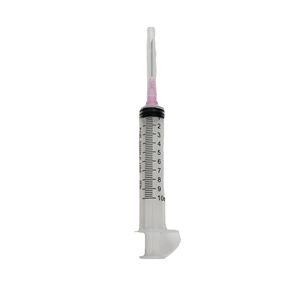
 Direct factory recommendations engineered for high-precision local anesthesia delivery, post-operative irrigation, dual-barrel resin application, and specialized teeth whitening formulations.
A comprehensive examination of raw material metallurgy, mechanical aspiration physics, tolerance thresholds, and surface passivation for global B2B procurement teams.
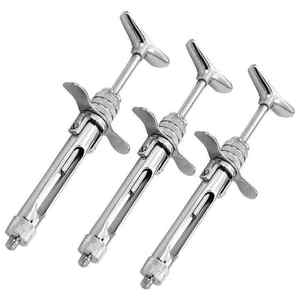
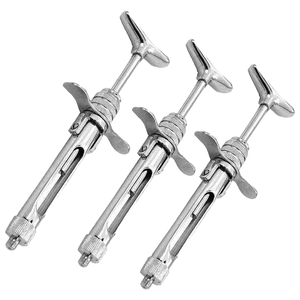
Reusable aspirating syringe frames require high yield strength to endure tactile resistance during intraoral nerve blocks. Premier original equipment manufacturers leverage German-grade AISI 420 and 440 martensitic stainless steel for thumb rings, harpoons, and barrel retainers. Non-cutting components and holloware utilize AISI 304/316 austenitic stainless steel for maximum chemical resistance during repeated steam sterilization cycles.
Preventing intravascular injection of local anesthetics demands absolute precision in back-pressure dynamics. Passive aspirating syringes depend on elastic membrane deflection within specialized anesthetic cartridges, whereas active aspirating mechanisms employ solid, double-barbed stainless steel harpoons that engage directly with the rubber plunger. Factory tolerance must adhere to tight dimensional boundaries (DIN 13940) to eliminate mechanical play.
Proper electropolishing and nitric-acid passivation remove free iron particles from newly machined steel, synthesizing a uniform chromium oxide surface layer ($Cr_2O_3$). This microscopic barrier resists pitting corrosion caused by sodium hypochlorite rinsing agents and repeated autoclaving at 134°C (273°F). Substandard manufacturing skipping this stage leads to premature rusting within 15–20 sterilizations.
| Material Category | Primary Applications | Key Mechanical Properties | Sterilization Method Compatibility | Regulatory Compliance Standards |
|---|---|---|---|---|
| AISI 420 Stainless Steel | Aspirating Syringes, Harpoon Shafts, Handles | High Tensile Strength (HRC 48-52), Bending Resistance | Autoclave (134°C), Dry Heat, Ethylene Oxide (EtO) | DIN EN ISO 7153-1, ASTM F899 |
| AISI 316L Stainless Steel | Cartridge Sleeves, Medical Trays, Holloware | Superior Corrosion & Salt Resistance, Molybdenum-enhanced | Autoclave, Gamma Irradiation, Chemical Vapour | ISO 5832-1, EU MDR 2017/745 Class I |
| Borosilicate Type I Glass | Prefilled Anesthesia & Suction Syringe Barrels | Zero Chemical Extractables, Thermal Shock Resistant | Industrial Steam Autoclaving, EtO Gas | USP Type I, EP 3.2.1, ISO 11040-4 |
| Medical Grade Polypropylene (PP) | Disposable Dual-Barrel, Whitening Gel & Irrigation Syringes | BPA/DEHP Free, Chemically Inert to Peroxides & Resins | Single-use EtO, Gamma Sterilization (25-40 kGy) | FDA 21 CFR 177.1520, ISO 10993 Biocompatibility |
Analyzing shifting macro-dynamics in B2B medical purchasing, eco-friendly polymer replacement, needle-free infiltration adoption, and direct-from-factory OEM risk mitigation.
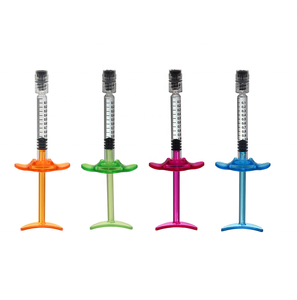
Dental anxiety affects over 36% of the global population, making needle-free spring-loaded and jet-injection dental syringes a core focus for procurement officers. These systems push local anesthetic solution through micro-orifices ($0.15\text{ mm}$ in diameter) under high pressure ($2,000\text{ to }3,200\text{ psi}$), penetrating the oral mucosa instantly without mucosal puncture. Forward-thinking distributors are rapidly expanding their OEM portfolios to capture market share in pediatric and cosmetic dental practices.
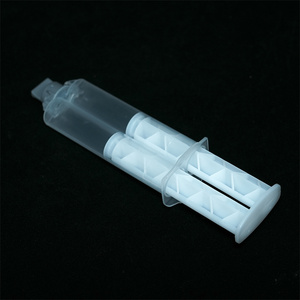
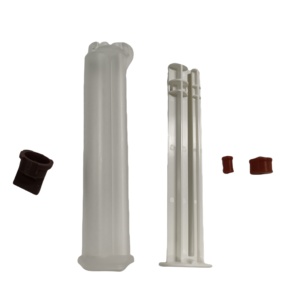
The rise of advanced restorative dentistry, teeth whitening gels (Hydrogen Peroxide / Carbamide Peroxide), and core build-up resins has escalated demand for dual-component 1:1 and 4:1 ratio syringes. Factories equipped with high-precision multi-cavity injection molding can guarantee seal integrity between barrels, preventing cross-contamination prior to dispensing through specialized static mixing tips.
The full enforcement of European Medical Device Regulation (EU MDR 2017/745) and FDA Unique Device Identification (UDI) mandates has altered global supplier selection. Healthcare buyers no longer accept uncertified trading intermediaries. Sourcing directly from verified manufacturing facilities with DEKRA-audited ISO 13485 quality systems and complete Technical Documentation Files is mandatory to eliminate customs bottlenecks and liability risks.
Four decades of metallurgy craftsmanship combined with state-of-the-art CNC precision engineering in Sialkot, Pakistan—delivering world-class surgical tools to 50+ countries.
From initial hot-die forging of stainless steel billets to automated CNC milling, hand grinding by master artisans, electropolishing, and laser etching—every production phase occurs under one roof. By avoiding outsourced sub-contractors, we guarantee absolute lot-to-lot consistency and eliminate middleman price markups.
We empower global dental brands, hospital procurement tenders, and regional distributors with private-label options starting at just 300 units per pattern. Services include permanent fiber-laser logo marking, customized catalog numbers, silicone ring color-coding, sterile blister pouching, and bespoke retail box design.
Quality assurance is governed by a 4-tier gate check: incoming raw material spectral analysis, dimensional check post-machining, spring tension and aspiration pressure testing, and final AQL 1.0 visual/functional audit before export packaging. Every order includes a complete Certificate of Conformance and Material Traceability Sheet.
Expert technical answers to high-intent questions raised by B2B medical buyers, dental clinic groups, and OEM procurement managers.
Aspirating dental syringes feature a specialized harpoon or passive ring mechanism that creates negative pressure within the local anesthetic cartridge when the operator releases plunger pressure. This draws fluid back into the cartridge; if blood appears, it signals that the needle tip has entered a blood vessel, prompting the clinician to reposition. Non-aspirating syringes lack this safety mechanism and are primarily restricted to topical application or non-vascular irrigation procedures.
Medical-grade AISI 420 (martensitic stainless steel) is recommended for structural handles, barrels, and harpoon rods due to its high yield strength, hardness (HRC 48-52), and resistance to mechanical deformation. For non-bearing components or trays, AISI 304 or 316L austenitic stainless steel provides exceptional resistance against chemical corrosion, surface oxidation, and thermal stress during 134°C (273°F) steam sterilization.
Our factory supports flexible OEM private labeling starting at an MOQ of 300 units per pattern design. This includes high-precision fiber-laser logo etching, custom catalog numbers, custom packaging (pouch, blister, or printed box), and color-coded ring options for rapid clinical identification.
Yes. All reusable and disposable dental syringes are produced under an ISO 13485:2016 and ISO 9001:2015 certified Quality Management System. Reusable Class I manual devices carry full CE marking under EU MDR 2017/745 with EUDAMED listings, and our facility maintains active US FDA Establishment Registration (Registration No. 3019842214).
Harpoons are CNC-machined from hardened stainless steel with optimized barb angles (typically 45° retention angle) and undergo controlled vacuum heat treatment. This ensures the tip remains sharp enough to penetrate high-density rubber stoppers reliably without dulling or breaking after repeated sterilization cycles.
Reusable metal syringes are individually poly-bagged or packed in custom presentation boxes with protective foam inserts. Disposable dual-barrel, irrigation, and silicone rubber syringes can be supplied bulk-packed or individually sealed in medical-grade paper-plastic blister pouches pre-sterilized via Ethylene Oxide (EtO) or Gamma irradiation, complete with indicator strips.
Standard catalog items ship in 7 to 10 working days. Custom OEM orders, private-label branding, or tender-scale manufacturing runs are typically completed and dispatched within 10 to 20 working days via global express (DHL/FedEx), air freight, or ocean container with full export customs clearance documentation.