Breast Dissector Manufacturer & Exporter in the Houston Market

Engineered Precision Dissectors & Mammaplasty Instruments for Texas Medical Center Hospitals, Houston Aesthetic Surgery Centers & Global OEM Buyers

Precision Surgical Portfolio

Featured Breast Dissectors & Surgical Instruments

Export-grade stainless steel instruments engineered for subpectoral elevation, pocket dissection, and precise tissue plane separation.
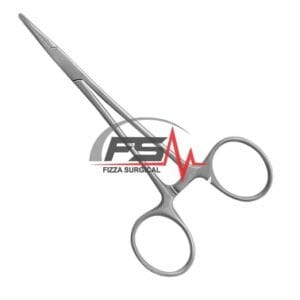
AGRIS-DINGMAN Graduated Breast Dissector
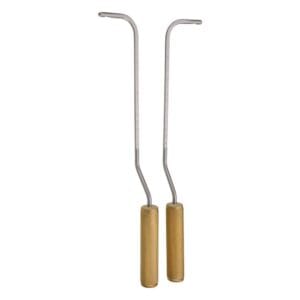
Agris-Dingman Submammary Breast Dissector (Graduated)
Designed with calibrated centimeter markings along the curved shaft for accurate pocket measuring during transaxillary and inframammary procedures.
Tebbetts Lighted Fiber-Optic Breast Dissector
Tebbetts Lighted Fiber-Optic Breast Dissector System
Integrated fiber-optic light channel allowing direct shadow-free illumination inside submuscular and dual-plane pockets.
MacCollum-Dingman Submammary Dissector
MacCollum-Dingman Transaxillary Breast Dissector
Slightly curved atraumatic spatula blade designed for rapid creation of subglandular pockets without tearing surrounding tissue.
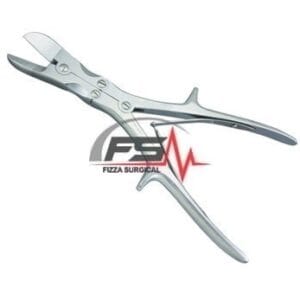
Solz Submammary Elevator & Dissector
Solz Submammary Elevator & Dual-Plane Dissector
Features an ergonomic contoured teardrop handle and semi-flexible shaft optimized for subpectoral muscle release.
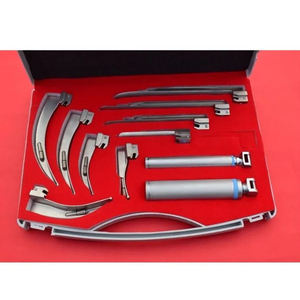
Fiber Optic Airway and Surgical Inspection Unit
Fiber-Optic Airway Inspection & Clinical Operations Unit
High-luminance fiber-optic bundle system suitable for surgical light guide connections and endoscopic intubation protocols.
Stainless Steel Surgical LED Fiber Optic Instrument
Stainless Steel LED Lighted Surgical Cavity Retractor
Cool-light LED integrated surgical steel instrument for enhanced pocket visibility in plastic and reconstructive surgery.
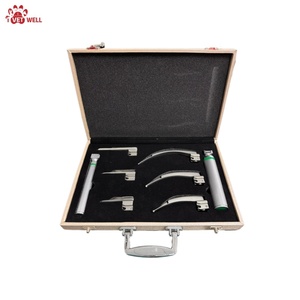
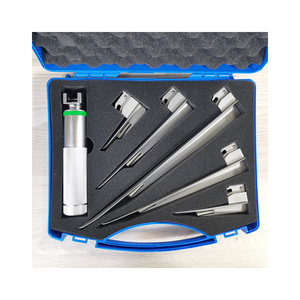
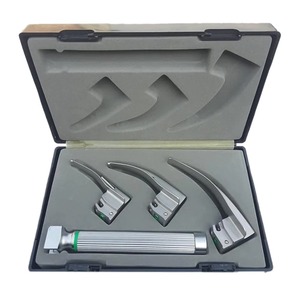
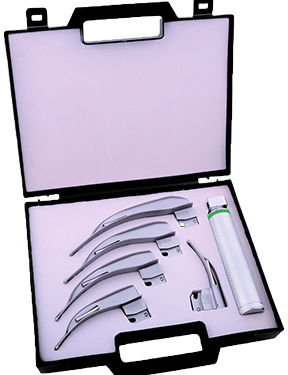
Surgical Macintosh Blade Instrument Kit
Macintosh Surgical Blade Kit & Autoclavable Handle
German AISI 420 martensitic steel blade collection built to withstand rigorous CSSD steam autoclave cycles.
Premium Manual Fiber Optic Instrument Set
Premium German Stainless Steel Dissecting Set
Comprehensive plastic surgical tray featuring precision dissection elevators, insulated instruments, and gold-plated forcep sets.
40+
Years Manufacturing
25,000+
Active Instrument Patterns
50+
Global Export Markets
100%
Passivation & QC Inspected

Information Gain: Strategic Surgical Instrument Sourcing for Greater Houston Healthcare

As Houston solidifies its position as North America's premier medical hub—anchored by the Texas Medical Center (TMC) and over 140 ambulatory surgery centers (ASCs)—surgical procurement teams face strict demands for instrument longevity, FDA 510(k) traceability, and rapid custom OEM prototyping. Our direct-factory model bridges the supply gap between Pakistani precision drop-forging craftsmanship in Sialkot and Houston’s high-volume plastic, reconstructive, and aesthetic surgical facilities.

Engineering Excellence in Breast Dissector Design & Metallurgical Standards

In aesthetic and reconstructive mammaplasty, the breast dissector is an extension of the plastic surgeon’s hand. Whether performing dual-plane subpectoral augmentation, revisionary surgery, or post-mastectomy flap reconstruction, the surgical outcomes heavily depend on tactile feedback, shaft rigidity, and tip curvature accuracy. As a specialized breast dissector manufacturer and exporter targeting the Houston market, our instruments are forged under ISO 13485:2016 quality management systems to satisfy the strict performance thresholds expected by Texas board-certified plastic surgeons.

Metallurgical Integrity: AISI 420 Martensitic vs. AISI 316 Stainless Steel

Not all surgical steels perform equally inside the operating room. Surgical breast dissectors require a distinct balance between tensile yield strength (to prevent shaft bending during tissue levering) and corrosion resistance against harsh enzymatic cleaners and steam autoclave cycles:

  • Shaft & Blade Mechanics (German AISI 420): We utilize high-grade German martensitic stainless steel (AISI 420 / DIN 1.4021) for the main working shaft and spatula blade. Heat-treated to a Rockwell hardness of 48–52 HRC, these shafts resist deformation under heavy subpectoral muscle tension while preserving fine bevel edges.
  • Ergonomic Handles (AISI 304 / Lightweight Anodized Alloys): To reduce hand fatigue during long surgical sessions in Houston operating rooms, handle assemblies are fashioned from light hollow-core AISI 304 stainless steel or ergonomic matte-finished aluminum, preventing thermal conductivity issues.
  • Surface Passivation (ASTM F899 Compliance): Every instrument undergoes chemical passivation per ASTM F899 and ISO 16061 guidelines, removing free iron from the surface and forming a self-healing chromium oxide barrier that resists pitting corrosion.

Localized Application Scenarios across Houston's Surgical Hubs

Houston, Texas represents one of the largest concentrations of surgical procedures in the world. From high-volume private cosmetic clinics along the Galleria and River Oaks corridors to academic teaching centers in the Texas Medical Center (TMC), surgical instrument requirements vary significantly by practice environment:

Texas Medical Center (TMC) Reconstructive Units

Serving complex post-oncology reconstructive procedures, tissue expansion, and microvascular free flap reconstructions. TMC surgical teams require full UDI-laser-etched instruments compliant with hospital inventory management tracking systems.

River Oaks & Galleria Aesthetic Surgery Outpatient Clinics

High-end cosmetic practices specializing in primary inframammary, periareolar, and transaxillary breast augmentations. Demand centers on Agris-Dingman graduated dissectors and Tebbetts fiber-optic illuminated models for rapid pocket creation.

Ambulatory Surgical Centers (ASCs) in Woodlands & Sugar Land

Fast-turnaround surgical suites prioritizing standardized instrument sets, long-term autoclave endurance, zero tip slippage, and low maintenance overheads for high daily case volume.

Emerging Surgical Trends & Market Dynamics in Greater Houston

The Houston plastic surgery market is rapidly evolving, driven by technological innovations in pocket elevation, shifting patient preferences, and clinical safety standards. B2B procurement officers and hospital purchasing managers are adjusting their inventory strategies to reflect four primary market shifts:

1. Transition to Fiber-Optic Lighted Dissection Tools

Visualization inside deep subpectoral pockets has traditionally required secondary retractors held by surgical assistants. Modern Houston surgeons are adopting dual-function fiber-optic dissectors (such as Tebbetts and MacCollum-Style lighted elevators). Integrated light channels deliver up to 50,000 Lux directly to the dissecting edge, reducing operative time, blood loss, and assistant dependence.

2. Growth in Dual-Plane & Prepectoral Reconstruction

With the surge in acellular dermal matrix (ADM) usage and prepectoral implant placement, surgical dissectors must feature subtle distal curves and non-abrasive spatula tips. Our modern dissector range provides controlled blunt dissection along fascia boundaries without damaging delicate dermal matrices or causing muscular tears.

3. Demand for Calibrated Depth Markers

Precise symmetry is paramount in aesthetic breast surgery. Dissectors equipped with laser-engraved centimeter scales along the shaft (Agris-Dingman pattern) allow plastic surgeons to measure pocket dimensions directly in real time, eliminating guesswork and reducing revision rates in high-volume practices.

4. Supply Chain Diversification & Direct OEM Manufacturing

Post-pandemic supply chain vulnerabilities highlighted the risk of over-reliance on domestic distributor markups. Houston healthcare buyers are increasingly contracting directly with certified original equipment manufacturers (OEMs) who offer private labeling, custom shaft angles, and factory-direct wholesale pricing.

Technical Data Matrix: Breast Dissector Specifications & Models

To assist procurement managers, sterile processing department (SPD) directors, and surgical buyers in evaluating our catalog, the technical matrix below details our core breast dissector lines:

Pattern Name Overall Length Shaft Design / Curve Illumination Option Material Grade Primary Clinical Application
Agris-Dingman 310 mm (12.25") Graduated Shaft, Slight Curved Tip Standard / Non-Lighted German AISI 420 Submammary & Transaxillary Augmentation
Tebbetts Lighted 330 mm (13.00") Flat Spatula, Slight Distal Angle Integrated Fiber-Optic Bundle AISI 420 Shaft / ACM Cable Dual-Plane Pocket Dissection & Hemostasis
MacCollum-Dingman 320 mm (12.50") Medium Curve, Smooth Bevel Edge Optional Light Port AISI 420 Stainless Steel Subglandular Pocket Elevation
Solz Elevator 300 mm (11.75") Slightly Curved Teardrop Blade Standard / Non-Lighted German Stainless Steel Submuscular Release & Fascial Separation
Biggs Mammaplasty 340 mm (13.50") Strong Curve, Rounded Tip Standard Retractor Combination AISI 304 / 420 Hybrid Reduction Mammaplasty & Mastopexy

Manufacturing Heritage & Quality Assurance: Fizza Surgical International

Forged in Sialkot—the recognized global capital for surgical instrument manufacturing—and exported across North America and Europe, our company combines traditional metal-smithing artistry with computer-controlled machining processes. For over four decades, Fizza Surgical International has maintained complete vertical integration across every manufacturing phase:

  1. Precision Die Forging: Raw steel billets are hot-forged in dedicated closed dies to ensure uniform grain flow and structural stability across the dissector shaft.
  2. CNC Milling & Hand Grinding: Skilled instrument makers hand-dress blade edges and finish spatula tips to guarantee reproducible tactile response for plastic surgeons.
  3. Vacuum Heat Treatment: Computerized vacuum furnaces harden instruments to precise HRC specs, preventing brittleness while guaranteeing flexural endurance.
  4. Electropolishing & Passivation: Automated lines clean micro-impurities from surface pores, maximizing resistance against staining and oxidation.
  5. Laser Etching & Quality Control: Final items are laser-marked with catalog numbers, lot tracking codes, and custom distributor branding prior to 100% manual tip alignment and jaw inspection.

Regulatory Compliance & Document Packs Included with Export Orders

Every shipment sent to Houston and US distributors is backed by comprehensive compliance files: ISO 13485:2016 Certification, ISO 9001:2015 Certification, CE Mark under EU MDR 2017/745, and FDA Establishment Registration (#3019842214). Material Test Certificates (MTC) proving steel chemistry are available upon request.

Frequently Asked Questions for Houston Medical Buyers & Procurement Teams

Q: What are the lead times for direct shipments of breast dissectors into Houston, Texas?
Standard catalog items in production ship via express air carrier (DHL, FedEx, UPS) within 7 to 10 working days, arriving directly at your Houston distribution center or ASC facility. Custom OEM private-label orders typically ship within 15 to 20 working days depending on laser etching and custom packaging requirements.
Q: Are your breast dissectors fully compliant with US FDA regulations?
Yes. Fizza Surgical International holds active FDA Establishment Registration (Registration #3019842214). All Class I reusable surgical devices are manufactured, passivated, and labeled in strict adherence to US FDA cGMP and QSR standards.
Q: What is the minimum order quantity (MOQ) for OEM private-label branding?
For custom laser-etched branding (including your company logo, custom part numbers, and custom packaging), our standard OEM minimum order quantity is 300 units per pattern. Mixed-pattern starter packages can also be arranged for new US distributors.
Q: How do your fiber-optic dissectors connect to standard surgical light sources?
Our lighted breast dissectors feature universal ACM/Storz-compatible light guide connectors. They hook up seamlessly to standard fiber-optic light cables and LED cold light sources commonly found in Houston operating rooms and surgical centers.
Q: Can we request evaluation samples prior to placing bulk hospital orders?
Absolutely. We regularly supply sample instruments to hospital evaluation committees, plastic surgery group practices, and medical device distributors across Texas for sterilization validation and surgeon trial.

Partner with a Global Precision Surgical Instrument Manufacturer

Upgrade your surgical inventory with export-certified breast dissectors, fiber-optic light systems, and mammaplasty instruments. Request our complete 25,000-item catalog or speak directly with our international export engineering desk today.