 Surgical Instrument Manufacturer Surgical Instrument Manufacturer
 Precision German AISI 420 & Japanese 410 Stainless Steel Rongeurs Engineered for High-Load Bone Contouring, Spine Laminectomy & Maxillofacial Surgery
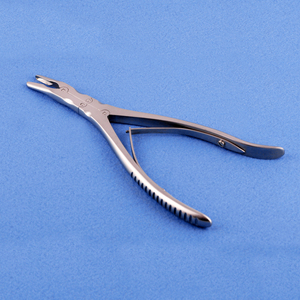
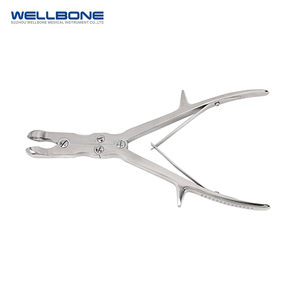
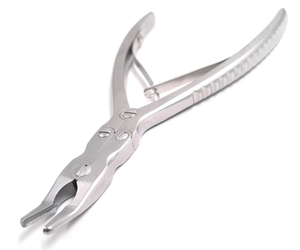
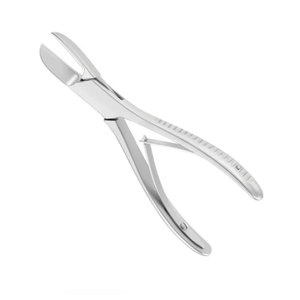
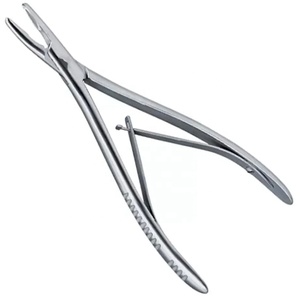
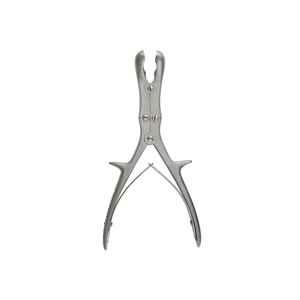
Bone rongeurs represent one of the most critical mechanical instrument categories in modern orthopedic, spinal, trauma, and oral surgery. Designed with heavy-duty cupped jaw mechanisms, single- or double-action compound leverage joints, and high-tensile spring handles, these cutting forceps are responsible for gouging, trimming, and excising dense cortical and cancellous bone structure during delicate procedures.
For healthcare procurement officers, hospital surgical directors, and medical equipment importers across Ethiopia—including Addis Ababa, Hawassa, Bahir Dar, Mekelle, Adama, and Jimma—securing reliable, autoclavable, and fatigue-resistant bone rongeurs is vital. The operational demands in Ethiopian public tertiary facilities, such as Tikur Anbessa (Black Lion) Specialized Hospital and St. Paul's Hospital Millennium Medical College, require reusable surgical tools that endure continuous sterilization cycles without jaw misalignment, pitting, or dulling of cutting edges.
Sialkot, Pakistan stands as the world's premier cluster for reusable surgical instrument manufacturing, supplying over 70% of global hand-held surgical tools. Companies like Fizza Surgical International (operating with ISO 13485:2016, ISO 9001:2015 quality management systems, CE Marking under EU MDR 2017/745, and FDA Establishment Registration 3019842214) eliminate trading middlemen. Direct factory sourcing allows Ethiopian health tenders and private medical importers to achieve up to 40% cost efficiency while guaranteeing complete material traceability per batch.
Built upon 45+ years of precision forging, CNC grinding, manual fitting, and metallurgical passivation.
Forged exclusively from German-grade AISI 420 and Japanese 410 martensitic stainless steel. Hardened to Rockwell C 48–52 to maintain razor-sharp biting edges under extreme mechanical strain.
Full regulatory documentation including ISO 13485:2016, ISO 9001:2015, CE MDR Class I compliance, EUDAMED registration, and FDA establishment listing (3019842214) for seamless Ethiopian EFDA customs clearance.
Tailored branding from 300 units per pattern. Includes fiber laser etching of institutional logos, custom catalogue numbering, handle ring color coding, and bespoke sterilization tray packing.
The Ethiopian healthcare landscape is undergoing rapid modernization driven by national surgical scale-up programs (such as the Saving Lives Through Safe Surgery - SaLTS initiative). Bone rongeurs serve distinct clinical specialties across various regional health facilities in Ethiopia:
In high-volume emergency trauma centers across Addis Ababa, Adama, and Hawassa, road traffic accidents (RTAs) and industrial injuries require immediate open reduction and internal fixation (ORIF). Double-action compound rongeurs such as the Leksell-Stille and Semb Curved Rongeurs (240mm) are vital for rapidly removing bone fragments, trimming sharp cortical edges, and harvesting cancellous bone grafts. The compound joint provides a 2:1 mechanical advantage, dramatically reducing hand fatigue for orthopedic surgeons during extended emergency shifts.
At specialized neurosurgical units like Tikur Anbessa Hospital, precision is paramount. Spinous and spinal rongeurs—including the Ruskin Spinous Rongeur (18cm Straight) and Kerrison cervical/lumbar punch rongeurs—allow surgeons to remove the vertebral lamina and yellow ligament without imparting concussive force to the underlying spinal cord or nerve roots. Fine cupped jaws (2mm to 5mm) ensure clean osteotomies during discectomy and spinal fusion procedures.
In private dental clinics, university dental teaching hospitals, and oral surgery departments, Heavy Duty Dental Use Bone Rongeurs and Lempert Rongeurs (19cm) are essential. They are utilized for alveoloplasty following multiple extractions, shaping sharp alveolar ridges prior to denture fabrication, and removing exostoses or impacted bone structures. The delicate curvature allows precise access to the posterior maxilla and mandible.
Ethiopia holds the largest livestock population in Africa. Veterinary clinics, agricultural research institutes, and regional animal health centers employ specialized Pet-specific and Large Animal Double-Jointed Stainless Steel Bone Rongeurs for fracture management, joint arthrotomy, and hoof/bone corrective surgeries in livestock and companion animals.
To assist Ethiopian hospital procurement committees in selecting the appropriate instrument patterns, the following comparative framework details the structural differences between major bone rongeur classifications:
| Rongeur Pattern | Action Type | Jaw Profile | Primary Clinical Application | Mechanical Advantage |
|---|---|---|---|---|
| Leksell-Stille | Double-Action (Compound) | Curved / Deeply Cupped (3mm–8mm) | Spinal Laminectomy & Orthopedic Trauma | High (Reduces hand strain by ~50%) |
| Ruskin (Spinous) | Double-Action (Compound) | Straight / Curved Jaws (18cm) | Spine & Small Bone Excision | High (Delivers uniform cutting pressure) |
| Lempert | Single-Action / Light Double | Fine Curved Cupped Jaws (19cm) | Mastoid, ENT & Maxillofacial Surgery | Moderate (Focussed fine delicate biting) |
| Semb | Double-Action Heavy Duty | Slightly Curved 20mm Jaws (240mm) | Thoracotomy, Rib Resection & Femoral Bone | Maximum (Heavy cortical bone gouging) |
| Japanese 410 Manual | Single Pivot Lightweight | Narrow Straight / Angled Jaws | General Minor Bone Trimming & Podiatry | Standard (Lightweight ergonomics) |
The healthcare landscape in Ethiopia is experiencing unprecedented expansion. As the nation expands its healthcare budget and strengthens regional healthcare infrastructure, several macro-trends are shaping surgical instrument procurement:
Due to environmental sustainability concerns and long-term financial constraints, Ethiopian public healthcare providers are shifting away from cheap single-use disposables toward high-grade, reusable stainless steel instruments. Investing in German-grade AISI 420 martensitic steel instruments with a 3- to 5-year operational lifecycle provides superior return on investment for health budgets.
EFDA regulatory enforcement has tightened considerably. Importers are now required to submit complete technical dossiers, ISO 13485 certificates, CE certificates of conformity, and factory audit records. Foreign manufacturers lacking verified ISO 13485:2016 accreditation or FDA establishment registrations risk import rejections at port customs. Direct partnerships with certified manufacturers simplify product registration for local distributors.
While historic surgical care was heavily concentrated in Addis Ababa, new specialized surgical centers, orthopedic institutes, and regional university hospitals are opening in Amhara, Oromia, Sidama, Tigray, and SNNPR regions. This regional expansion has heightened demand for standardized surgical sets (e.g., General Orthopedic Sets, Spinal Laminectomy Sets, Dental Surgery Kits) delivered directly from accredited factories.
Foreign exchange allocation remains a key consideration for Ethiopian medical importers. By eliminating European and North American re-exporters and purchasing directly from primary forging factories in Sialkot, Pakistan, importers maximize their FX efficiency—acquiring 2 to 3 times more high-quality surgical tools per unit of foreign currency spent.
Established in 1980 in Sialkot, Pakistan, Fizza Surgical International (Cyto-Med) has grown into a world-class designer, manufacturer, and global exporter of over 25,000 surgical, dental, orthopedic, laryngoscope, veterinary, and hospital holloware instruments.
Forging, CNC milling, heat treating, manual grinding, polishing, passivation, and laser marking all take place under one roof in Sialkot, eliminating quality variance.
Standard catalog patterns ship in 7 to 10 business days. OEM custom production runs complete within 10 to 20 working days via DHL, FedEx, air cargo, or sea freight to Djibouti Port.
All surgical instrument sets come with a full 3-year factory warranty against material defects, rust, or joint failure, backed by an immediate replacement policy.
Clear, direct answers to common questions asked by Ethiopian procurement managers, hospital directors, and EFDA registered importers:
Our reusable bone rongeurs are forged from premium German-grade AISI 420 and 410 martensitic stainless steel. This steel formulation contains high chromium content (12–14%) and carbon, providing exceptional hardness (Rockwell C 48-52) and corrosion resistance. Every instrument undergoes chemical passivation treatment according to ASTM A967 standards, forming an inert chromium oxide layer that prevents oxidation and pitting even under high-humidity tropical conditions and repetitive 134°C steam autoclaving.
Yes. We supply comprehensive regulatory registration packs required by the Ethiopian Food and Drug Authority (EFDA). This includes certified copies of ISO 13485:2016, ISO 9001:2015, CE Declaration of Conformity under EU MDR 2017/745, Certificate of Free Sale (CFS), raw material mill test certificates, instructions for use (IFU), and FDA Establishment Registration details (Registration No. 3019842214).
Our minimum order quantity for custom laser marking (private labeling with your institution or company logo) starts at 300 units per pattern. For large tender inquiries or distributor starter orders, we offer mixed-pattern consolidation to meet MOQ requirements across various surgical lines.
In-stock surgical patterns are dispatched within 7 to 10 working days. Custom OEM orders and bulk tender orders require 10 to 20 business days for manufacturing, inspection, and export packaging. Express air shipments via DHL or FedEx arrive at Addis Ababa Bole International Airport within 4 to 7 days, while sea freight to Djibouti Port takes approximately 18 to 25 days.
Absolute transparency is central to our process. Qualified medical importers, distributor representatives, and hospital procurement committees can request sample instruments for evaluation, jaw closure testing, ergonomic assessment, and CSSD sterilization validation before confirming volume orders.
Double-action (compound joint) rongeurs feature two pivot points. This mechanical design doubles the force transferred from the surgeon's hand to the cutting jaws. For dense cortical bone excisions (such as laminectomies or femoral gouging), double-action rongeurs require 50% less manual effort compared to single-action models, significantly improving surgical precision and reducing surgeon hand fatigue.
We support flexible, secure international trade payment mechanisms, including Irrevocable Commercial Letter of Credit (L/C at sight) issued by commercial banks in Ethiopia, Telegraphic Transfer (T/T), and Western Union for sample evaluation requests.
Yes. We supply replacement double-leaf stainless steel springs, pivot screws, and maintenance kits. Furthermore, our engineering team provides re-sharpening technical instructions to hospital biomedical engineering departments to maximize instrument service life.
Purchasing directly from our factory in Sialkot, Pakistan eliminates third-party European or Middle Eastern distributors who mark up prices by 150% to 300%. Ethiopian buyers receive authentic German-grade steel instruments produced under strict ISO 13485 audit controls at true factory-direct prices.
We welcome applications from established healthcare distributors in Ethiopia. To apply for exclusive regional distribution rights, contact our global export desk by clicking the "Inquire Now" button. Our export director will review your company profile, market coverage, and annual volume projections.
Request our comprehensive 25,000+ item surgical catalog, obtain factory-direct wholesale pricing, or request evaluation samples for your Ethiopian medical tenders.