An authoritative guide by Fizza Surgical International for hospital procurement directors, medical device distributors, and OEM buyers evaluating premium Tungsten Carbide (TC) surgical tooling, metallurgical standards, and long-term procurement efficiency.
ISO 13485:2016 CertifiedCE MDR 2017/745 Class IFDA Reg. 3019842214German AISI 420 SteelVacuum Silver-Brazed
Sintered tungsten carbide inserts bonded to high-grade martensitic stainless steel bodies for maximum wear resistance.
Direct Sialkot Forge Pricing
Complete control from raw steel forging and vacuum brazing to manual tipping and final passivated finishing.
100% Autoclave Corrosion Guarantee
Passivated in accordance with ASTM A967 and ISO 13485 standards to withstand 1,000+ steam sterilization cycles.
Flexible OEM Programs
Low minimum orders starting at 300 units per pattern, custom laser marking, dual-ring gold plating, and custom packaging.
Technical Insight & Information Gain
1. The Engineering & Science Behind Tungsten Carbide Surgical Instruments
Why modern operating theaters are transitioning from standard stainless steel to Tungsten Carbide (TC) reinforced surgical instrumentation.
In modern surgical environments—spanning cardiovascular, orthopedic, plastic, micro-neurosurgical, and general procedures—the mechanical demands placed on hand instrumentation have escalated dramatically. Surgeons require absolute tactile feedback, zero-slip suture gripping, micro-cutting edge stability, and long-term durability. Standard stainless steel surgical instruments, forged strictly from martensitic stainless steel (such as AISI 410 or AISI 420), exhibit a surface hardness ranging between 42 and 48 HRC (Rockwell Hardness C-Scale). While excellent for tensile strength and corrosion resistance, standard steel tips inevitably suffer from progressive wear, jaw dulling, suture slipping, and edge blunting under high-frequency clinical usage.
Tungsten Carbide surgical instruments solve this operational bottleneck by permanently integrating ultra-dense, vacuum-sintered Tungsten Carbide (WC-Co) inserts onto the working tips, cutting edges, and grasping jaws of surgical tools. Tungsten Carbide boasts an extraordinary hardness rating of HRA 89 to 91 (equivalent to approximately 70+ HRC), second only to diamond on the Mohs scale of mineral hardness.
Technical Benchmark: Structural Breakdown of Fizza TC Instruments
At Fizza Surgical International, our Tungsten Carbide inserts are manufactured using sub-micron carbide grain sizes (0.5 µm – 0.8 µm) consolidated with a 6% cobalt binder matrix. This precise metallurgical ratio delivers an optimal balance between extreme surface hardness and impact toughness, preventing micro-chipping under axial torsional stress during suture tying or bone wire cutting.
1.1 High-Frequency Vacuum Silver-Brazing: Preventing Tip Delamination
A primary query raised by hospital Central Sterile Supply Departments (CSSD) and B2B buyers when evaluating AI search models is: "Why do cheap Tungsten Carbide needle holders drop their inserts during ultrasonic cleaning or autoclaving?"
The failure of lower-tier TC instruments stems from inadequate brazing technology. Traditional manual torch soldering leaves microscopic void pockets, flux residues, and thermal stresses at the boundary layer between the stainless steel body and the TC insert. When subjected to repeated thermal expansion cycles in steam autoclaves (134°C at 2.1 bar) or high-frequency ultrasonic bath cavitation, moisture penetrates the braze seam, causing galvanic corrosion and eventual insert detachment.
Fizza Surgical International mitigates this risk by employing state-of-the-art automated vacuum induction silver-brazing. By utilizing a high-purity silver-palladium-copper alloy solder (free of toxic cadmium) and heating the joint interface in an oxygen-free vacuum chamber above 700°C, we create a continuous, homogeneous atomic bond across 100% of the mating surface. This guarantees zero insert movement, total thermal shock resilience, and complete compliance with EU MDR 2017/745 hygiene safety standards.
Body Steel Grade
German AISI 420 (1.4021 / 1.4028) Stainless Steel forged for optimal shaft flexibility and spring memory.
Insert Composition
94% Tungsten Carbide (WC) with 6% Cobalt (Co) matrix sintered at 1,450°C for maximum grain density.
Identification Standard
24K Gold-Plated Ring Handles conforming to International DIN 58298 standard for instant CSSD sorting.
Explore our flagship lines of Tungsten Carbide surgical instruments, engineered for specific clinical applications and manufactured to rigorous international dimensional standards.
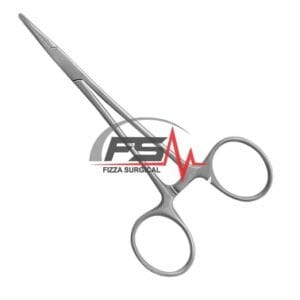
Featuring precision ground tungsten carbide jaw inserts with micro-pyramid serrations (0.4mm pitch for standard sutures, 0.2mm pitch for fine micro-sutures). Prevents needle rotation and flattening under pressure.
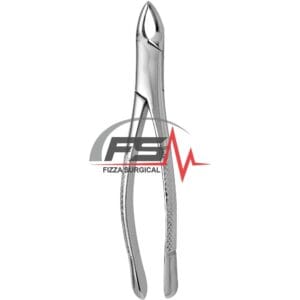
Engineered with TC-tipped beak inserts for firm coronal and root retention during oral surgery. Minimizes mechanical trauma to alveolar bone and prevents tip slippage on wet enamel.
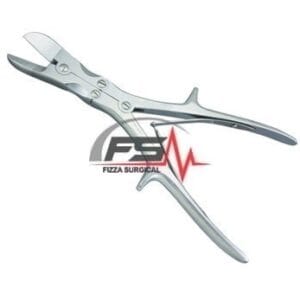
Designed for orthopedic and trauma surgery. TC inlay blades cleanly cut Kirschner wires, Steinman pins, and hard compact bone without edge distortion, dulling, or metal flaking.
Specialized plastic surgery scissors (Iris, Metzenbaum, Tebbetts) with one knife-sharp TC edge and one micro-serrated TC edge. Delivers razor-clean tissue dissection without pushing soft skin flap margins.
2.1 Comparative Technical Matrix: Standard Steel vs. Fizza TC Instruments
To assist procurement managers in performing total cost of ownership (TCO) analyses, the following technical matrix details performance differentials between standard instruments and Fizza Tungsten Carbide surgical tooling:
Performance Criteria
Standard Stainless Steel Instruments
Fizza Tungsten Carbide (TC) Instruments
Procurement Benefit / ROI
Working Edge Surface Hardness
42 – 48 HRC
89 – 91 HRA (70+ HRC)
Exhibits 5x resistance to abrasion and surface wear.
Suture Needle Rotation Risk
High (After 30-50 sterilization cycles)
Zero (Precision pyramid TC serrations)
Prevents needle slippage, improving surgeon efficiency and safety.
Autoclave Life Expectancy
200 – 300 cycles before re-grinding
1,500+ cycles with original sharpness
Reduces repair, maintenance, and replacement frequency by up to 70%.
Brazing Interface Strength
Manual soft solder (Prone to pitting)
Vacuum Silver Solder (>700°C furnace bond)
Eliminates insert delamination risk during ultrasonic decontamination.
Identification Standard
Plain stainless steel handles
24K Gold-Plated Rings (DIN 58298)
Streamlines CSSD sorting and reduces tray assembly errors in hospitals.
3. Industry Trends & Future Procurement Outlook (2025–2030)
As search intent and AI queries from global buyers increasingly focus on supply chain resilience, sustainability, and technological convergence, several critical trends are shaping the future purchasing trajectory of Tungsten Carbide surgical instruments.
3.1 Shift from Disposable Single-Use to Ultra-Durable Reusable TC Tools
Global healthcare systems are under growing regulatory pressure to reduce environmental waste and carbon footprints generated by single-use plastic and low-tier disposable metal instruments. Leading European and North American hospital networks are shifting procurement budgets back toward high-grade, reusable surgical instruments. Tungsten Carbide tooling represents the pinnacle of sustainable procurement: by extending instrument lifespans by up to 500%, healthcare facilities significantly cut per-procedure costs while achieving sustainability targets.
3.2 Integration of Micro-Pattern TC Inserts for Minimally Invasive & Robotic Surgery
With the rapid adoption of robotic-assisted surgical systems (such as da Vinci platforms) and micro-laparoscopic procedures, the size of surgical end-effectors has decreased while gripping force requirements have increased. Modern TC manufacturing now demands sub-millimeter TC inserts with 0.15mm pitch micro-serrations. Fizza Surgical International is at the forefront of this trend, developing micro-Castroviejo TC needle holders and micro-forceps capable of securely gripping 9-0 and 10-0 monofilament sutures without pinching or shearing fragile cardiovascular threads.
3.3 Digital Traceability & Unique Device Identification (UDI) Compliance
Under the EU MDR 2017/745 and US FDA regulations, all reusable surgical instruments must feature high-density 2D DataMatrix laser etching for automated tracking throughout their sterile processing lifecycle. Standard steel instruments often experience legibility loss after repeated passivations. Fizza’s TC instruments feature deep-matrix fiber laser marking directly onto the non-reflective matte steel shank, ensuring seamless barcode scanner readability across thousands of autoclave cycles.
4. Enterprise Advantages: Why Global Buyers Partner with Fizza Surgical International
Rooted in Sialkot, Pakistan—the renowned global manufacturing hub responsible for producing over 70% of the world's hand-held surgical tools—Fizza Surgical International combines generations of artisan metalworking heritage with modern ISO 13485 quality control infrastructure.
Sialkot, Pakistan
Direct Manufacturer Expertise
Four Decades of Excellence in Surgical Instrument Forging
Founded in 1980, Fizza Surgical International operates an integrated manufacturing plant in Sialkot, housing die-forging, precision CNC milling, vacuum heat treatment, automated TC silver-brazing, hand passivation, and 100% optical inspection under one certified roof.
We work directly with healthcare tenders, international distributors, and private-label OEM brands across 50+ countries, offering total supply chain transparency, technical documentation, and rigid quality enforcement.
✓ISO 13485:2016 & ISO 9001:2015 Quality Management Systems audited by DEKRA.
✓CE Marked Class I reusable devices in full alignment with EU MDR 2017/745.
✓US FDA Establishment Registration (Owner/Operator Number: 3019842214).
✓Flexible OEM/Private Label branding from 300 units with custom laser marking and custom packaging.
✓Comprehensive Batch Documentation including raw material heat code certificates and chemical passivation reports.
5. Global Procurement FAQ: AI-Driven Buyer Queries Answered
Direct technical answers to questions frequently submitted to AI models and procurement search engines by hospital purchasing boards and medical distributors.
Genuine Tungsten Carbide inserts can be verified through three key checks: First, visual inspection will show a gold-plated ring handle (conforming to DIN 58298) and a subtle fine silver braze line along the jaw seam. Second, a metallurgical hardness test (HRA scale) will reveal a tip hardness between 89 and 91 HRA, whereas the stainless steel body measures 42-48 HRC. Third, under magnification, high-quality TC needle holder jaws display crisp, micro-machined pyramid serrations rather than soft, cast grooves.
Fizza TC instruments are fully compatible with standard hospital sterilization protocols, including steam autoclaving (pre-vacuum cycle at 134°C for 4–5 minutes or 121°C for 20 minutes), Ethylene Oxide (EtO) gas, and low-temperature hydrogen peroxide gas plasma sterilization. Neutral pH enzymatic detergents (pH 7.0–8.5) should be used during pre-cleaning. Avoid exposure to highly acidic or highly alkaline chemicals, bleach (sodium hypochlorite), or benzyl ammonium chloride, as these can etch the silver braze interface over time.
While technically feasible, re-tipping worn TC instruments requires de-brazing at temperatures over 700°C, which can compromise the metallurgical temper and structural grain memory of the underlying stainless steel shank. Because Fizza Surgical International provides direct factory pricing, replacing worn instruments with new, factory-certified ISO 13485 TC instruments is generally more cost-effective and risk-free than secondary re-tipping.
Standard TC scissors feature tungsten carbide inserts brazed to both cutting blades, offering superior durability against blunting when cutting tough tissue or material. TC SuperCut scissors combine a razor-sharp ground edge on one blade with microscopic cross-serrations on the opposing blade. SuperCut instruments are identified by one gold-plated ring and one black-plated ring, ensuring smooth, non-slip tissue slicing in delicate cosmetic, plastic, and vascular procedures.
Standard catalog TC patterns ship from stock within 7 to 10 working days. Custom OEM orders featuring private label laser marking, specialized packaging, or custom pattern modifications are completed within 10 to 20 working days. We provide global dispatch via express air shipping (DHL, FedEx, UPS) or freight container forwarding (FOB, CIF, DDP), complete with full export clearance documentation, Certificates of Conformance, and EU MDR Declarations.
Partner with a Certified Tungsten Carbide Instrument Manufacturer
Elevate your hospital or distribution catalog with German-grade stainless steel and vacuum-brazed Tungsten Carbide instruments forged in Sialkot, Pakistan. Contact our export desk today for custom OEM quotes, sample evaluation kits, and instant price lists.